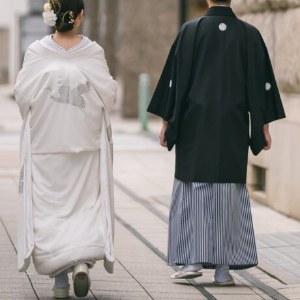
Updated July 2026. Photos are from our own shoot in Kobe, February 2026.
Cost: ¥126,500 total (≈ US$780). Exact receipt below
You get: about 100 edited photos, delivered by download link
Difficulty for tourists: easy to moderate. The studio we used has an English team
My husband and I put on a white wedding kimono and a black montsuki, and walked through the streets of Kobe with a professional photographer, months before our actual wedding ceremony.
It’s called maedori (前撮り) (“shooting in advance”), and it is a wedding tradition I like a lot. Below is how it works and what it cost us, down to the yen. We are sharing our actual invoice, because every article we found online said “prices vary.” They do. Ours was ¥126,500.
What is a kimono pre-wedding shoot?
In Japan, wedding photos are usually a separate event from the wedding itself. Couples book a photo studio weeks or months before the ceremony, spend half a day in traditional dress with a photographer and stylists, and treat it as its own little celebration.
Two things might surprise you:
You don’t need a wedding in Japan to do this. Studios photograph couples celebrating anniversaries, engagements, or just a trip to Japan. If you want a photo of the two of you in kimono on a Japanese street, and not a costume selfie, this is how you get it.
It’s a full production. Professional kimono dressing (a white shiromuku takes a small team), bridal hair and makeup, and a photographer who knows the good spots in the city. Your job is to stand there and try not to cry.
Our shoot: white kimono in Kobe’s old quarter
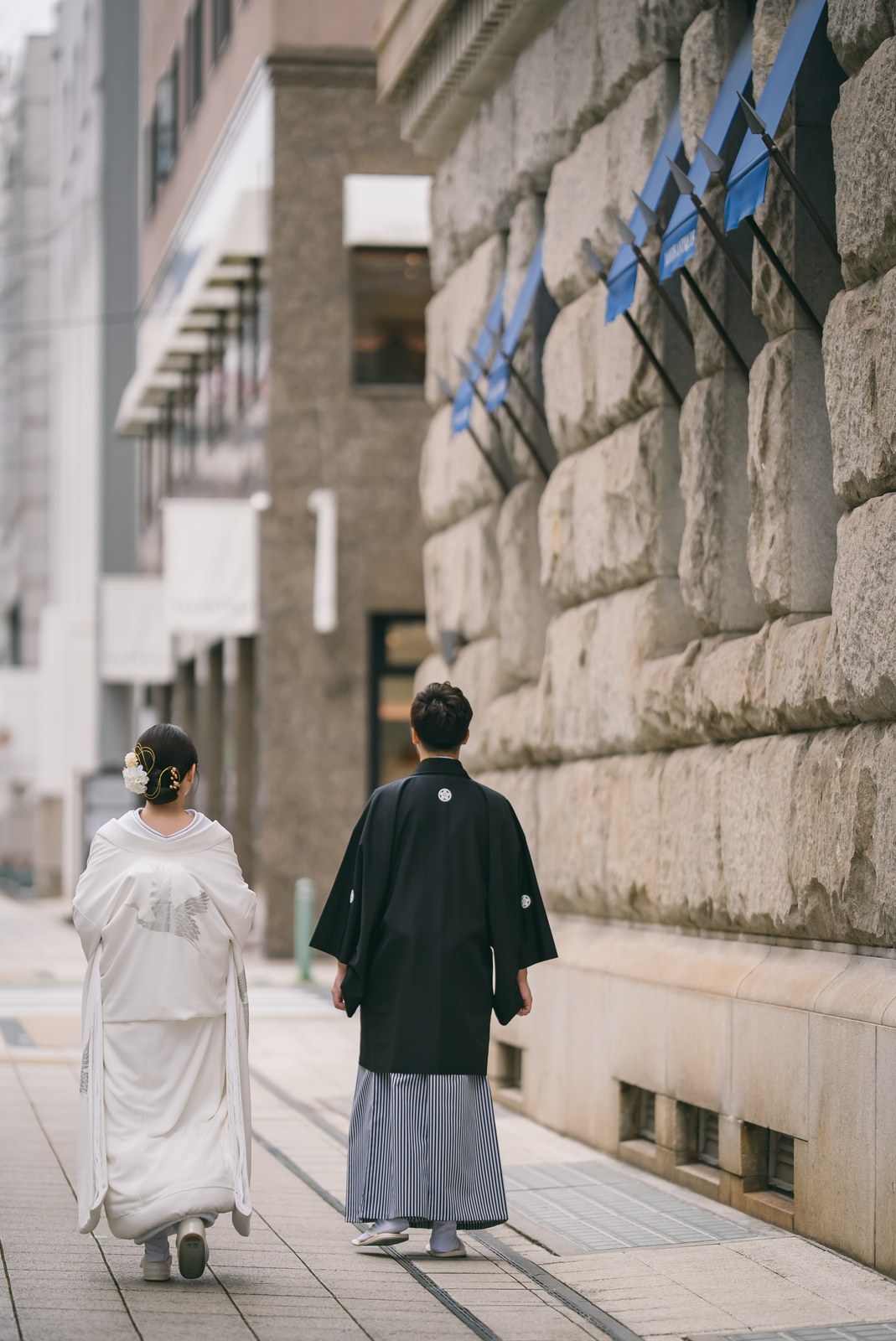
We chose LA-VIE FACTORY, a photo studio chain with locations across Japan (find a studio on Google Maps). We already knew their work because they were shooting our wedding, and when we learned the same studio does kimono pre-wedding sessions, we booked one with a phone call. We picked their Kobe studio for one reason: the Former Foreign Settlement (Kyoryuchi, 旧居留地), a district of big early-1900s Western bank buildings. We liked the idea of white silk against old stone, and we wanted photos that did not look like everyone else’s shrine shoot.
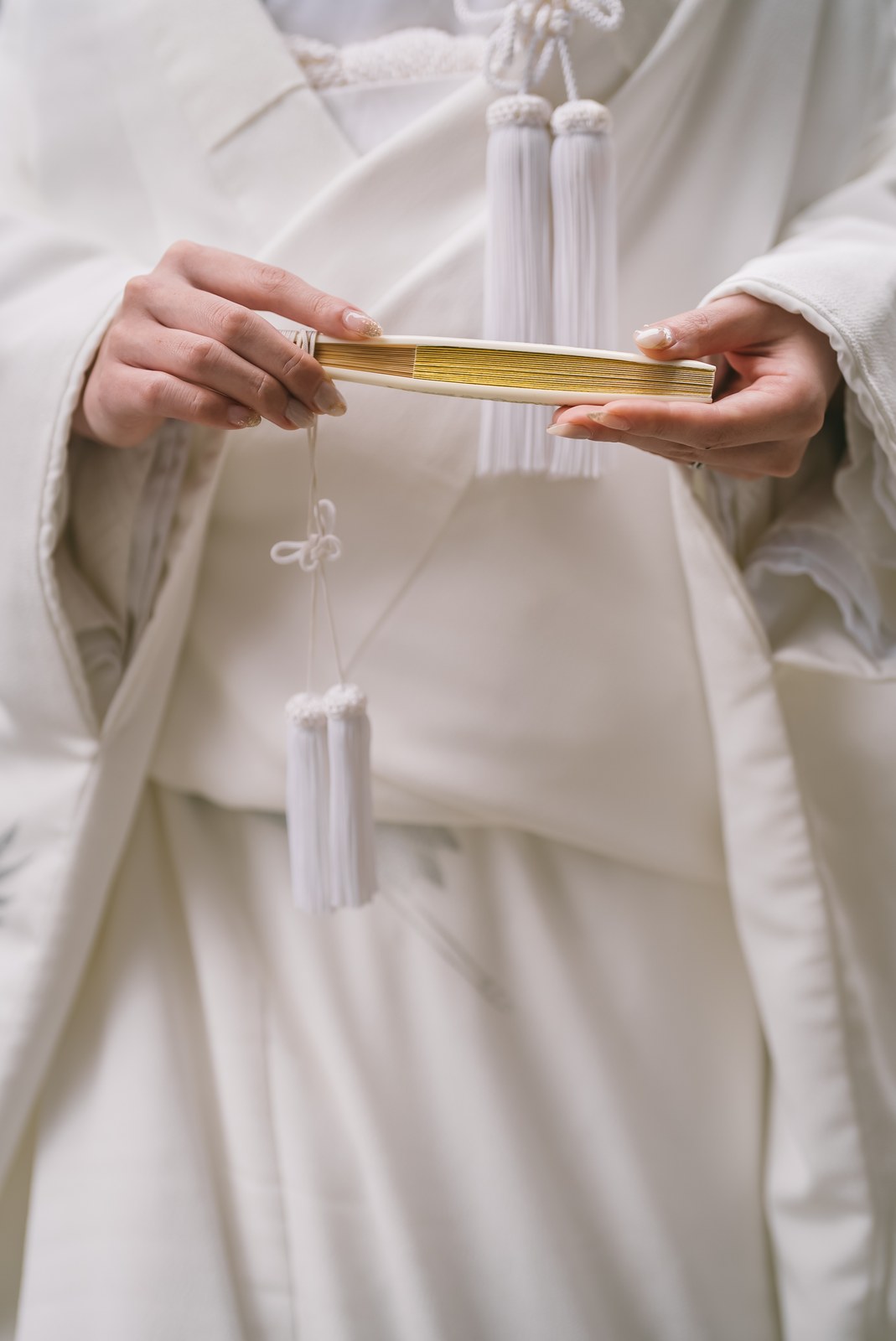
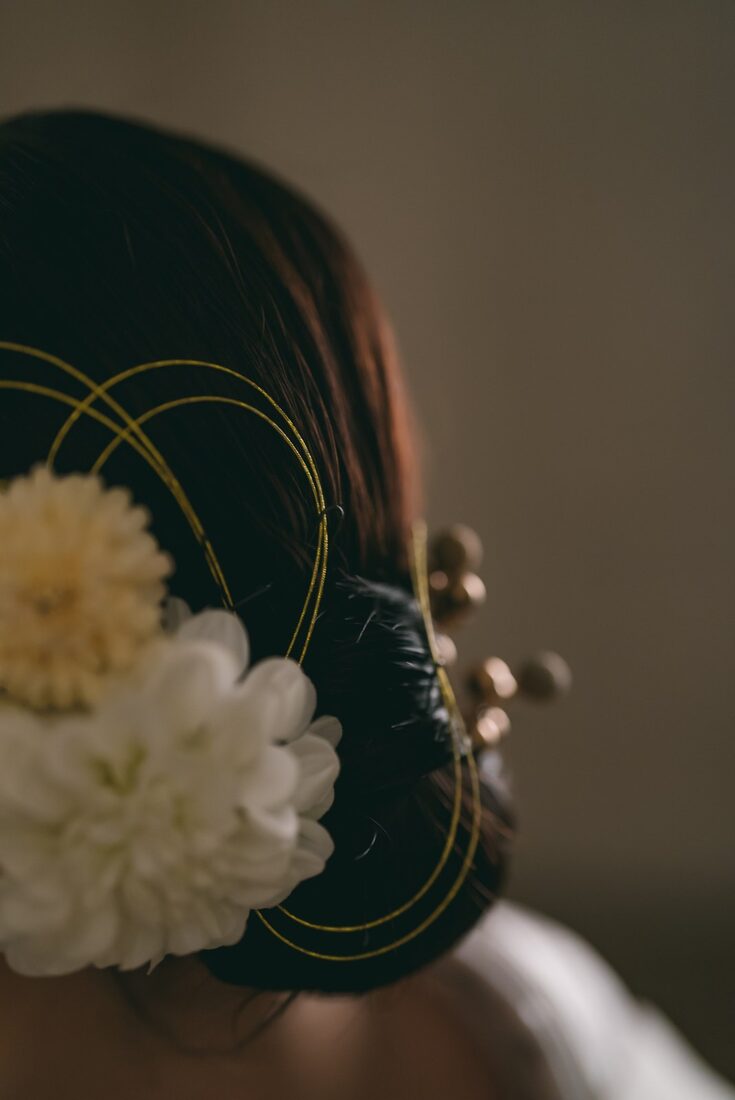
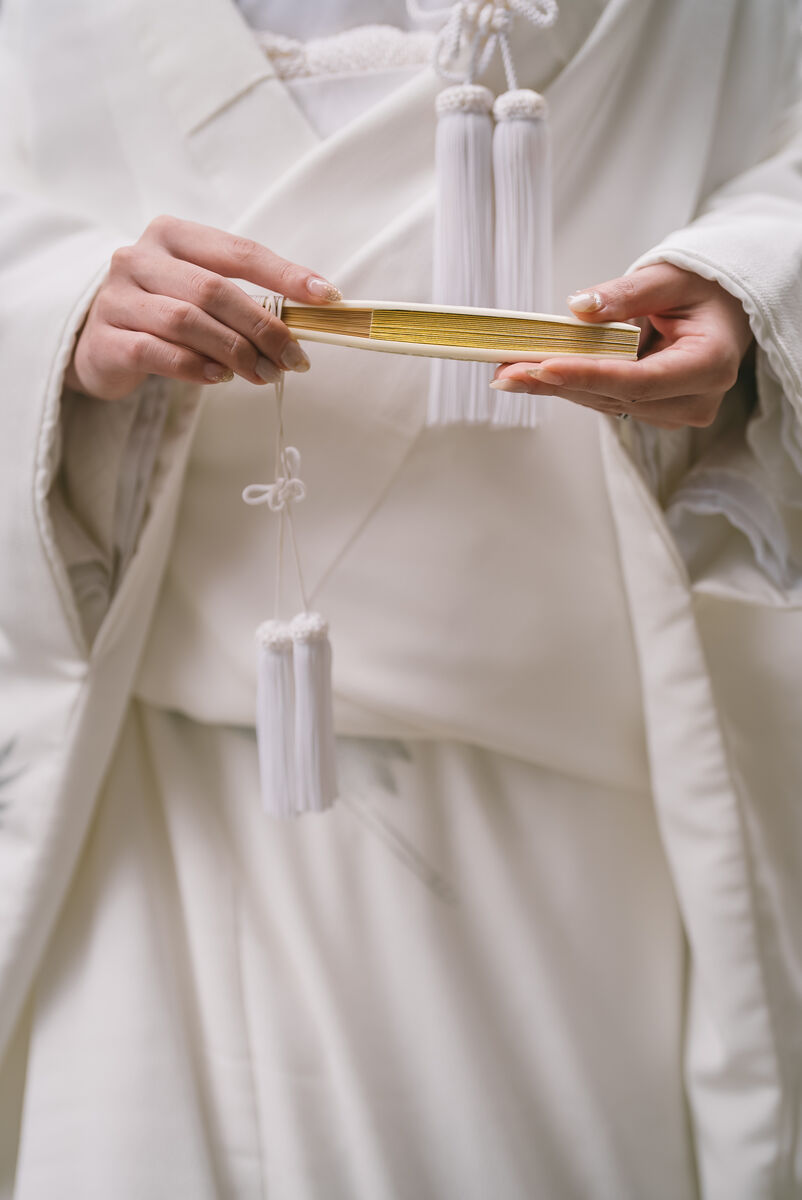
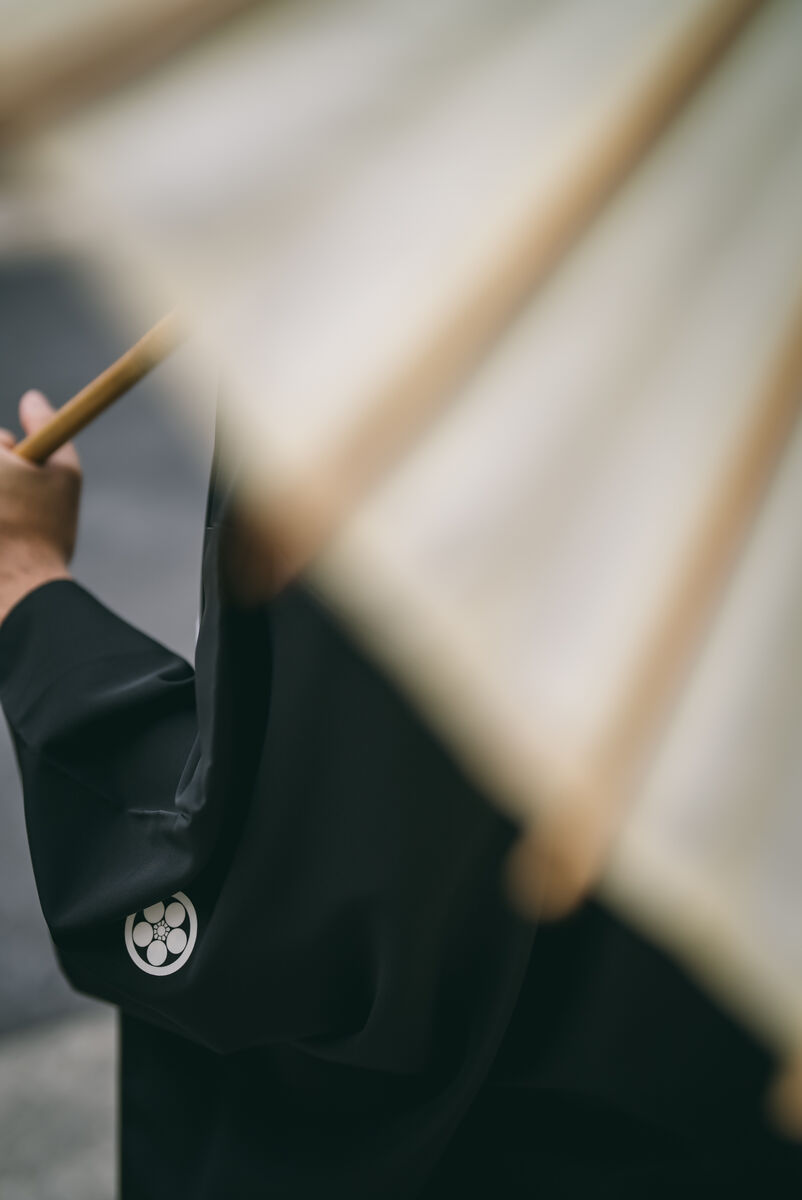
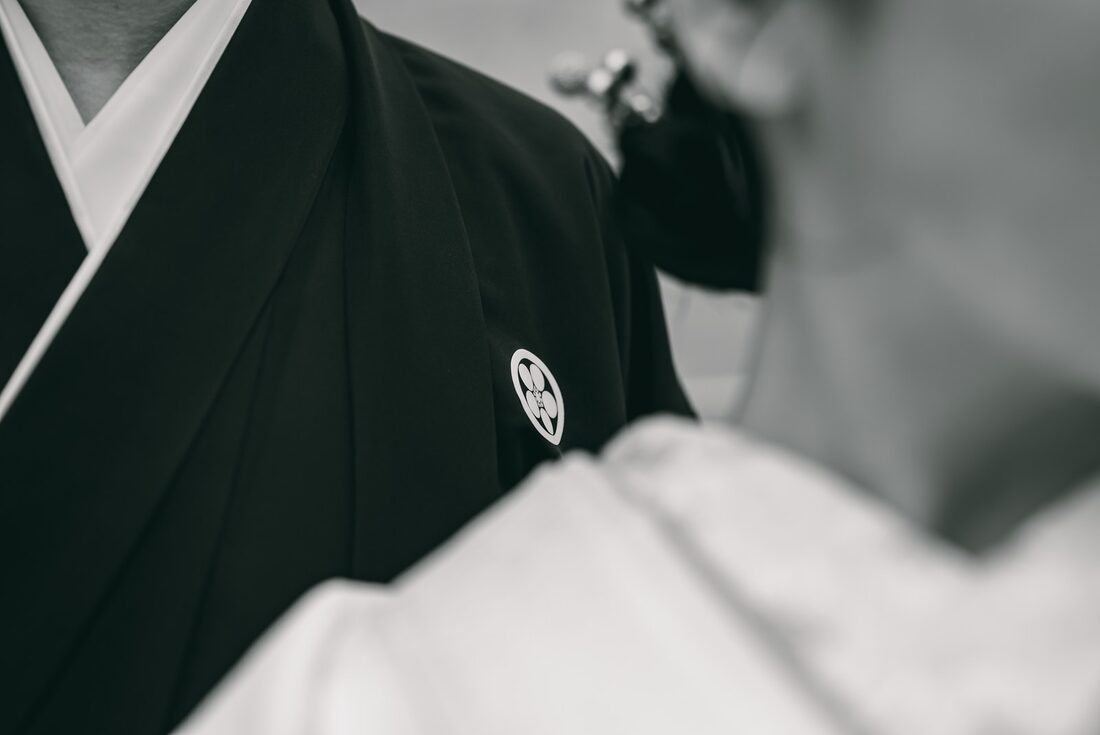
Most rental plans print a generic crest. We paid ¥10,000 extra to have ours. Worth it? For us, yes. With your own crest, it is your photo and not a costume.
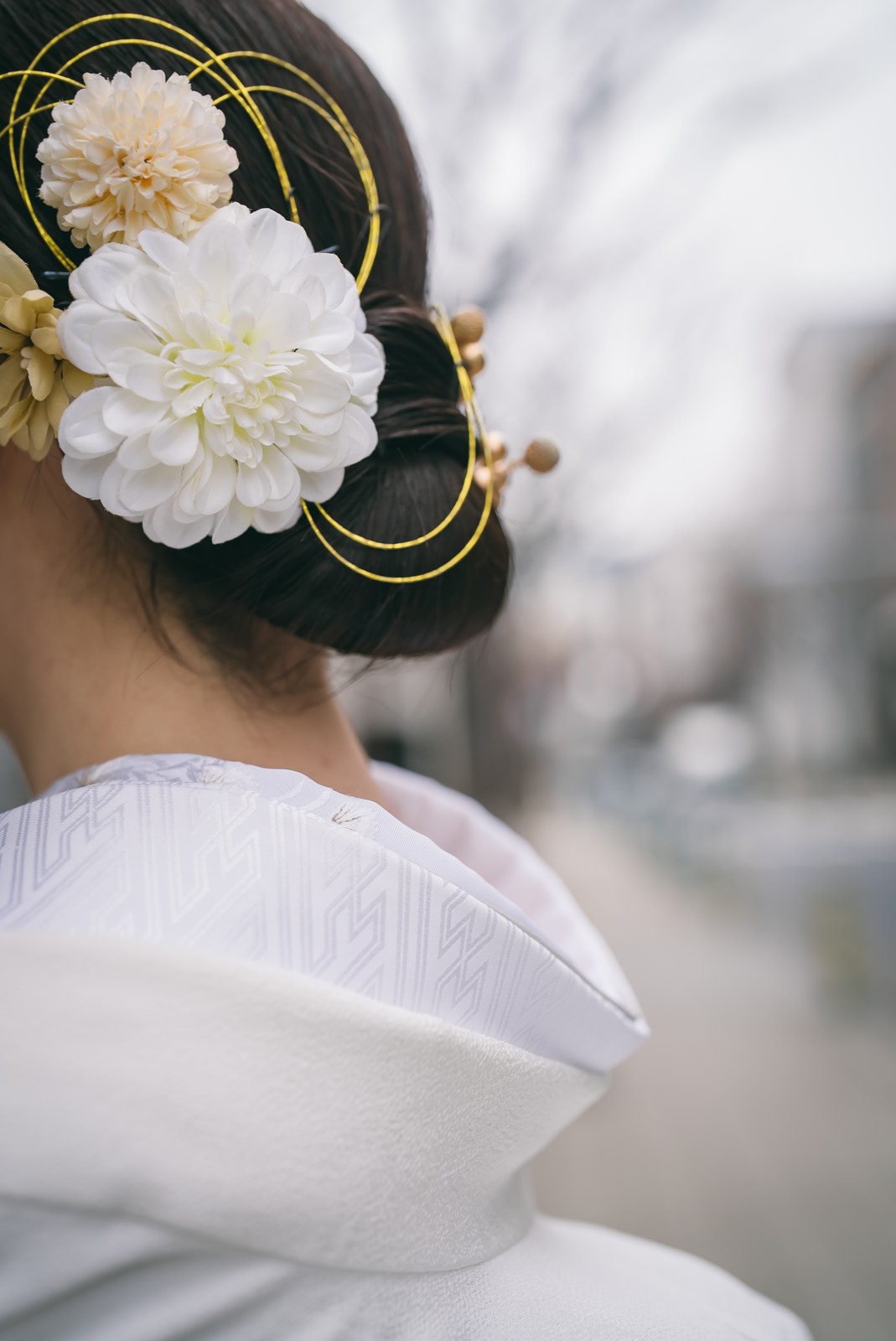
Then you walk. The photographer leads you through the streets, between real traffic and real pedestrians. It sounds stressful, but it was not. Passers-by smiled, and an older lady bowed to us. Kobe on a weekday morning in February was nearly empty, which is also why it was cheaper.
If you are staying in Kobe for a shoot like this, the hotels we paid for there (from ¥10,533 a night with breakfast, a short walk from the old quarter) are in our Kansai hotel list with real prices.
The exact bill: ¥126,500
Here is our actual invoice from LA-VIE FACTORY Kobe, line by line:
| Item | What it means | Price |
|---|---|---|
| Location shoot, Japanese attire (1 outfit) | The core plan: at half price (winter campaign; regular ¥180,000) | ¥90,000 |
| Family crest customization (家紋指定) | Your real family crest on the groom’s montsuki | ¥10,000 |
| Embroidered collar (刺繍半衿) | Upgrade for the bride’s under-collar | ¥5,000 |
| Layered collar (伊達衿) | The color accent at the bride’s neckline | ¥3,000 |
| Mizuhiki styling | We brought our own mizuhiki cord ornament; fee to style it in | ¥1,000 |
| Groom’s hair & makeup | Yes, grooms get styled too | ¥6,000 |
| Subtotal | ¥115,000 | |
| Tax (10%) | ¥11,500 | |
| Total | ¥126,500 (≈ US$780) |
Three honest notes on that number:
1. The half-price campaign is the whole game. The same shoot at regular price is ¥180,000 before add-ons. Japanese photo studios run seasonal campaigns all the time, and off-season (winter, midsummer) and weekdays cost much less. Our February weekday shoot cost half of what a spring weekend would.
2. The base plan covered more than we expected: kimono rental for both of us, full bridal dressing, bride’s hair & makeup, the photographer for the location shoot, and about 100 edited photos delivered by download link.
3. Add-ons are where budgets quietly grow. Ours added ¥25,000. Collars, crests, hair flowers, extra outfits: each one is small, but they add up. Decide what you want before the fitting appointment, not during it.
The same studio quoted us ¥126,500. Their English page starts at ¥396,000.
Almost nobody writes about this part, and I think it is the most useful thing in this article.
We booked LA-VIE FACTORY by telephone, in Japanese, for a domestic plan: one Japanese outfit, location shoot, winter weekday. List price ¥180,000, halved by a seasonal campaign, ¥126,500 after our add-ons and tax.
Their English-language pre-wedding page, checked in August 2026, opens at ¥396,000 for the Basic / Standard plan.
We want to be fair about why, because the two are not identical products:
- The international package includes interpreter support throughout. A real cost, and worth paying for if you need it
- It lets you choose locations, outfit styles and your photographer
- It is built for couples flying in, who need everything coordinated remotely
But the gap is big, and we could not find anyone writing it down, so we are putting it here.
What to do with this: when you enquire, ask two specific questions.
- Is there a domestic plan, and what does it cost?
- Are there seasonal or weekday campaign prices?
Both are normal questions to ask. Studios run campaigns all the time and advertise many of them only in Japanese. You can ask in English; the worst answer is no.
How the day actually goes
10:00: Dressing begins for both of us (the shiromuku, hair and makeup take a solid two hours)
12:00: Fully dressed; shooting starts in the studio, then out into the Kyoryuchi streets
13:00: Shooting wraps; change back into normal clothes
13:30: Done. The ~100 edited photos arrived later by email as a download link
What a kimono shoot costs across Japan
We paid for one shoot, in one city, on one day. For comparison, here is what studios publish elsewhere.
A note on these figures: these are listed starting prices, gathered from studio websites in August 2026. They are not what people end up paying: add-ons and weekend surcharges push the real number up, and campaigns pull it down. Think of them as the minimum.
By city (median starting plan, 144 studios)
| City | Median starting plan |
|---|---|
| Karuizawa | ¥176,000 |
| Kyoto | ¥99,000 |
| Kanazawa | ¥99,800 |
| Asakusa (Tokyo) | ¥88,000 |
| Nagoya | ¥87,800 |
| Kobe | ¥78,000 |
| Osaka | ¥78,000 |
| Sapporo | ¥44,000 |
| Fukuoka | ¥40,000 |
Across all 144 studios: median starting plan ¥88,000, median full package ¥214,500.
Kyoto costs more because everyone wants Kyoto. If the photos matter more to you than the city, the same money buys a longer session almost anywhere else. Ours cost half of what Kyoto would have, and the streets were empty.
By type of experience
| What you want | What you get | Rough cost |
|---|---|---|
| Kimono rental only | Dressing, your own phone for photos | ¥3,000–6,000 |
| Tourist kimono plan with a photographer | Casual kimono, short session, some edited photos | ¥15,000–50,000 |
| Bridal studio session | Shiromuku or uchikake, full dressing, hair and makeup, 30–60 min | ¥88,000–130,000 |
| Bridal location shoot (what we did) | The above, plus streets, plus a longer session | ¥126,000–215,000 |
| International package | The above, plus interpreter and remote coordination | ¥300,000–450,000 |
If you would rather book online, in English
We booked LA-VIE FACTORY by phone, in Japanese, and we have not used any other studio, so this is not a review. But readers keep asking for something they can book with a credit card and no Japanese. This is the one option we found on a booking site that is a proper wedding-kimono shoot rather than a 30-minute rental add-on: a one-day Tokyo and Mt. Fuji pre-wedding shoot on Klook, with a shiromuku or irouchikake package, private car, hair and make-up, and retouched photos. It is a Chinese- and English-speaking team; at the time of writing it had two reviews, both five stars. If you book it, please tell us how it went and we will add it here.
That link is an affiliate link: if you book through it we earn a small commission, at no cost to you. It is the only link on this page we have not used ourselves.
What is not in the price
Our ¥25,000 of add-ons was our own doing. These are the ones that catch people out, taken from what studios publish:
- Weekend and public holiday surcharge: ¥11,000 to ¥20,000 at the studios we checked
- High season surcharge: cherry blossom and autumn leaves, up to ¥30,000, sometimes 15 to 20 per cent
- Location permit fees: some shrines and gardens charge the couple separately. Fushimi Inari and Gokoku Shrine are ¥5,000, collected by the venue, not the studio
- Interpreter: bundled into international packages, charged as an add-on elsewhere
- Groom hair and makeup: often not in the base plan. Ours was ¥6,000
- Bridal makeup upgrade: ¥12,000 at one studio we checked, versus the standard makeup included
- Second outfit: from ¥10,000 for the change, more for the garment
- Retouching beyond the included set: check whether you are being handed edited files or raw ones
Ask for the total price for your date, with everything you asked for, before you pay the deposit. That answers most of these questions.
Can tourists actually book this?
Yes, and it is easier than we expected when we looked into it afterwards.
The studio we used has a dedicated international service. LA-VIE FACTORY runs an English site with interpreters on staff, and takes bookings by web form, WhatsApp, Messenger or LINE. They shoot in Tokyo, Kyoto, Osaka, Kobe, Hiroshima, Hokkaido and Okinawa. Kimono plans, shrine ceremonies, and “travel photo” plans (photos of your trip, no wedding required) are all offered to overseas visitors.
Budget guide for visitors:
- Full studio pre-wedding shoot (what we did): roughly ¥90,000–250,000 depending on season, city and plan
- Kimono rental + casual photo plan (tourist studios in Kyoto, Asakusa etc.): ¥15,000–50,000. A lighter version, good if you want the photos without the full bridal production
- Book ahead: popular seasons (cherry blossom, autumn leaves) fill up months out; winter weekdays are the bargain
Our advice if you’re visiting: ask specifically about off-season and weekday campaigns: discounts like our 50% off are often advertised only in Japanese. It is a fair thing to ask in English; “Is there a seasonal campaign price?” works.
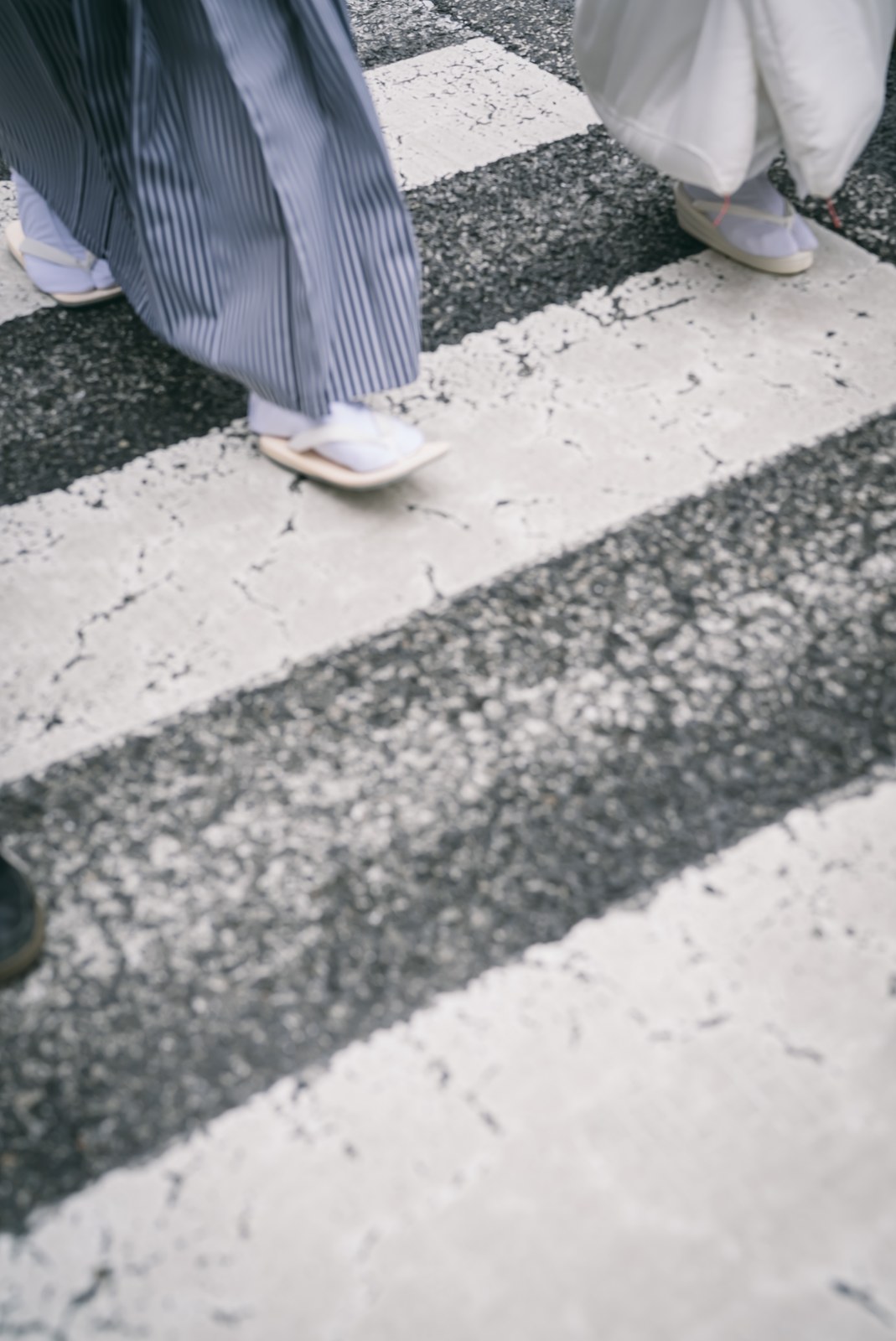
One thing nobody warned me about: the walking. The team kept finding one more good spot, then one more, and by the end my feet, in unfamiliar sandals, were finished. I am not complaining, because every extra spot gave us another photo we love now.
How the booking actually works, start to finish
- Enquire: web form, WhatsApp, Messenger or LINE at the larger studios. Say your dates, city, and that you want Japanese attire
- Ask the two price questions (domestic plan, campaign price) before you commit to anything
- Get a written quote listing every line, not a package name
- Pay a deposit to hold the date. Popular seasons go months out; winter weekdays rarely do
- Fitting or online consultation: this is where add-ons get decided. Decide beforehand what you actually want
- Shoot day: allow half a day, most of it dressing
- Delivery: ask for the number of edited photos and the delivery time in writing. Most complaints online are about this step, so settle it early
Which kimono is which
- Shiromuku (白無垢): all white, the most formal. What the bride wears in the photos above
- Iro-uchikake (色打掛): the coloured outer robe, red and gold being the classic. Often the second outfit
- Hikifurisode (引き振袖): long-sleeved, less formal, easier to move in
- Montsuki haori hakama (紋付羽織袴): the groom, black silk with family crests
Was it worth ¥126,500?
We planned this shoot for ourselves, not for this site. Looking at the photos now (the family crest, the old bank buildings, the umbrella), it is the best money we spent on anything for the wedding.
If you’re coming to Japan and thinking about this, I would say do it. Book a winter weekday and ask about the campaign.
Questions people ask us
How much does a pre-wedding shoot cost in Japan?
Studio sessions start around ¥88,000 and location shoots run ¥126,000 to ¥215,000. We paid ¥126,500 for a half-day location shoot in Kobe, in winter, on a weekday, with a campaign discount. The same plan at full price was ¥180,000.
How much does it cost to rent a kimono for a photoshoot?
Tourist kimono rental is ¥3,000 to ¥6,000 for the day. Bridal kimono is not rented separately. It comes bundled into a photo plan, and that is where the cost sits.
Do we need to be getting married?
No. Studios photograph anniversaries, engagements and couples who simply want the photos. Several sell it as a travel photo plan.
Is it worth the money?
For us, yes, and we paid for it ourselves. If your budget is tight, a tourist kimono plan at ¥15,000 to ¥50,000 gets you real photos in real kimono. The bridal version is a much bigger production, and you probably already know if you want it.
When is it cheapest?
Winter and midsummer, on weekdays. Ours cost half of a spring weekend. Cherry blossom and autumn leaves carry the largest surcharges and book out months ahead.
How long does it take?
Half a day. Dressing a shiromuku with hair and makeup took two hours before we took a single photo.
How many photos do we get, and when?
We received about 100 edited photos by download link. Get both numbers in writing before you pay; this is the most common complaint online.
Do we need Japanese?
No, at the studios set up for overseas couples. We booked in Japanese because we live here, which is also why we saw the domestic price.
This is not sponsored. We paid the campaign rate (half price) like any customer, and the studio does not know we are writing this. Prices are from our February 2026 invoice; campaigns change with the season.
Planning a Japan trip? Start with our Perfect Japan Guide: live exchange rates, pocket phrases with native audio, and everything we tell friends before they visit.
More from us: the ceremonial end of the same wardrobe is our shiromuku bridal kimono guide: what the all-white kimono means and what it costs. For kimono in the wild, hatsumode at New Year is the week half the country dresses up.