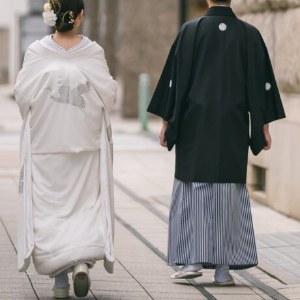
I got married in a white kimono, and this is everything I learned inside it.
Budget: full shiromuku sets are usually rented, often for several hundred thousand yen with dressing and hair
Where: shrine weddings, hotel ceremonies, and photo-wedding studios all over Japan
Hardest part: for guests, zero. For the bride, it is physically hard work
1. The shiromuku is Japan’s all-white bridal kimono: every layer, cord and sandal in white and gold
2. White is not (only) purity: the old meaning is “I arrive undyed, ready to take on your family’s colors”
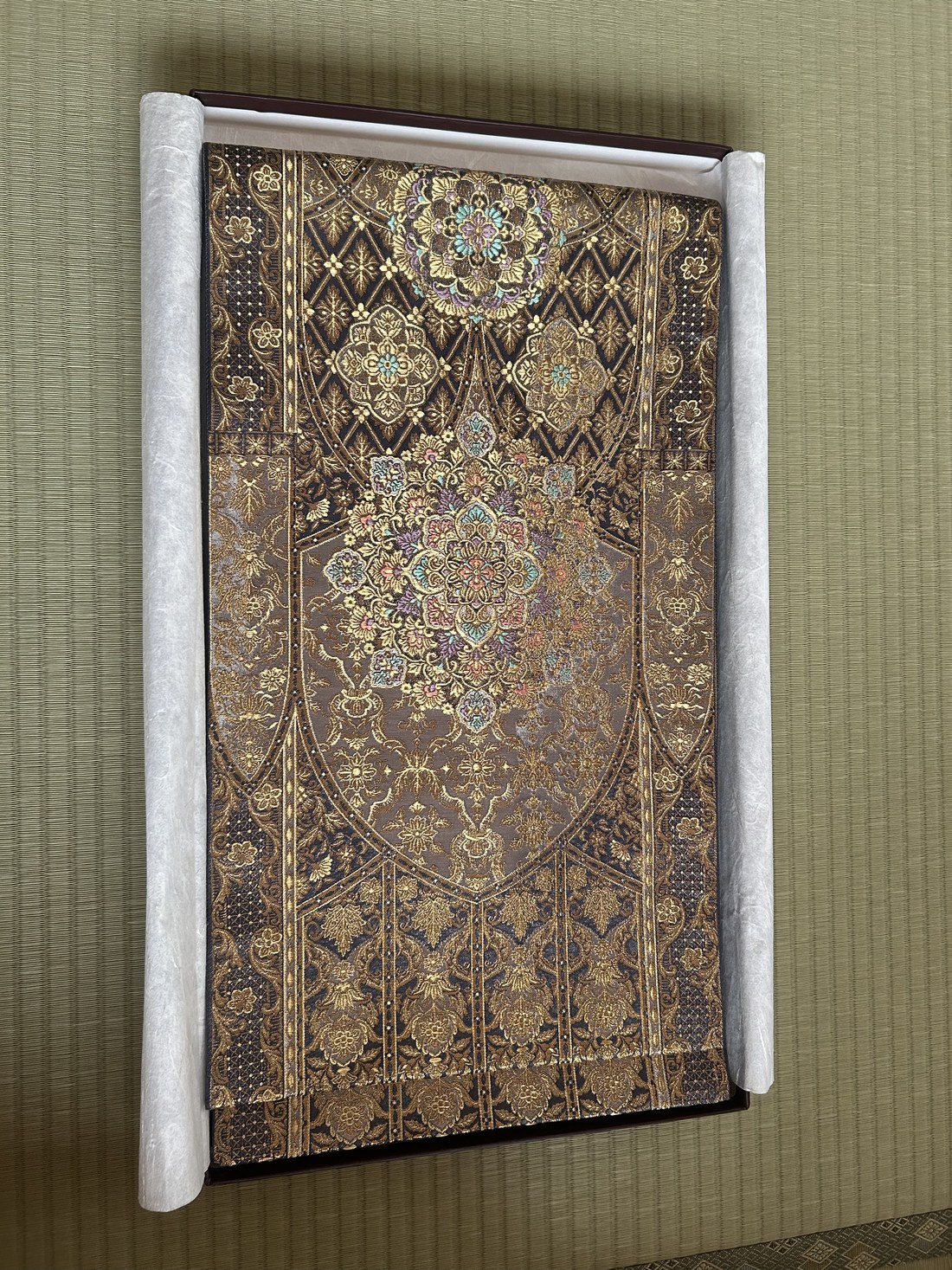
3. The obi and accessories are serious textile art, like the gold brocade obi
4. Visitors can see this too, through photo-wedding plans and kimono museums (details below)
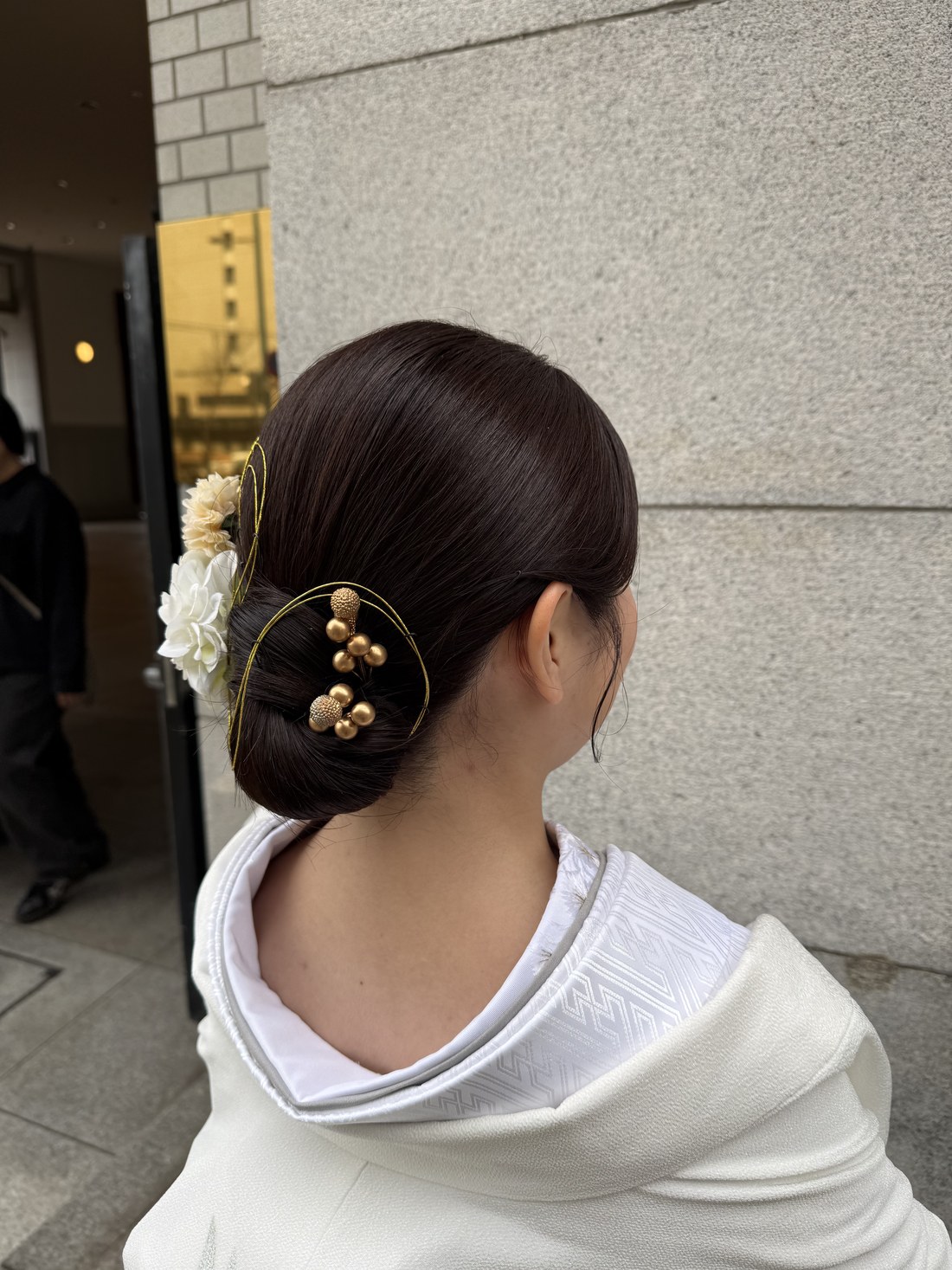
The photo above is from our maedori (the pre-wedding portrait session most Japanese couples book weeks before the day itself). We married at Ashiya Baycourt Club, a resort hotel on the water between Osaka and Kobe, and the ceremony there was Western. But I wanted to wear Japanese dress at least once, so we booked the maedori and shot it in Kobe’s Kyu-Kyoryuchi (the Former Foreign Settlement), a few blocks of 1900s European stone banks and trading houses. A white bridal kimono in front of a Victorian arcade sounds like an odd match, but it looks very good in photos. Two professional dressers put the shiromuku on me piece by piece: undergarment, under-kimono, the heavy white outer robe, cords, clips, and an obi stiff enough to stand up by itself. Then hair: a low, very smooth bun with white flowers and sprays of gold. When they finally turned me toward the mirror I did not entirely recognize the person in it, and I think that is the idea of a Japanese wedding costume.
Those maedori photographs were used again later. On the wedding day they became the welcome board at the entrance and the portrait pages of our profile book, the little booklet Japanese couples hand out so guests can read about the two of them. This is the practical reason maedori is so standard here: the pictures are used as decoration on the day itself. It is also why you see couples in full kimono at shrines and old streets on ordinary weekday mornings.
What the white actually means
Shiromuku (白無垢) translates roughly as “pure white.” People usually say it means innocence, and that is partly true. But there is an older meaning: white is the color of beginnings: the bride arrives undyed, and will be “dyed in the colors” of the family and life she is joining, like a blank first page. Many brides (I did this too) change partway through the celebration into a colored kimono or a Western dress, so the white turns into color. The change happens in a changing room, and very fast.
 TSŪ INFORMATION
what Japanese connoisseurs know
A formal obi like the one above is woven brocade: silk with real metallic thread, made on looms in weaving centers that go back centuries (Kyoto’s Nishijin district is the most famous). Each pattern has a meaning: cranes for a thousand years of fidelity, pine-bamboo-plum for endurance, fans for a future that opens outward. A 通 detail that people often do not know: the bride cannot dress herself. A licensed dresser (kitsuke-shi) puts the ensemble on in a fixed order, and the obi knot on her back is chosen and tied to suit the occasion. So a bride at a shrine is wearing the work of at least three professionals, and patterns that are several hundred years old.
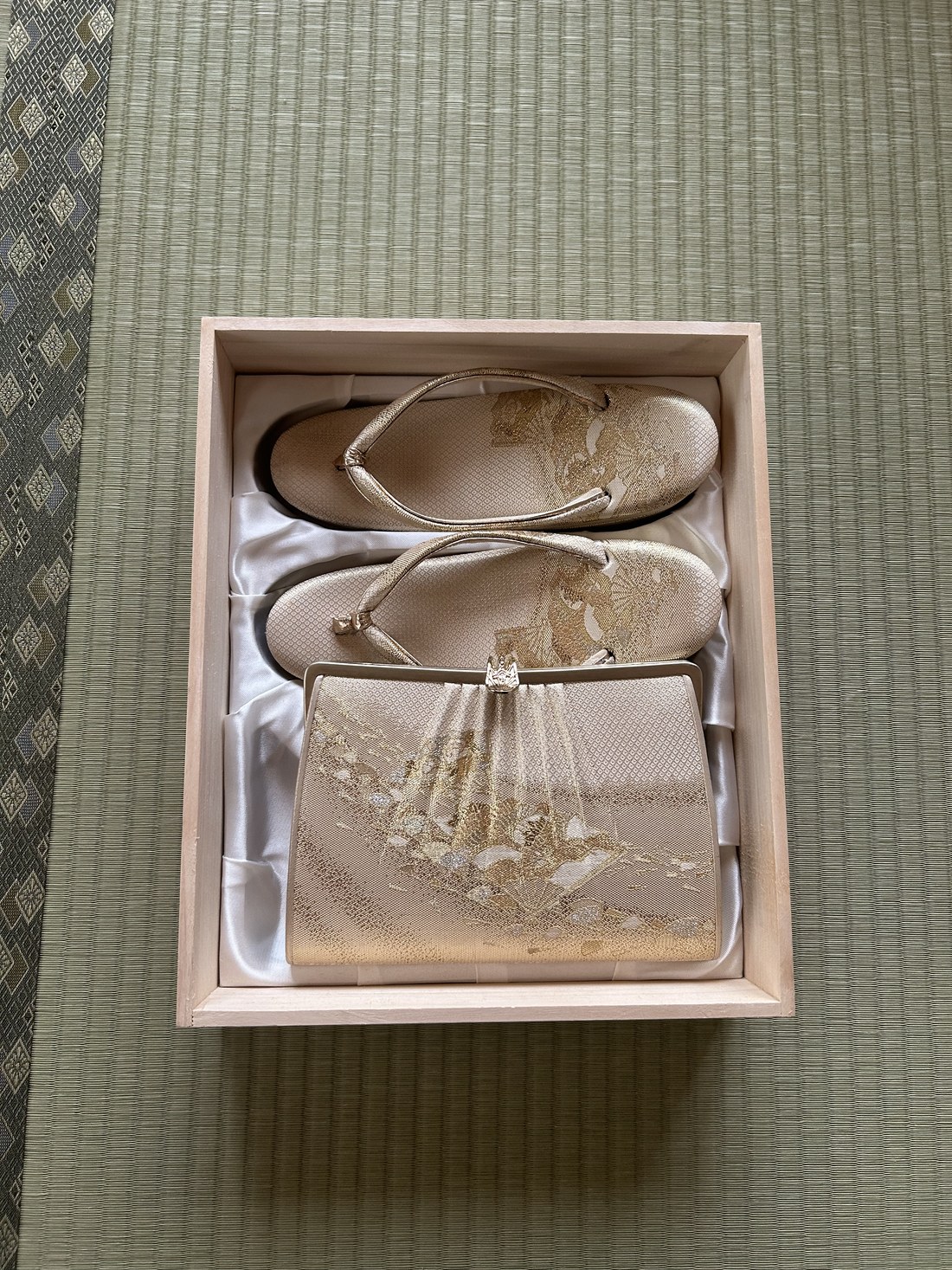
The pieces that were not rented. My shiromuku came from a rental house, like almost everyone’s, and that is completely normal: renting runs ¥100,000–300,000 , buying one runs into seven figures. But the obi and the zori in the photos above are ours. They have been handed down in my family for generations, and on our wedding day my mother wore them with her kurotomesode (the black formal kimono reserved for the married women closest to the couple). So on the day I wore a rented white robe, and my mother wore the family heirlooms, for the occasion they were made for.
Honest notes from inside the kimono
- It is heavy, and you shuffle. Walking in a full shiromuku is slow, with small steps. It looks elegant in photos but takes effort. You need help on stairs.
- You cannot really eat. The obi is tight around your middle, so brides usually only nibble. Future brides, plan for this. I did not, and regretted it by mid-afternoon.
- It is worth every minute. The costume keeps you still, and that made the day feel calm. You cannot rush in a shiromuku, so you stop trying, and you actually pay attention to your own wedding.
How visitors can touch this world
- Watch, freely: shrine weddings are semi-public. At big shrines on auspicious weekend days you may see a bridal procession cross the courtyard. Keep your distance and do not use flash; watching is fine.
- Photo-wedding & couple plans: studios in Kyoto, Tokyo and elsewhere offer wedding-kimono photo experiences for couples, including non-Japanese couples, with no actual ceremony required.
- Everyday version: if full bridal wear is more commitment than your itinerary allows, regular kimono rental is everywhere. Our kimono photoshoot guide covers that world.
FAQ
What is the difference between shiromuku and the colorful bridal kimono?
The all-white shiromuku is the most formal, traditionally worn for the ceremony itself; the iro-uchikake (the spectacular colored and embroidered over-robe) often appears at the reception. Many brides wear both in one day.
What is the white hood some brides wear?
Two options exist: the wataboshi, a soft white hood, and the tsunokakushi, a band-style headdress whose name means “horn-hider”: folklore says it covers the bride’s horns of jealousy. I love that Japanese wedding tradition can joke about marriage like this.
Do modern Japanese couples still choose kimono weddings?
Western-style dresses are more common overall, but shrine weddings are slowly becoming popular again. Plenty of couples, like us, do both in one day.
• Shiromuku = the all-white bridal kimono · white means “ready to be dyed your family’s colors”
• The obi is woven gold brocade: pattern language of cranes, pine and fans
• A licensed dresser puts it on you · walking is slow, eating is barely possible
• Most brides rent the shiromuku (¥100,000–300,000) · the heirlooms usually turn up on the mothers
• Maedori = a separate pre-wedding shoot · the photos become the welcome board and profile book
• Visitors: watch shrine weddings respectfully, or book a photo-wedding plan
• From our own maedori and wedding day · nobody paid us anything
More from us: for the everyday version of dressing up, our kimono photoshoot guide. Planning the whole trip? Start with the Perfect Japan Guide.