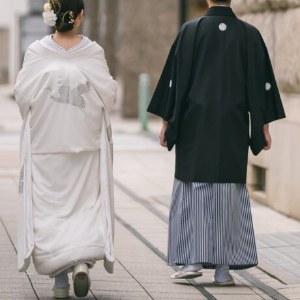
When we did our kimono pre-wedding shoot, I wore white and my husband wore black. Both outfits carry a thousand years of meaning, and we only half-knew it ourselves until we started asking the dressers questions. Here is what Japanese wedding attire is, piece by piece, with photos from our own shoot.
Shiromuku: the all-white bride
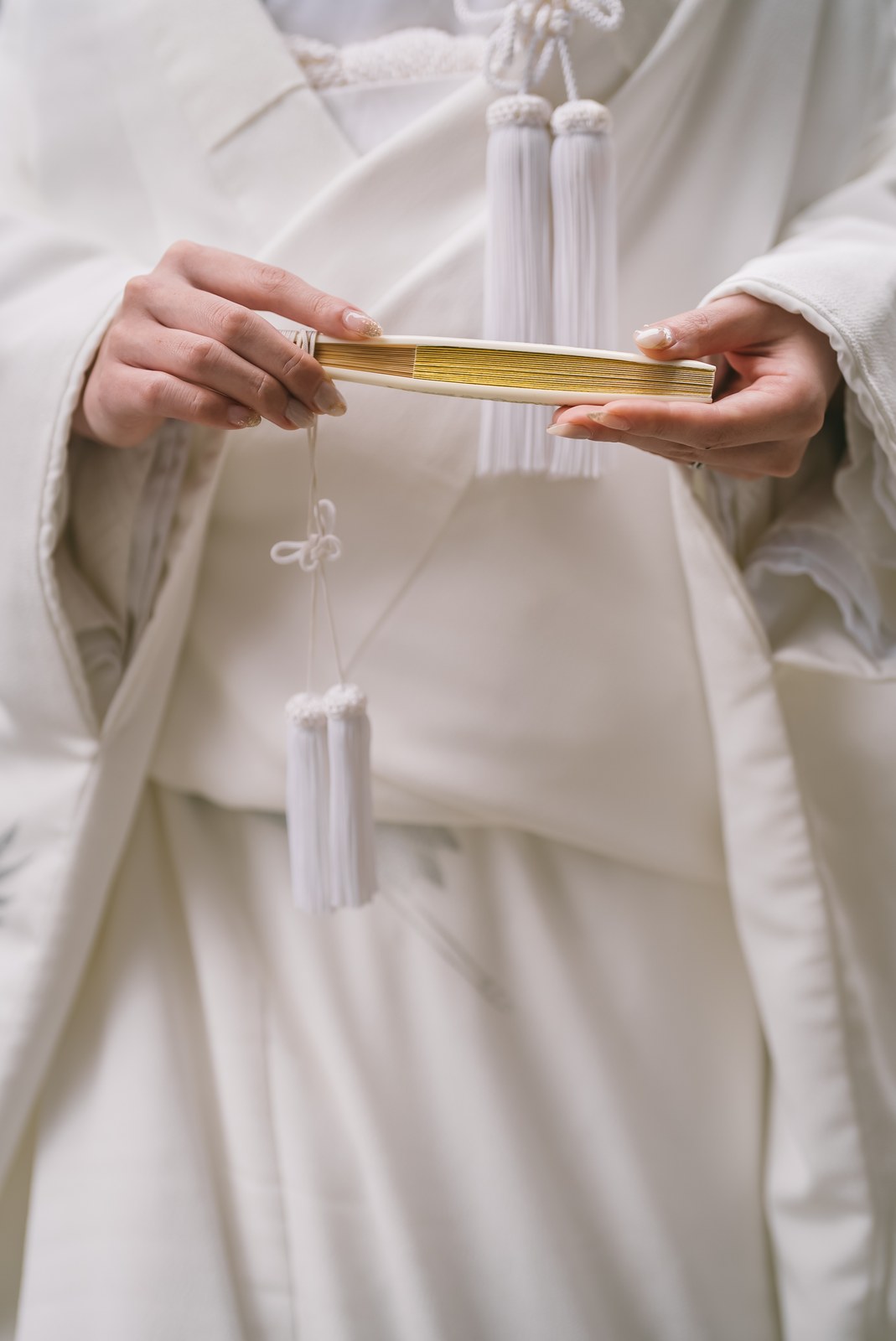
The shiromuku (白無垢) is the most formal Japanese bridal outfit: white outer robe, white under-layers, white accessories, all white down to the sandals. Traditionally it means purity, a kind of blankness: the bride arrives “undyed,” ready to take on her new family’s colors. It dates back to samurai-era wedding dress.
Up close, the white is more complicated than it sounds. Woven patterns (cranes, pine, plum blossoms) move through the silk when the light shifts. This is why photographers like shooting shiromuku against dark or old backgrounds (we chose Kobe’s old bank district for exactly this reason).
The accessories are a whole story
- Hakoseko (筥迫): the small brocade case tucked at the chest. Edo-period women carried cosmetics and papers in it; today it is only ceremonial and carries nothing.
- Kaiken (懐剣): a small ceremonial dagger in a brocade sleeve, worn at the sash. It comes from the tradition of samurai daughters and stands for self-protection and resolve.
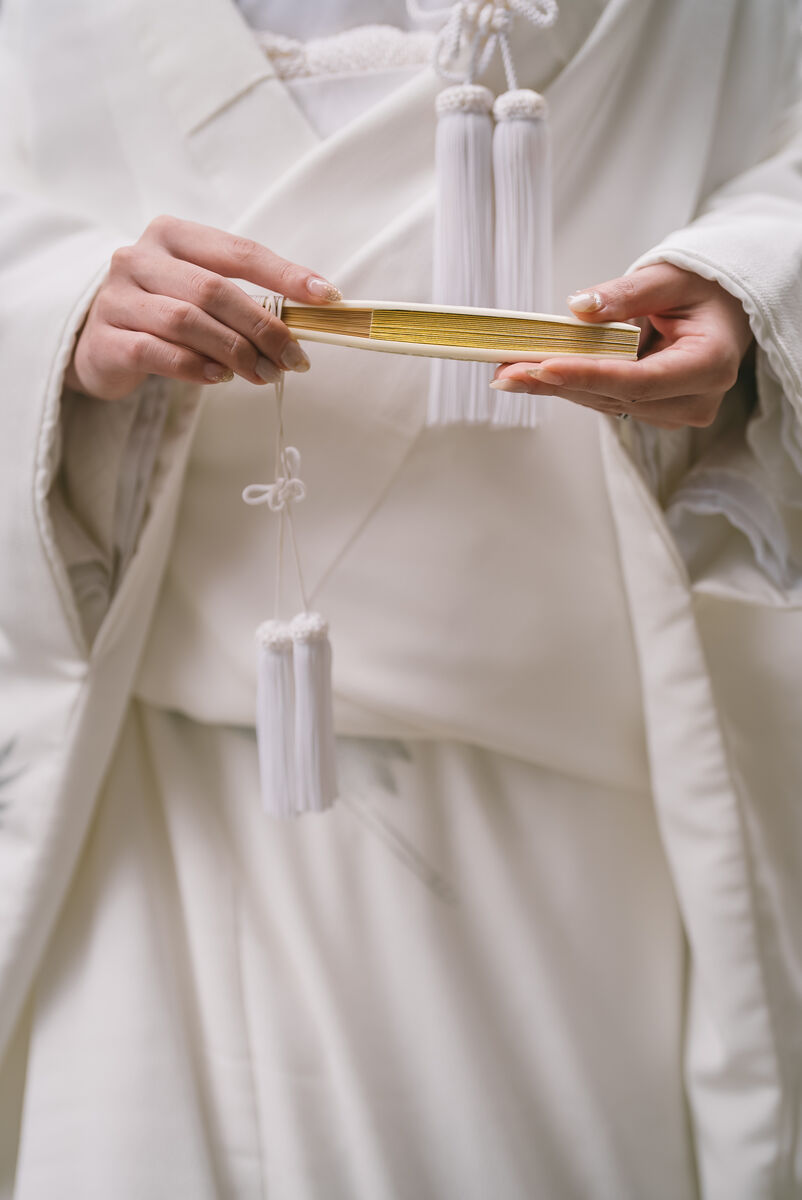
- Suehiro (末広): a folding fan whose shape “spreads toward the end”, a pun on a future that gets wider and brighter.
- Wataboshi / tsunokakushi: the white hood or headband options. The wataboshi is the big soft white hood (only worn with shiromuku); the tsunokakushi is the sleek band that is said, half as a joke, to “hide the bride’s horns.”
Rental plans also offer upgrade layers with names you’ll meet on the invoice: the embroidered han-eri (decorative under-collar that peeks out at the neckline, ¥5,000 on ours) and the date-eri (an extra color accent collar, ¥3,000). They are small details, but they show up a lot in photos.
Montsuki hakama: the groom in black
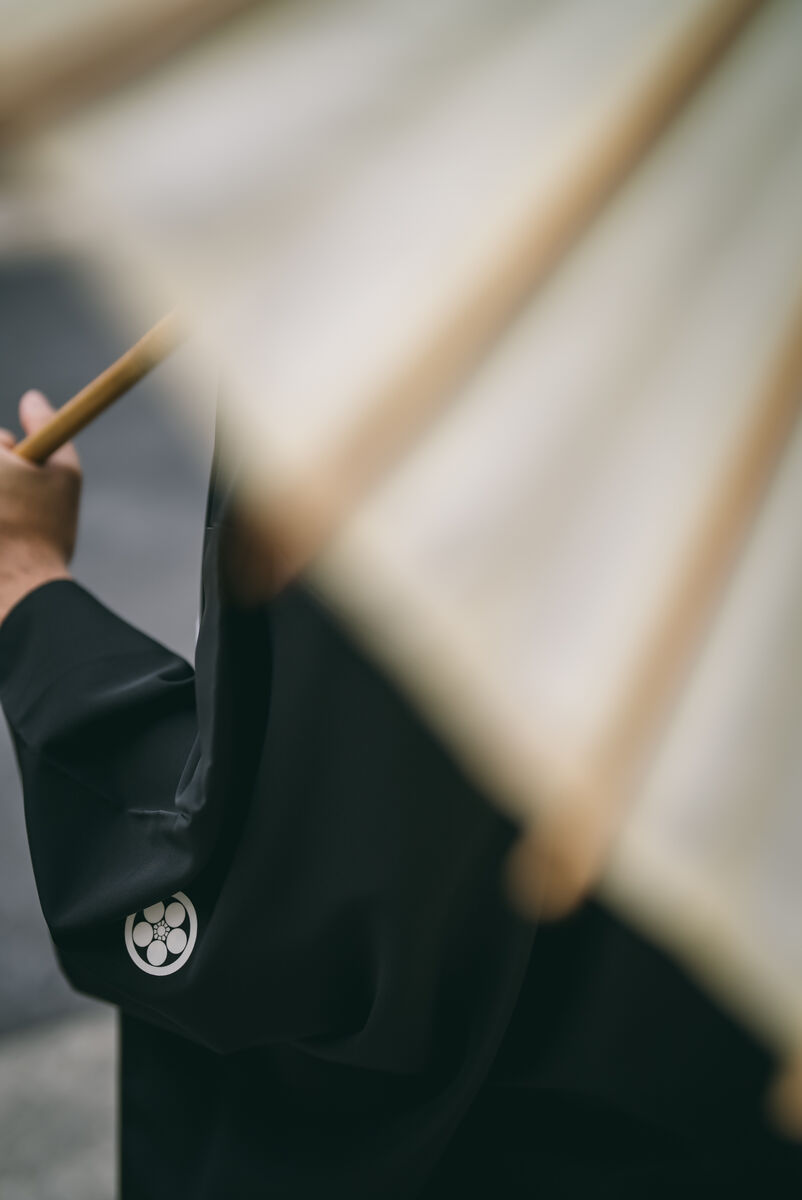
The groom’s outfit is the kuro montsuki haori hakama (黒紋付羽織袴): a black crested kimono, a haori jacket, and pleated hakama trousers in a subtle stripe. The five white family crests (back, sleeves, chest) make it the male equivalent of white-tie. (What crests are, and why we paid extra for our real one, is a longer story; see our guide to kamon, Japan’s family crests.)
The groom’s all-black next to the bride’s all-white is there for contrast, so it does not look somber. In photos the pair reads as a single composition, which someone planned centuries ago.
And the colorful one? Iro-uchikake
The vivid red-and-gold kimono you’ve seen in wedding photos is the iro-uchikake (色打掛) (the “color robe”), traditionally worn after the ceremony to show the bride taking on her new family’s colors. Many couples now rent both: shiromuku for the ceremony or first photos, iro-uchikake for the reception or a second look. (It is also the usual “one more outfit” upsell at photo studios. A second outfit usually adds several tens of thousands of yen, which is why our one-outfit plan stayed at ¥126,500.)
Quick glossary
Shiromuku = all-white bridal kimono · Iro-uchikake = colorful over-robe · Montsuki hakama = groom’s crested black formal · Kamon = family crest · Hakoseko / kaiken / suehiro = the bride’s chest accessories · Wataboshi = white hood · Han-eri / date-eri = collar upgrades on the invoice
Part of our Kimono & Japanese Weddings series. All photos are from our own shoot. The full story with the itemized bill: Our kimono pre-wedding photoshoot in Japan.