How to order food here when you cannot read any Japanese.
Budget: ¥0; this one is pure technique
Where: every restaurant, ramen shop and izakaya in Japan
Difficulty: much lower than you fear; everything is set up so you can point
1. Japan is one of the easiest countries to order food in without the language: photo menus, plastic food models and ticket machines do the talking
2. Pointing is not rude here. Pointing is the system working as designed
3. Learn one word “kore” (this) and one phrase “sumimasen” (excuse me), and you can eat anywhere
4. Use the ticket machine at the door: pay first, hand over the ticket, and the food comes
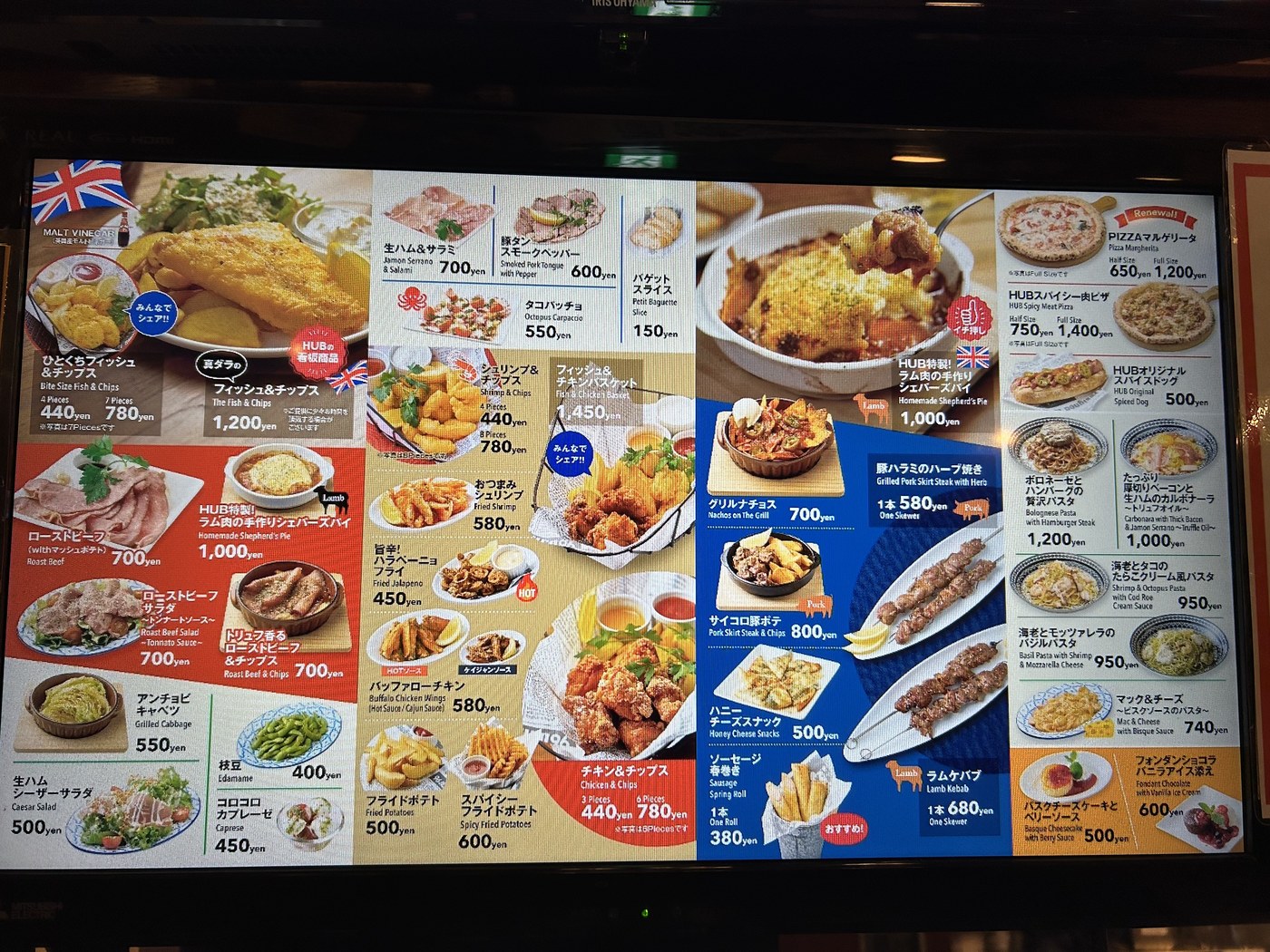
The people who eat best here use whatever is in front of them, plus whatever translation app they have. I see it all the time: someone hesitates at a counter, points at a photo on the menu, the server leans in, they both nod, and that is it. Japan had ways around the language barrier long before translation apps. So this is how ordering works, from someone who has ordered ten thousand meals here.
The four ordering systems, ranked by ease
- Touch-panel tablets: chain restaurants and kaiten sushi use tablets with an English button in the corner. Tap the flag icon, order in your own language, and the food comes. The machine even calls the staff for you.
- Ticket machines (券売機): at ramen and gyudon shops you pay a vending machine before sitting down. Pictures on the buttons, money in, ticket out, hand the ticket to the counter. The good part is that you decide before anyone is looking at you.
- Photo menus: like the wall of pictures above. Point at the photo, say “kore kudasai” (this, please), and hold up fingers for how many.
- Plastic food models (食品サンプル): the very realistic fake dishes in the front window. If nothing else works, walk the staff member to the window and point through the glass. I have seen people do it with no embarrassment at all.
 TSŪ INFORMATION
what Japanese connoisseurs know
Those plastic food models are a serious craft called shokuhin sampuru, started about a century ago and still mostly made by hand. The town of Gujo Hachiman in Gifu is known as their home, and workshops there let you make your own fake lettuce or tempura as a souvenir. A good restaurant-window model costs more than the real dish, sometimes fifty times more. The 通 detail: when a shop’s models look old and sun-faded, locals take it as a good sign. It means the menu, and the recipe, have not changed in decades.
The ticket machine, out loud
No panel, no English, no idea what to say. Tap 🔊 to hear it: or tap the Japanese to make it bigger and show your screen to whoever is behind the counter. Both work, and nobody minds.
-
Excuse me: could you show me how this works?sumimasen, tsukaikata o oshiete kudasaiThe one phrase that solves most problems. Staff will usually come over and press the buttons for you.
-
This one, pleasekore o kudasaiPoint at the button, or at a photo on your phone. That is how the system is meant to work.
-
Can I use a card?kaado wa tsukaemasu kaYes/no answer. Plenty of older ramen machines are still cash-only: ask before you join the queue.
-
Firm noodles, pleasemen wa katame de onegaishimasuAt tonkotsu shops the staff ask you this as soon as you hand over the ticket, so it helps to have an answer ready.
-
A second helping of noodles, pleasekaedama onegaishimasuSay it while there is still soup in the bowl. Leave a little broth, don’t hand anything over, just say it.
-
Thank you for the meal: said on your way outgochisousama deshitaThere is no tipping here. This is the tip.
The only Japanese you actually need
Excuse me! (すみません, sumimasen), how you summon staff; never wave silently
Two, please (2つお願いします, futatsu onegaishimasu), or just hold up fingers
Recommendation? (おすすめは? osusume wa?), the question that gets you the best thing on the menu
Check, please (お会計お願いします, okaikei onegaishimasu), or cross your index fingers in an X, the local gesture
Small rules that save you
- Many tables have a call button. Press the little bell on the edge of the table and staff come. Nobody comes until you press it; they are leaving you alone.
- Pay at the register, not the table. Take the paper slip from your table to the front counter when you leave. No tipping, ever, anywhere.
- The honest downside: some old-school ticket machines are cash-only and Japanese-only, with no photos. What I do: look up the shop’s menu photos on Google Maps while standing at the machine, and match the prices. It has always worked for me.
- Mistakes get fixed, gently. If the wrong dish comes, a calm “sumimasen” and a point at the menu fixes it. Nobody gets scolded.
FAQ
Is pointing at food actually acceptable?
Completely. The photo menu exists so that people can point at it, and Japanese customers point too. What looks rude is snapping your fingers or waving staff over without a word; saying “sumimasen” is the polite way.
What about allergies?
Write your allergy in Japanese on your phone before the trip (or ask us in the comments and I will write it for you). Show the screen; kitchens here take it seriously.
Do I need to speak any Japanese at a fancy restaurant?
High-end places increasingly have English menus or set courses where you don’t need to decide anything. With omakase, the chef chooses for you.
• Photo menus, tablets, ticket machines: you can order in Japan without words
• “Kore kudasai” + pointing = a full vocabulary
• Summon staff with “sumimasen” or the table button; silence is normal until then
• Pay at the register · no tipping, ever
• Ticket machine stuck? Match Google Maps menu photos to the prices
• From two locals who order everything · nobody paid us anything
More from us: practice the pointing arts at a kaiten sushi restaurant, or start with the whole plan in our Perfect Japan Guide.
More from us: for a Nagoya lunch worth pointing at, our Solo Pizza guide.
Read next
A worked example with photographs of every screen: ordering tonkotsu ramen without speaking.