The “hamburger” with no bun, and why every Japanese person has a strong opinion about it.
Budget: teishoku sets mostly ¥1,000–2,000
Where: dedicated hambāgu restaurants, yōshoku diners, family restaurants: everywhere
The catch: the plate spits fat while you eat, so wear the paper bib like the locals do. Ordering is easy, because most shops have photo ticket machines
1. Hambāgu is a juicy steak of seasoned ground meat with no bun, served with rice and miso soup, so it is not a hamburger
2. It is one of Japan’s favorite comfort foods: kids ask for it on birthdays, and adults still want it
3. The current wave: shops serving it rare on a hot stone plate, so you finish the cooking yourself
4. Order it as a teishoku set and watch the rice disappear
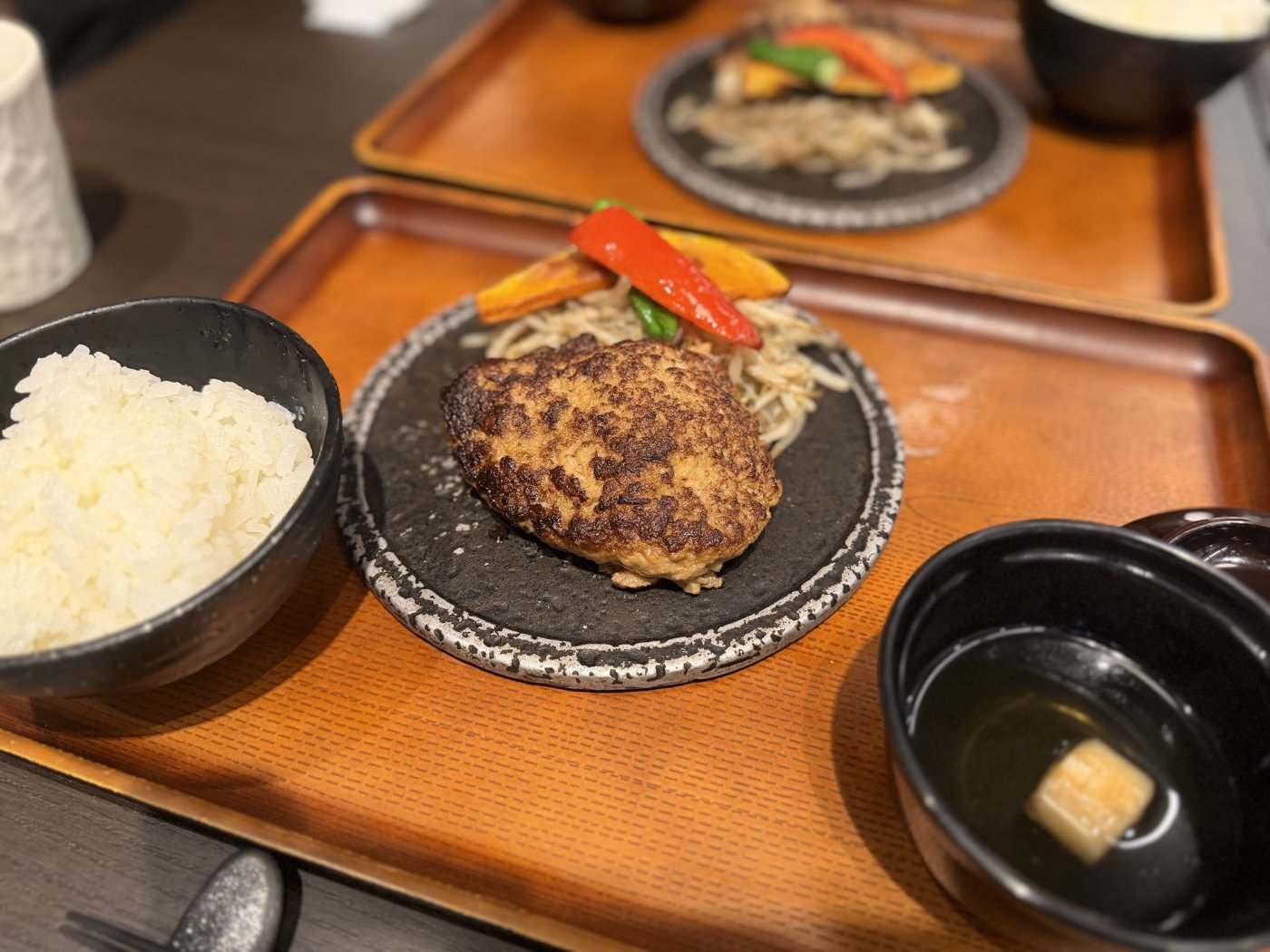
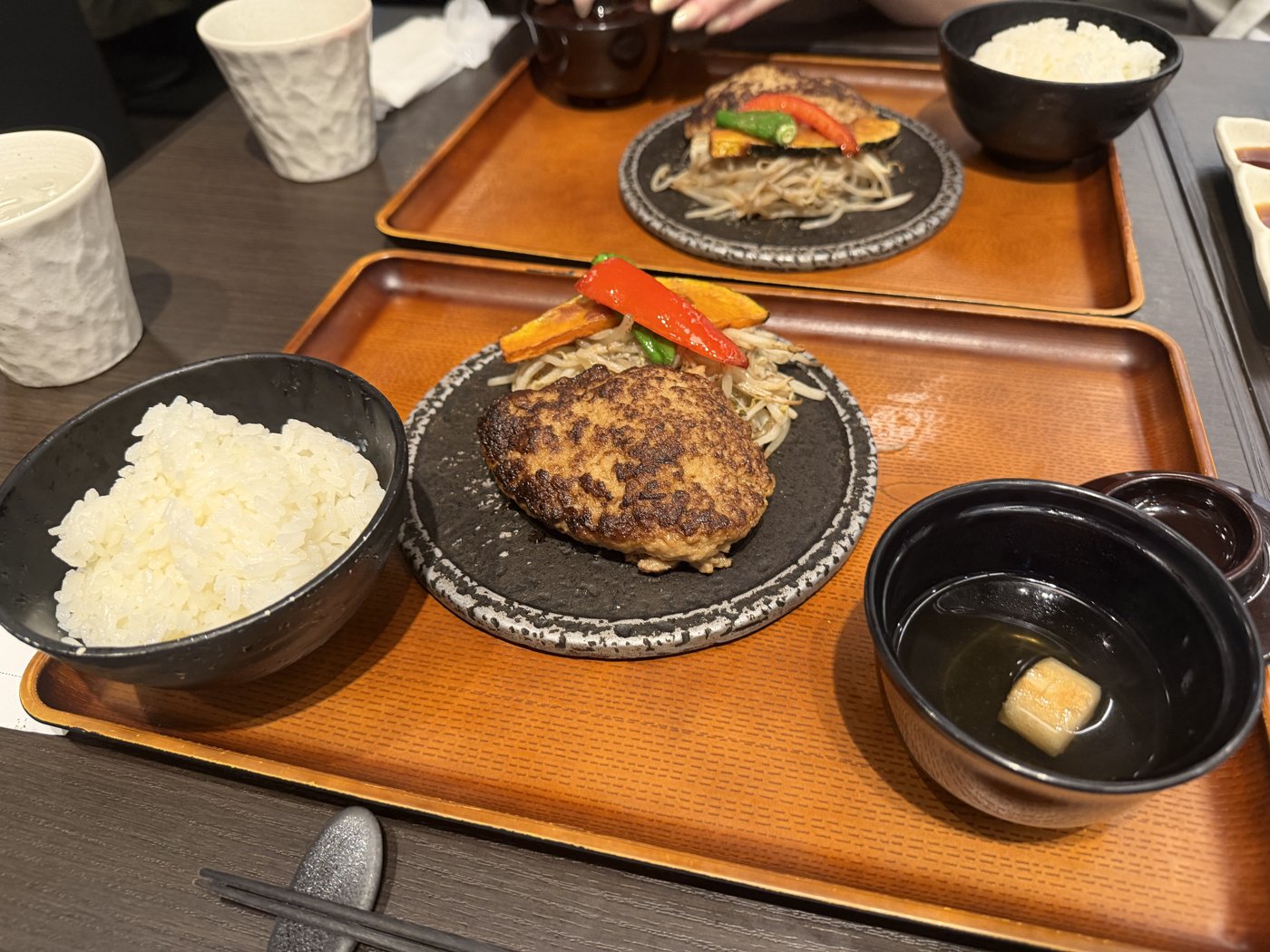
Ask a Japanese office worker what they really want for lunch, and hambāgu wins more often than sushi. It came from the West more than a century ago, and Japanese cooks changed it: softer and juicier, seasoned all the way through, with no bun, and served with rice and miso soup. My husband and I recently queued for the modern version, served rare on a very hot stone plate, and it reminded me why people here never stopped eating it.
How to eat the stone-plate version
- It arrives underdone on purpose. The stone plate is hot enough to keep cooking; slice a piece off and press it to the stone until it is done your way.
- Season in rounds. Shops line up sauces and condiments. Try the meat plain first, then experiment.
- Rice is not a side. Eat meat, rice, soup, and repeat. Many shops offer free rice refills (おかわり okawari), and nobody thinks it is greedy to ask.
- Mind your clothes. The plate spits fat, so wear the paper bib. Locals wear it without embarrassment.
 TSŪ INFORMATION
what Japanese connoisseurs know
Hambāgu belongs to 洋食 yōshoku (“Western food”), a genre Japan created in the Meiji era by taking European dishes and changing them to go with rice. Omurice, curry rice, korokke and napolitan spaghetti are all yōshoku. They came from abroad, but they are now so Japanese that visitors from their “home” countries do not recognize them. The 通 view: hambāgu is Japan’s version of Western food, from a 150-year-old habit of remaking foreign dishes, served as a lunch set.
Show this to the staff
Rice refill, please (ご飯のおかわりをお願いします)
What sauce do you recommend? (おすすめのソースはどれですか?)
A little more well-done, please (もう少し焼いてください)
FAQ
Is it safe to eat it rare?
The stone-plate style is designed for you to finish the cooking: press each slice to the stone until you are happy. Anywhere serving it this way grinds fresh for exactly that purpose, and “a little more cooked, please” is a completely normal request.
Hambāgu vs hamburger: really that different?
Yes. There is no bun, the grind is softer and often mixed with onion and panko, and you eat it with rice and chopsticks. It is closer to meatloaf than to a fast-food burger.
Where should I try it?
Look for a queue of locals outside a small shop at 11:45am. Family restaurants (Gusto, Bikkuri Donkey) are the easy option; dedicated hambāgu shops are worth traveling for.
• Hambāgu = bunless Japanese hamburger steak · a favorite comfort food
• Teishoku sets ¥1,000–2,000 · rice refills often free (okawari)
• Stone-plate style: it keeps cooking, so finish each slice yourself
• 通 frame: it is 洋食 yōshoku, Japan’s 150-year-old remix of Western food
• Follow the local queue at 11:45 · from our own lunch · nobody paid us anything
More from us: for the raw-fish end of the comfort spectrum, our kaiten sushi guide. Planning the whole trip? Start with our Perfect Japan Guide.
More from us: for the other Western dish Japan quietly perfected, our world-champion pizza for ¥980 in Nagoya.