On Japan’s love of coffee, and the white counter in Tokyo where making it looks like a show.
Budget: specialty lattes mostly ¥600–800
Where: % Arabica Tokyo, Azabudai Hills, plus kissaten and konbini everywhere
The catch: zero: point, pay, sip
1. Japan runs on coffee, from ¥120 konbini cups to century-old kissaten cafes to world-famous roasters
2. % Arabica (the roaster with the famous “%” logo) was born in Kyoto and now has an all-white showpiece cafe at Azabudai Hills in Tokyo
3. The round counter is half cafe, half stage: baristas in the middle, beans in the ceiling
4. Same complex as chocolate maker Minimal, so you can do both in one sweet afternoon
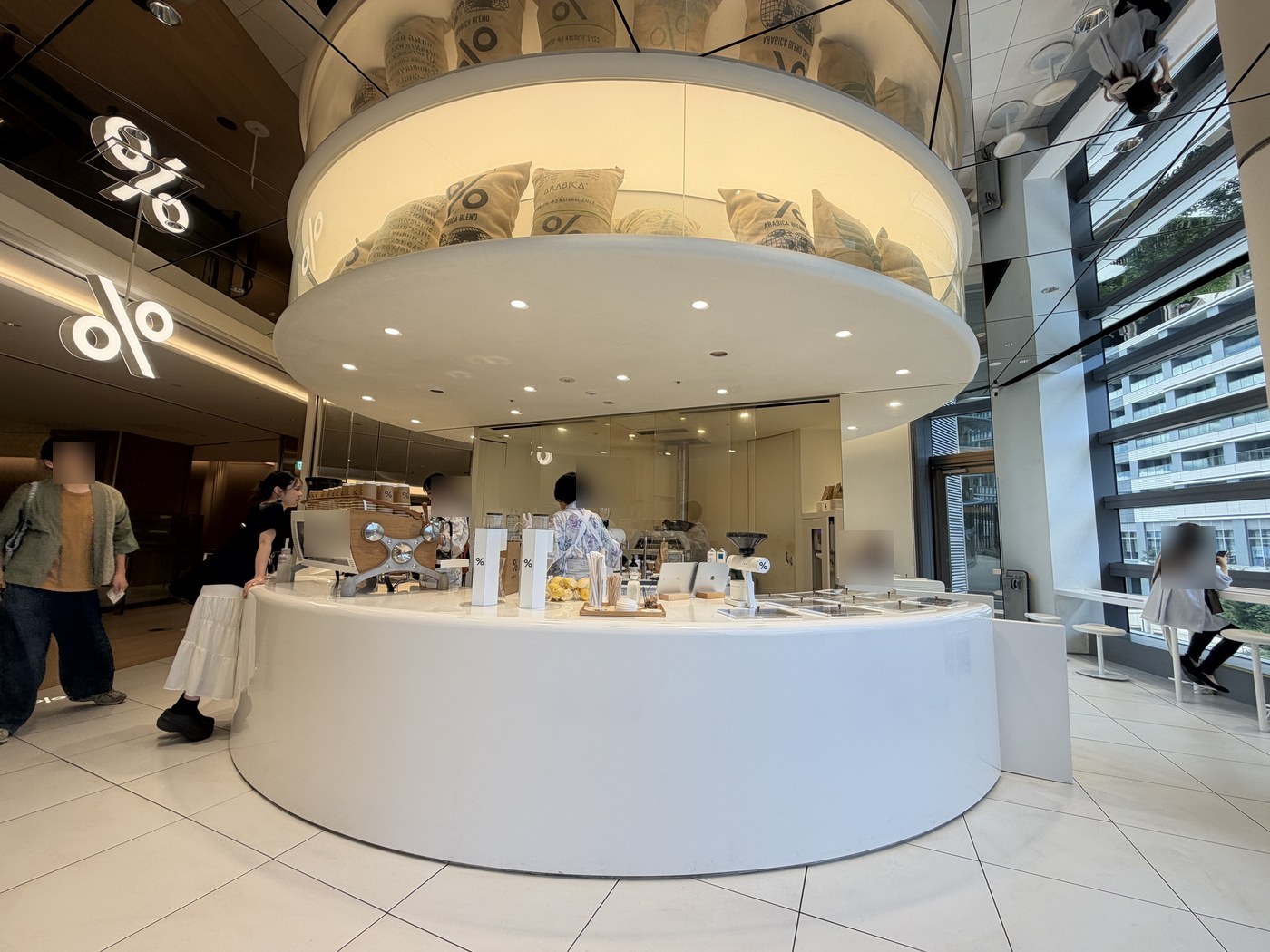
We found % Arabica the way you find most things at Azabudai Hills: a little lost, following the smell. The Tokyo flagship of the Kyoto-born roaster is a white circle under a drum of coffee-bean sacks, with a mirrored ceiling that reflects all the lattes. My husband, who drinks coffee just as a drink, was impressed after one sip; I, who treat it as a hobby, stood watching the baristas work the round counter like a small stage. It is the most designed cup of coffee in Tokyo, in the most designed neighborhood in Tokyo, and I think it deserves the attention.
Japan’s coffee, in three layers
- The everyday layer: konbini counter coffee (¥120–250 ) is really good: freshly ground, machine-brewed, what most people here drink every day. Canned coffee from vending machines is the old-style version, hot in winter at the push of a button.
- The heritage layer: kissaten. Old-school coffee houses with dark wood, jazz, siphon brewers, and masters in waistcoats who have poured the same blend for forty years. Order the blend and the pudding.
- The specialty layer: roasters like % Arabica, born in Kyoto’s Higashiyama and now known worldwide, care a lot about single origins and latte art. This is where Japanese craftsmanship met third-wave coffee.
 TSŪ INFORMATION
what Japanese connoisseurs know
Japan drinks a lot of coffee, and its influence goes further than most people know: the pour-over gear on specialty counters around the world (the cone drippers and precision kettles from brands like Hario and Kalita) is Japanese, and the slow, careful hand-drip style now called “third wave” owes a lot to the kissaten masters who were doing it decades before the term existed. The 通 order at a kissaten is the house blend, hand-dripped, with a slice of thick-cut toast or a caramel-topped purin. That is Japanese coffee culture in its original form.
Quick facts: % Arabica Tokyo (Azabudai Hills)
Order: caffe latte (the signature), mostly ¥600–800
Pair with: Minimal’s chocolate around the corner: our guide
Know before: seating is scarce; this is a stand-and-stroll coffee
FAQ
What does the % logo actually mean?
Look at it sideways: a coffee branch with two cherries and a leaf. Once you see it, you start noticing the logo from Kyoto to Dubai.
Is Azabudai Hills worth visiting for non-coffee reasons?
Yes. It is Tokyo’s newest big development: gardens, galleries, teamLab, food halls, and a lot of architecture to photograph. From our visit: the complex is a maze and shops are hard to find, so leave time to wander and expect to get lost.
I don’t drink coffee. Do I skip all this?
No: kissaten serve serious tea and famous melon-soda floats, konbini have hot tea and cocoa, and % Arabica has a matcha latte for you.
• Japan’s coffee runs three layers: konbini ¥120 · retro kissaten · world-class roasters
• % Arabica Tokyo at Azabudai Hills: white circular counter, mirror ceiling, Kyoto-born roaster
• The % logo is a coffee branch: two cherries, one leaf
• Kissaten order: house blend + purin · Arabica order: the latte
• Seats are scarce at Azabudai, so plan to stroll · from our own caffeinated wandering · nobody paid us anything
More from us: the chocolate half of this afternoon is our Minimal bean-to-bar guide; the matcha half of Japanese caffeine is our matcha guide. Planning the whole trip? Start with the Perfect Japan Guide.
Read next
Coffee culture at the other end of the country from a Kyoto espresso bar: what a coffee gets you in Nagoya before 11:00.