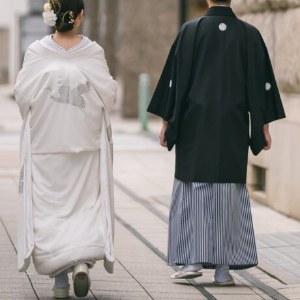
Nagoya, born and raised, walking Ginza with a 150-year-old sweet bun in one hand and my husband in the other.
Budget: buns are a few hundred yen each; trying several stays under ¥1,500
Where: Ginza Kimuraya, right by the Ginza 4-chome crossing, Tokyo
What trips people up: zero. Point at the tray, pay, walk, eat
1. Anpan (a soft bun filled with sweet red-bean paste) was invented in 1874 by Kimuraya, and the original shop still bakes on Ginza’s main street
2. This is the bun that got Japan to like bread: Western bread with a Japanese filling, about the size of a fist
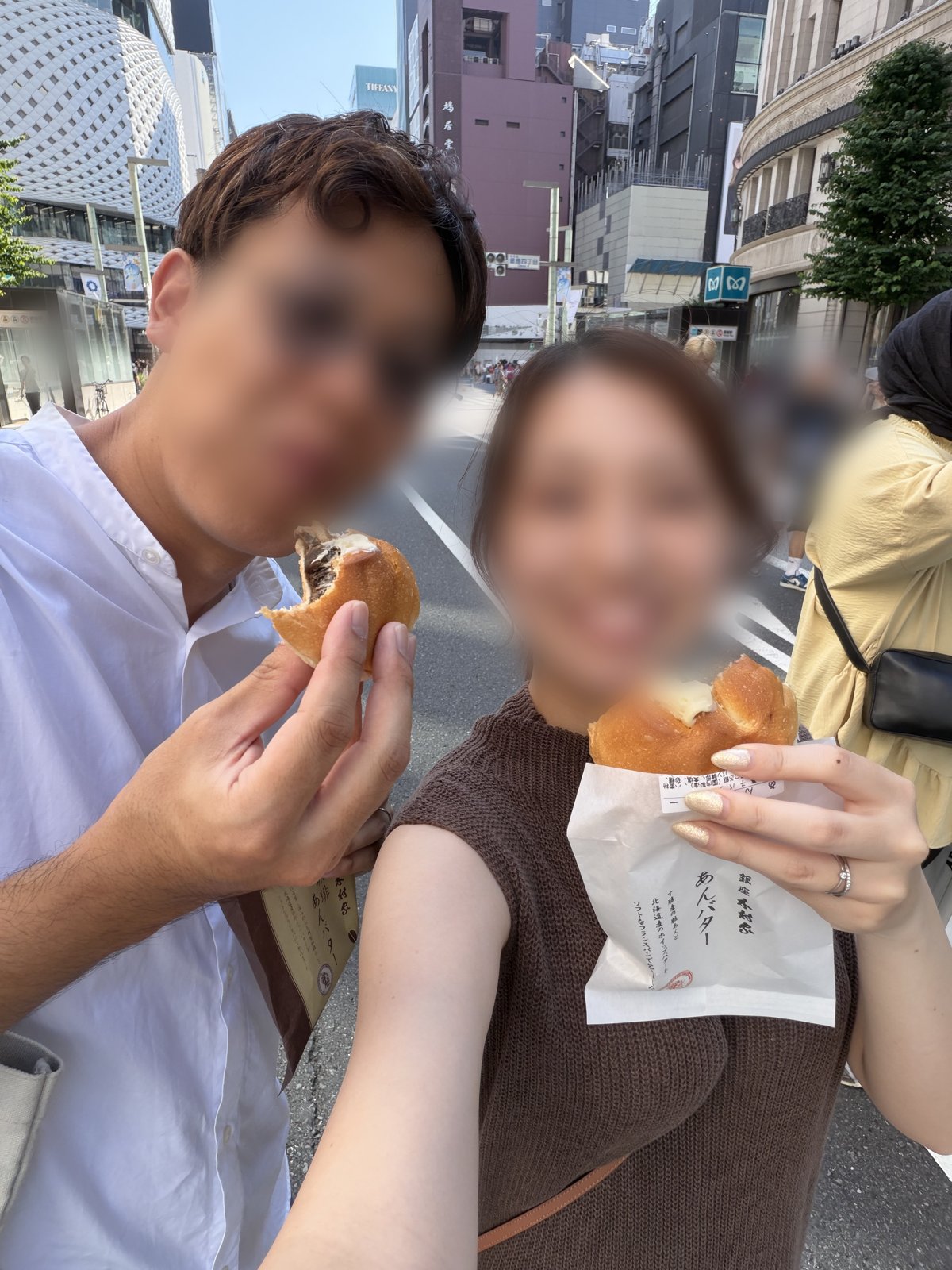
3. On weekend afternoons Ginza’s main avenue becomes a pedestrian paradise and the whole street is your dining room
4. Order the classic sakura anpan, or do what we did and get the an-butter
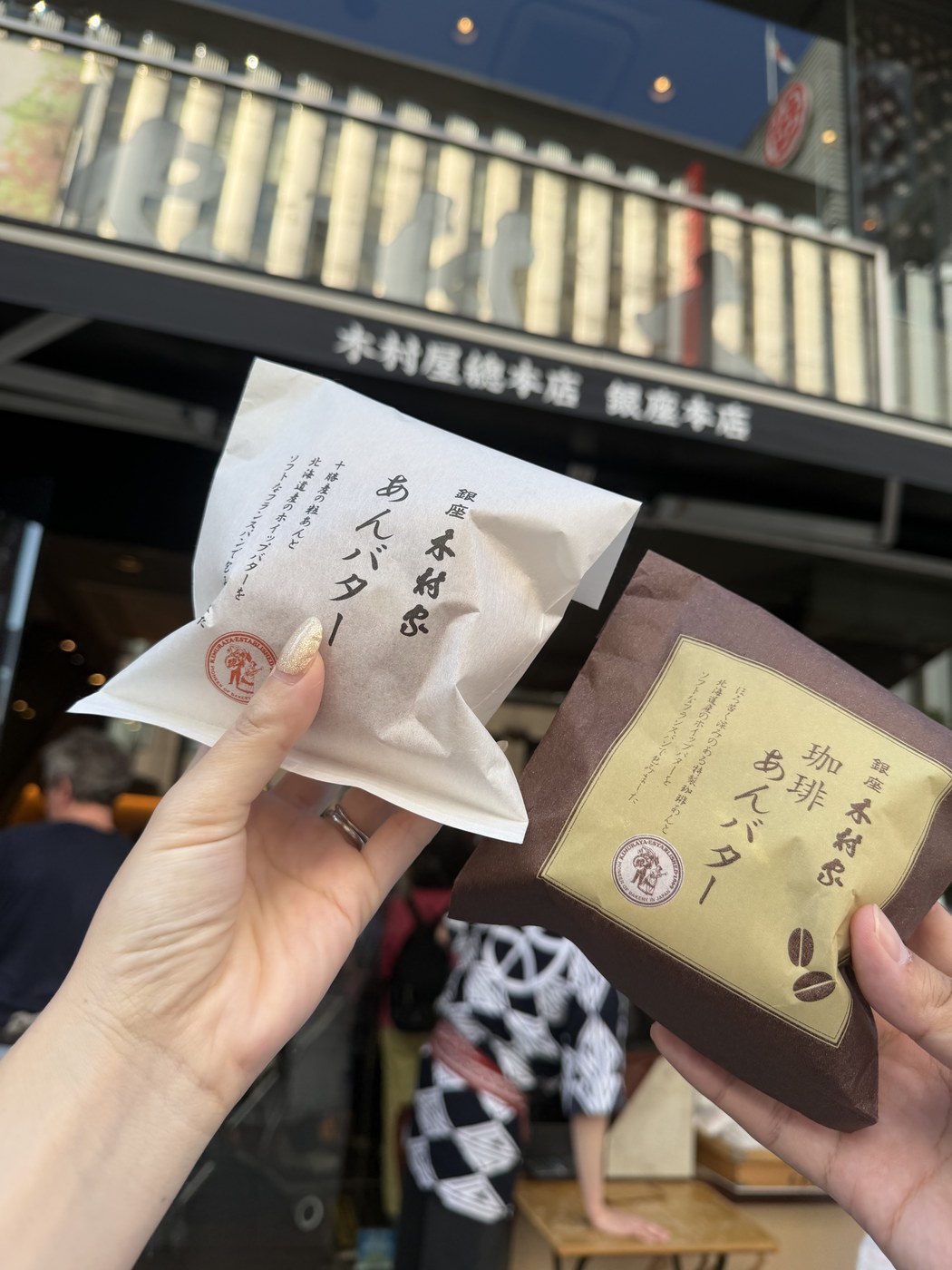
Ginza is Japan’s most expensive shopping street, and the best thing you can buy there costs about as much as a bus ticket. On weekends the main avenue closes to traffic and people walk in the road. My husband and I joined the line into Kimuraya, the bakery that has been by the Ginza 4-chome crossing since the end of the samurai era. We came out with an-butter buns (chunky Tokachi red-bean paste and a cold slice of Hokkaido whipped butter inside a soft roll) and ate them standing in the middle of the street, which is fine on hokosha-tengoku days.
Why this bun matters
Bread came to Japan with foreigners, and for years people here mostly ignored it. It was dry and hard, and made with a yeast nobody here had. Kimuraya’s founder, a former samurai retainer who became a baker, fixed this in 1874 with a Japanese ingredient: he raised the dough on sakadane, a fermentation starter from sake brewing, and filled the soft bread with anko, the sweet red-bean paste used in traditional sweets. With a familiar filling and a light sake smell, people here finally took to bread, and anpan became one of the first foods in Japan to mix East and West.
 TSŪ INFORMATION
what Japanese connoisseurs know
The bun also has imperial approval. In April 1875, Kimuraya presented a special anpan to Emperor Meiji (topped with a salt-pickled cherry blossom, as a taste of spring), and the court liked it enough to order it regularly. That sakura anpan is still on the trays today, with a small dent in the top holding the pickled blossom, and April 4, the anniversary of the tasting, is Anpan Day. The 通 order: one sakura anpan for the history and one modern flavor for lunch. Notice the faint sake smell of the sakadane dough; it is the same method from 1874, still fermenting upstairs.
Making an afternoon of it
- Time it for the pedestrian paradise: on Saturday, Sunday and holiday afternoons, Chuo-dori closes to cars and fills with strollers, parasols and chairs. The whole street is slower and quieter then.
- Pair it with stationery heaven: Itoya, our favorite twelve floors in Tokyo, is a few minutes’ walk. our full guide is here.
- The honest downside: there are queues at Kimuraya on weekends (we waited maybe ten minutes) and popular flavors sell out by late afternoon. Go before 3pm for the full tray selection.
Quick facts: Ginza Kimuraya
Buns: a few hundred yen each; cash and cards both fine
Order: sakura anpan (the 1875 original) · an-butter (our favorite)
Best time: weekend early afternoon, when the street is car-free
FAQ
What does anpan taste like?
A soft, slightly sweet roll around a dense, jammy heart of red bean, closer to a filled brioche than to cake. Many first-timers say the bean paste is a bit like chocolate: earthy and sweet, not sugary.
Is this the anpan from the superhero?
Yes. Anpanman, Japan’s favorite children’s character, has this bun for a head, and every Japanese person you meet grew up with him, so eat it with respect.
Anything for non-sweet-tooths?
The shop bakes savory items too, and Ginza’s depachika food halls, a few minutes away, have everything else. I would still try one bun.
• Anpan = red-bean bun, invented 1874 at Kimuraya; the shop is still on Ginza’s main street
• Sake-yeast dough + anko filling = the bread that got Japan eating bread
• Sakura anpan carries the 1875 imperial story · an-butter is the modern star
• Go weekend afternoons: the avenue is car-free · before 3pm for full trays
• From our own street-corner lunch · nobody paid us anything
More from us: five minutes away is our favorite stationery store: our Itoya guide. Planning the whole trip? Start with the Perfect Japan Guide.