Updated July 2026. The sweet every Japanese kid grows up with, and what to know before your first one.
Budget: roughly ¥250–450 per piece
Where: classic wagashi shops all over Tokyo. The famous three are in Ueno, Asakusa and Higashi-Jujo
Difficulty: zero, but one word choice (below) makes you sound like a local
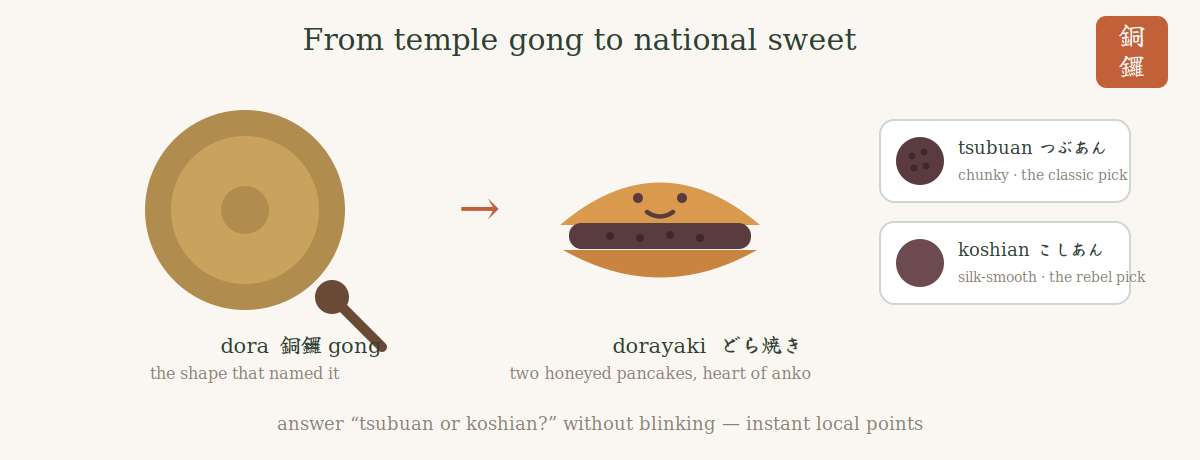
1. Dorayaki = sweet red-bean paste (anko) between two honeyed, castella-like pancakes, named after the dora, a bronze gong
2. It is the favorite food of Doraemon, which is why Japanese staff tend to smile when you order one
3. Tokyo has a famous “big three”: Usagiya (Ueno), Kameju (Asakusa), Sogetsu (Higashi-Jujo)
4. Buy in the morning, eat the same day. Anko sweets are best fresh
5. Learn two words, tsubuan (chunky) and koshian (smooth), and you can order like you grew up here
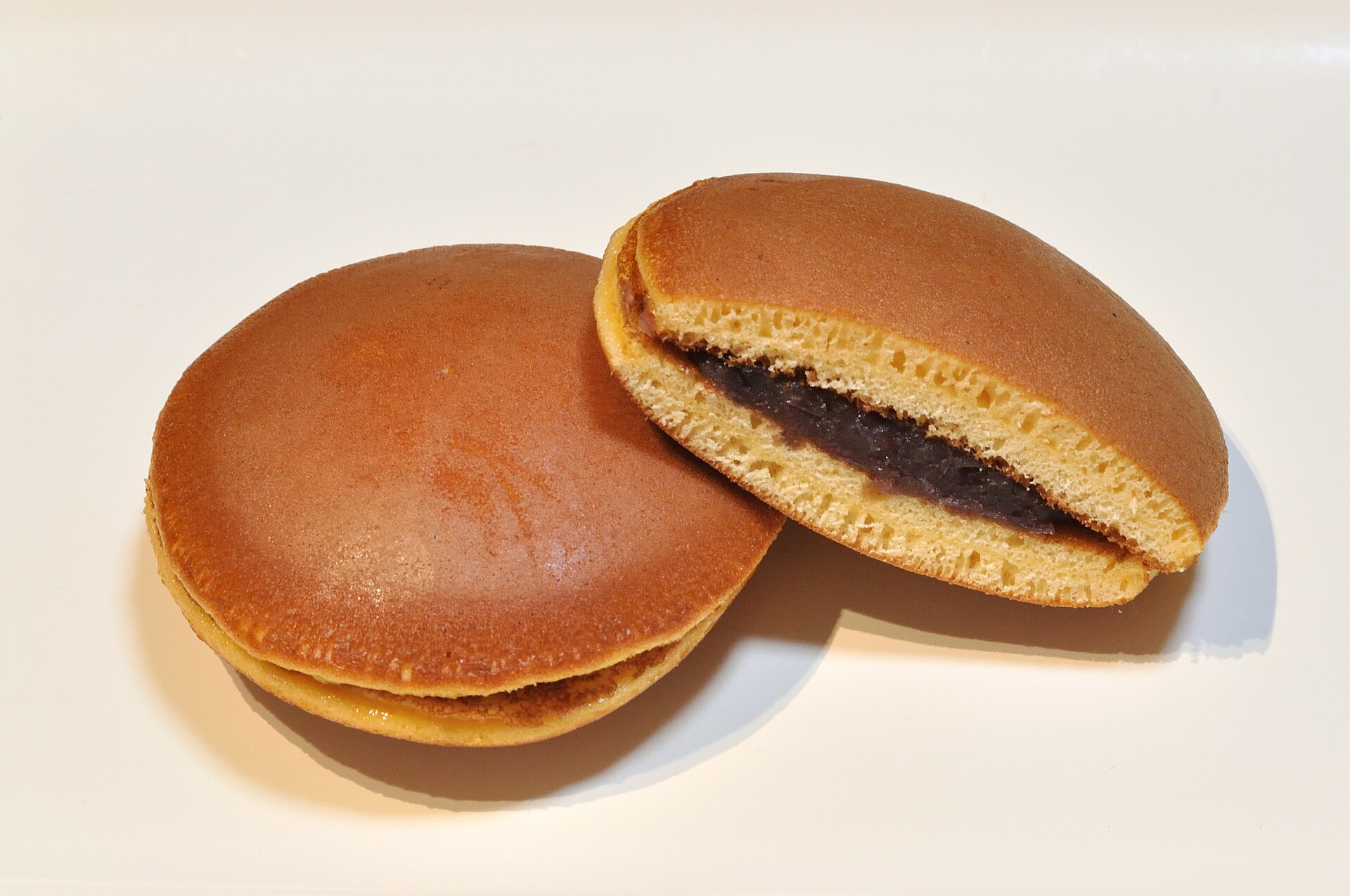
Most people have seen dorayaki in anime before they ever smell one fresh off a copper griddle. Two soft pancakes that smell of honey, a thick filling of sweet red-bean paste, and a shape like a small bronze gong. It is Japan’s most popular everyday wagashi, sold in convenience stores and in hundred-year-old shops. On my Tokyo sweets crawl I ran into its modern matcha version; this guide covers the classic: where it came from, where to eat it, and the two words you need to order it.
The gong, the monk, and the robot cat
The name is the shape: dora (銅鑼) means gong, and a dorayaki does look like one. The legend says the warrior monk Benkei, nursed back to health at a farmhouse, left his gong behind, and the farmer started griddling sweet pancakes on it. The real history is less clear: Edo-period versions looked more like a folded crepe, and the fluffy two-pancake form you know today is credited to Usagiya in Ueno, founded in 1913, so the “classic” dorayaki is only about a century old, younger than most people think.
And then there is Doraemon. The robot cat loves dorayaki, and that put this sweet into every Japanese childhood and plenty abroad. When a visitor orders one, the shop staff usually smile.
Tokyo’s big three, and why each one is worth the trip
Usagiya: Ueno, the origin story
- The shop credited with the modern dorayaki itself. Warm, loose pancakes that smell of honey; the anko is on the lighter, silkier side. Best in the first hour, so eat it soon after buying.
- Pairs well with a stroll through Ueno Park or Ameyoko market · open in Google Maps
Kameju: Asakusa, the giant
- Right by Kaminarimon; you will see the queue. Kameju’s dorayaki is oversized, with thick, pale gold pancakes closer to a soufflé. The best one in Tokyo to give as a gift, as long as it lasts until you get back to your hotel.
- Sells out; go before noon for a sure thing · open in Google Maps
Sogetsu: Higashi-Jujo, the connoisseur’s stop
- Their signature “Kuromatsu” (black pine) has a darker honey-and-brown-sugar skin with a mottled pattern. Higashi-Jujo is away from the tourist areas, which is why the 通 crowd likes it · open in Google Maps
 TSŪ INFORMATION
what Japanese connoisseurs know
What marks you out as a regular is the anko question. つぶあん tsubuan is chunky paste with whole beans left proud; こしあん koshian is strained until smooth. Every Japanese person has a preference for life, families are split on it, and a shopkeeper who asks “tsubuan or koshian?” will be pleased if you answer straight away. Dorayaki is traditionally a tsubuan sweet, because the bean texture against the soft pancake is what makes it, but ordering koshian where it is offered is fine too. Decide before you travel; people like to argue about this one.
Our crawl’s cameo: the matcha dorayaki
Proof the classic is still changing: on my July sweets crawl, THE MATCHA TOKYO’s stand menu had a matcha dorayaki for ¥450 (the century-old gong shape, filled with the decade’s favorite flavor). My matcha stand guide has that side of the story.
How to buy dorayaki at a classic shop
- Go in the morning. The famous shops bake fresh daily and the best ones sell out; anko sweets are a same-day pleasure.
- Order by number. Two fingers, “futatsu,” done. Nobody expects speeches.
- Say yes to the box if it is a gift. Wagashi shops wrap beautifully by default. This is 手土産 temiyage (gift-bringing) culture.
- Eat one warm if the shop offers it. A just-griddled dorayaki is very different from a boxed one: softer, more honey, the anko barely set.
Show this to the staff
Chunky bean paste, please (つぶあんでお願いします)
Is it freshly made today? (今日作りたてですか?)
Please make it a gift box (手土産用に箱に入れてください)
 IKI STYLE
the Japanese idea of cool
Dorayaki goes best with hot green tea, slightly bitter, no sugar. The anko gives you all the sweetness you need, and the bitter tea clears your palate between bites so the third mouthful tastes like the first. Buy your dorayaki, find a park bench or your ryokan’s tea set, brew the free green tea every Japanese lodging provides, and eat them together. There is no queue and nothing extra to pay, and this is how Japanese people usually eat them.
FAQ
How long does dorayaki keep?
Same day is ideal, next morning is acceptable, after that it is past its best. Do not refrigerate it; the cold makes the pancake hard.
Is it vegan?
Usually not. The pancakes almost always contain egg and honey. The anko itself is typically just beans and sugar.
Convenience-store dorayaki: worth it?
As a cheap ¥150-ish first try, yes. Just know that a konbini dorayaki and an Usagiya one are quite different things, even with the same name.
Tsubuan or koshian: which should I pick first?
Tsubuan for dorayaki; it is the traditional match. Try koshian later in a different sweet, then decide which side you are on.
• Dorayaki = anko between two honeyed pancakes · named for the gong it resembles · Doraemon’s favorite
• Big three: Usagiya (Ueno, the original) · Kameju (Asakusa, the giant) · Sogetsu (Higashi-Jujo, the pilgrimage)
• Morning purchase, same-day eating, never refrigerate
• Say tsubuan (chunky) and the staff will know you have done your homework
• 粋 pairing: unsweetened hot green tea, park bench, no queue
• Prices roughly ¥250–450 · from our July 2026 notes · nobody paid us anything
More from this trip: dorayaki’s modern cousin appears in our Tokyo Sweets Crawl covers one day of eating, from matcha stands to an emperor’s anpan. Planning the whole trip? Start with our Perfect Japan Guide.
More from us: dorayaki’s Meiji-era rival is the Kimuraya anpan (same era, same idea, different bread). Have it with our coffee culture guide.