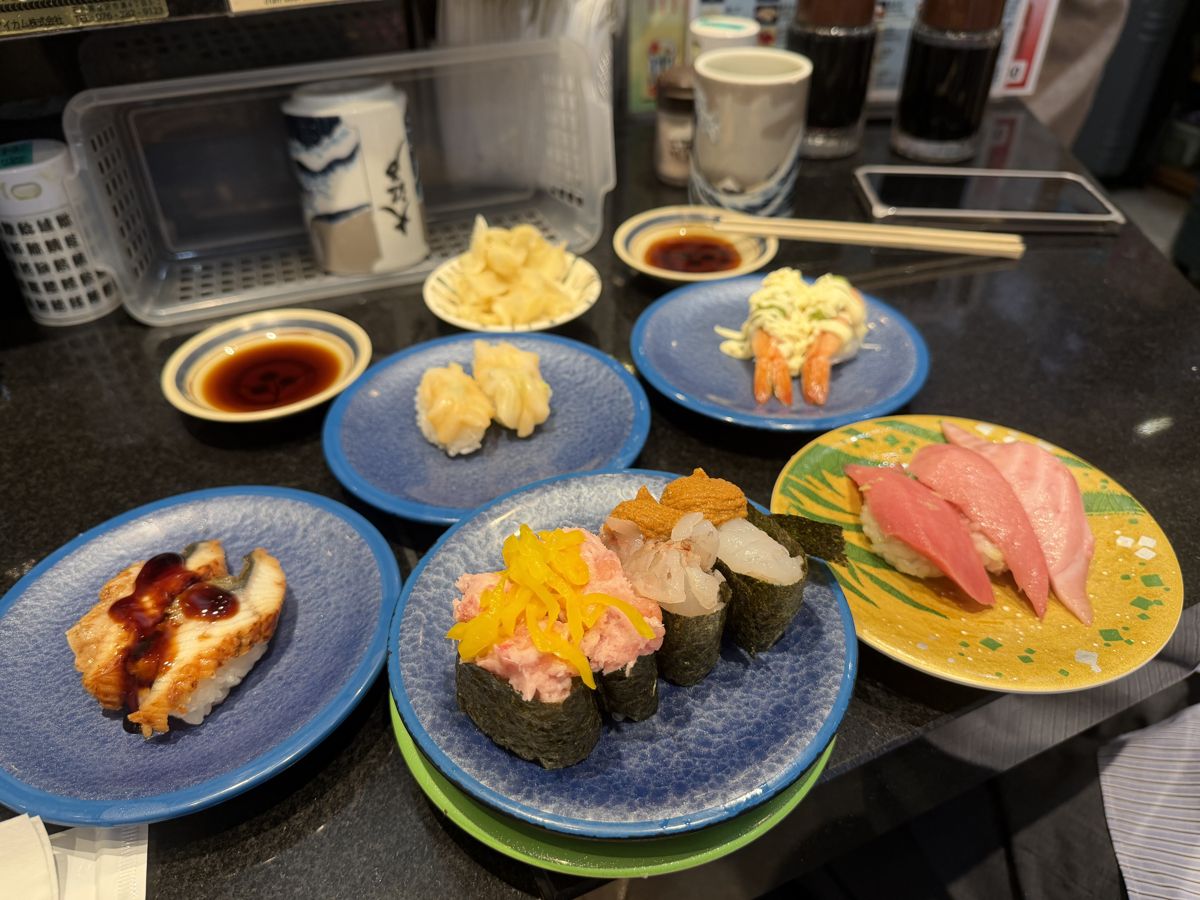
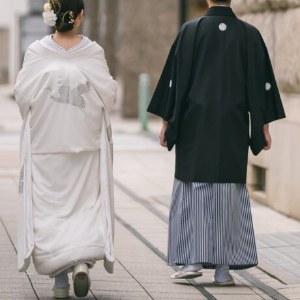
Updated July 2026. Photos are from my latest belt-side lunch at Oedo in Tokyo.
Cost: ¥1,500–2,500 per person, easily less
Difficulty: the easiest type of restaurant in Japan for a beginner
Japanese needed: zero. The machine does everything
1. Get a number at the entrance machine → sit → order from the touch panel (English available)
2. Take the whole plate; never put one back on the belt
3. Tea (agari) and ginger (gari) are free at your seat; pay at the machine on the way out
That is honestly all. Sushi here is casual (eat what you like, in any order, at your own pace).
 IKI STYLE
the Japanese idea of cool
• Stack finished plates by color, which makes the staff’s count easier
• Try the tuna three-way set early, save the seasonal special for the finale
• Chef right in front of you? Order out loud: “(neta) 一皿 hitosara, onegaishimasu”
If eating out in Japan makes you nervous, start here. At kaiten sushi (conveyor-belt sushi) nobody has to talk to anybody and everything has a price tag. It is also one of the best food deals in the country, plate for plate: plates start around ¥130 .
How it works, start to finish
- Get a seat. At the entrance there is usually a ticket machine or tablet: choose counter or table, take your number. Big chains have English buttons.
- Set up your station. Everything is at your seat: green-tea powder and a hot-water tap (tea is free and unlimited, and at a sushi bar, tea has its own name: agari), soy sauce, pickled ginger (gari is the name for those thin slices of sweet-vinegared ginger, usually pale pink. It is a palate cleanser to reset your mouth between different fish, not a topping), chopsticks, wet wipe.
- Take from the belt, or order from the screen. You can take anything on the belt, but lift the whole plate. At modern chains, though, the easier way is the touch panel (English available): tap what you want and it comes to your seat on an express lane, made fresh.
- Stack your plates. Empty plates stay at your seat (or drop into the plate slot at some chains). Plates are color-coded by price, and at the end a staff member counts the stack. That is your bill. One optional thing Japanese regulars do: stacking same-colored plates together makes the count easier for staff, and shows you know how a sushi bar works. Nobody expects it from visitors, so staff notice.
- Check out. Tap the checkout button on the panel or catch a staff member. They count plates, and you pay at the machine by the door. Cards and IC cards work at all major chains.
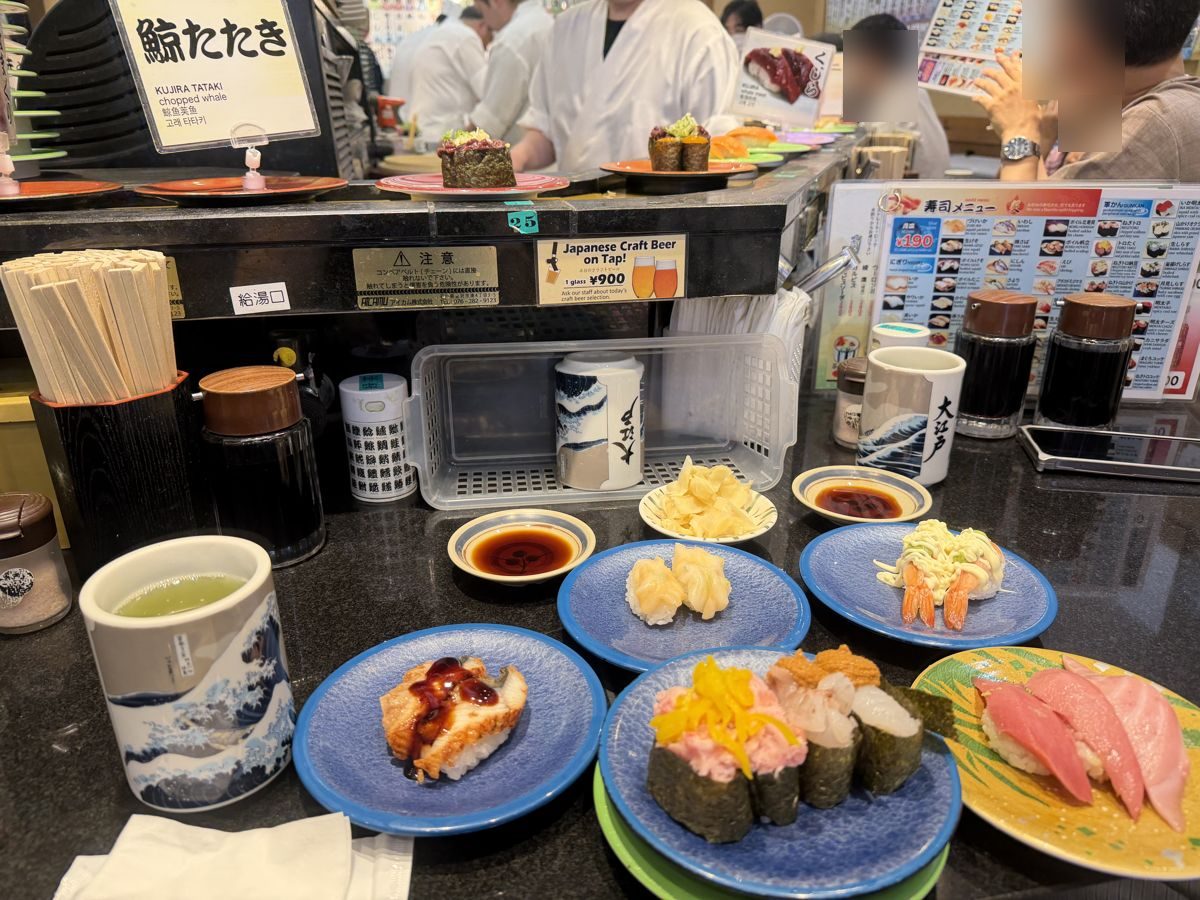
 TSŪ INFORMATION
what Japanese connoisseurs know
The insider move: order out loud. At shops where chefs work the counter in front of you (like Oedo above), you can skip the panel and just say it: “Maguro, hitosara onegaishimasu” (◯◯を一皿 ◯◯ o hitosara: one plate of ◯◯, please). They make your piece right then and hand it over, with the rice still at body temperature, so it loosens and melts in your mouth. A plate from the belt is not the same. Japanese regulars do this all the time; tourists almost never do.
What to order first
Safe and glorious: maguro (lean tuna), salmon, ebi (cooked shrimp), tamago (sweet egg, which sushi fans use to judge a shop). One step up: aburi (blowtorch-seared, start with seared salmon), negitoro gunkan (minced fatty tuna), hamachi (yellowtail). One rank up: chūtoro, ōtoro, uni (sea urchin) and unagi (eel, a luxury here, traditionally eaten for summer stamina; see the tuna note below), plus the seasonal special on the poster, which is usually the best value in the shop.
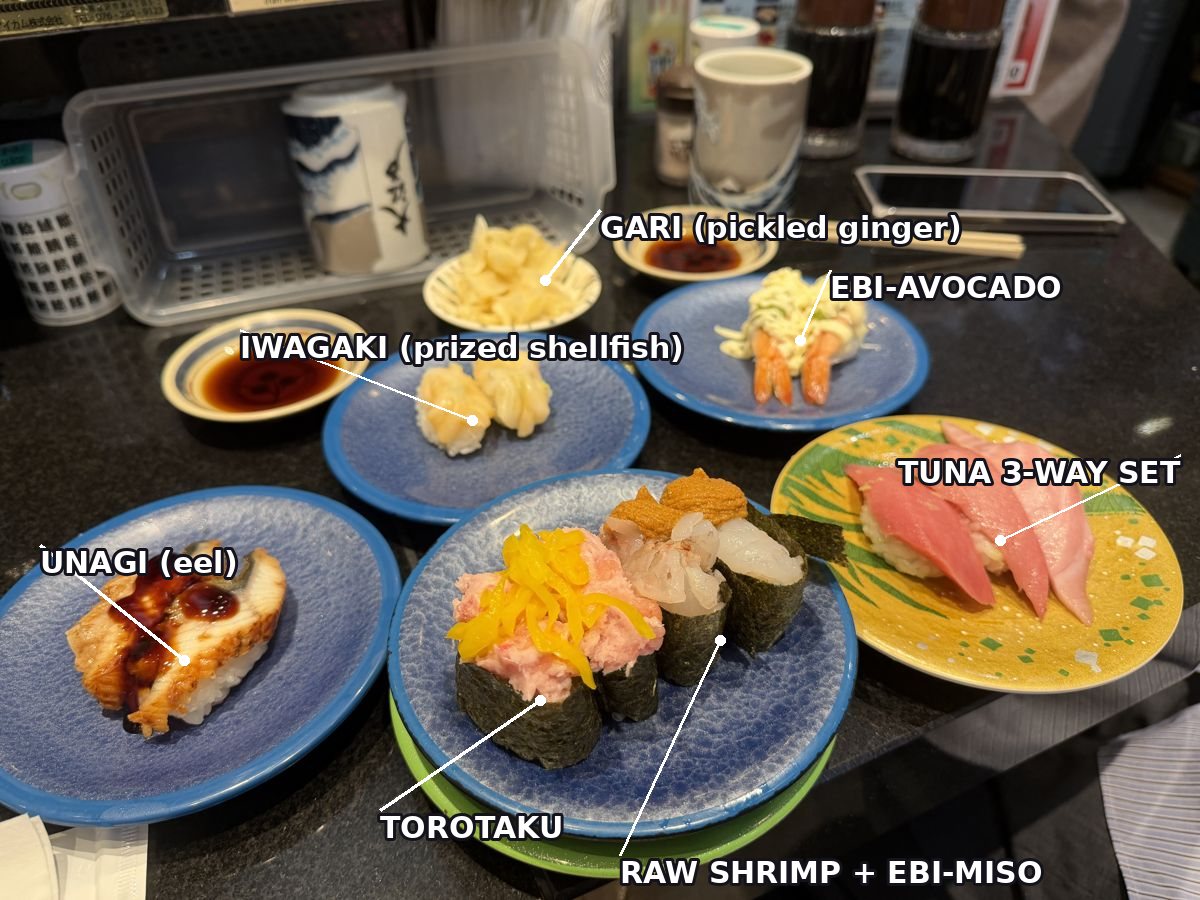
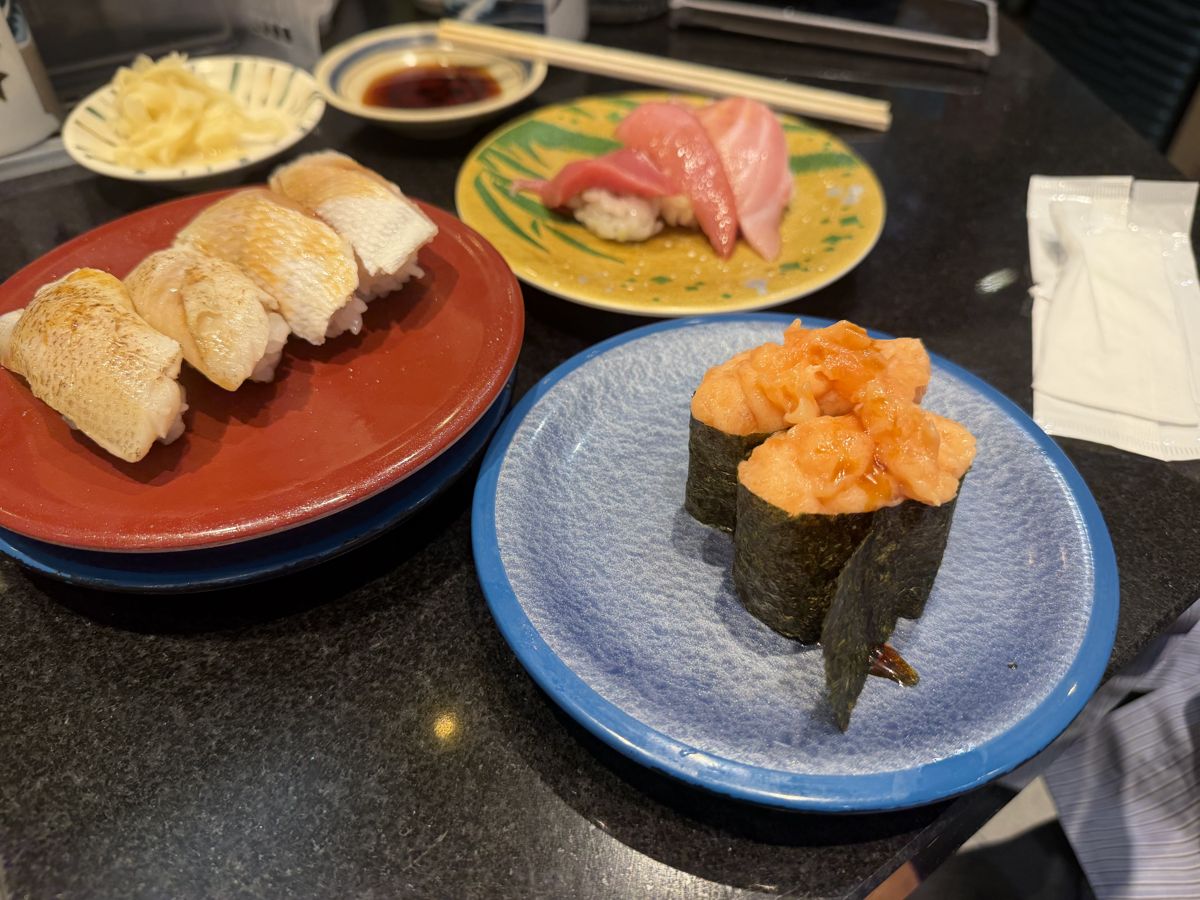
About tuna: it has ranks. Maguro comes in grades, and the top one is hon-maguro (Pacific bluefin, “true tuna”). When a kaiten chain gets some in, it goes on every poster in the shop; order it that day, and look for 本鮪 on the menu. Then there are the cuts: Akami is the lean red cut (the standard plate). Chūtoro is medium-fatty, from where the belly begins. Ōtoro is the fattiest belly cut, and it melts right away. The price goes up in that order, and kaiten is the cheapest place I know to try ōtoro: ¥300–500 a plate, compared with thousands of yen at a counter shop. Also look for plates named ◯◯盛り (mori, assortment): the maguro three-way set puts akami, hon-maguro and ōtoro side by side on one plate. That is the trio at the back of our photo above. It is the cheapest way to try all the tuna grades at once, and it is always our first order.
Our house favorites, for what they are worth: together we always order ebi-avocado (shrimp, avocado, a little mayo; a kaiten classic that sushi purists say they don’t like). My husband looks for engawa (the strip of muscle along a flounder’s fin, chewy then buttery), which is popular and sells out early. My pick is mizudako (raw water octopus): sweet and soft, not rubbery like most octopus you have had.
 TSŪ INFORMATION
what Japanese connoisseurs know
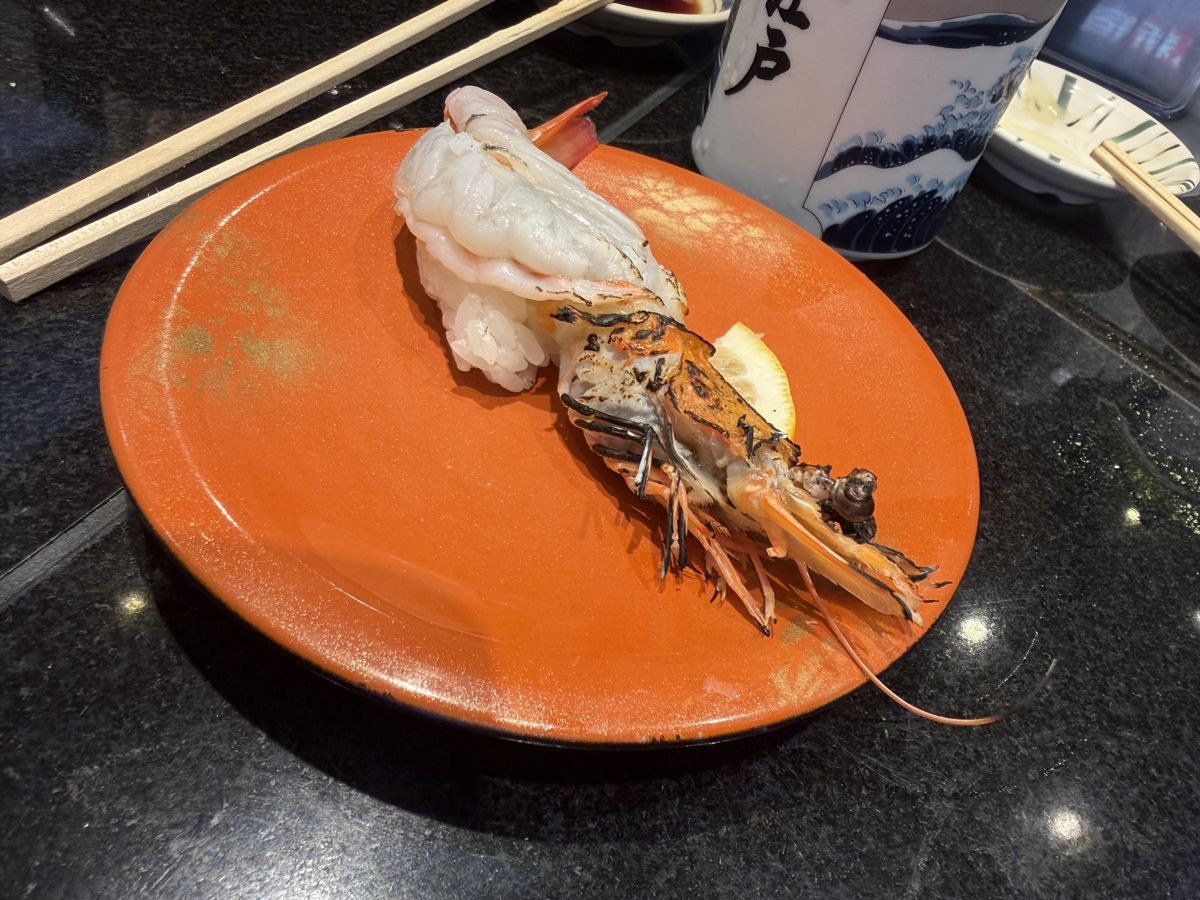
And one deep-cut move, since this photo demands it. In Japan, the miso inside a shrimp or crab’s head (nothing to do with miso soup; it is the rich, creamy tomalley) is a delicacy, and having it with a cup of sake is a classic 通 “tsū” thing to do (通 tsū means a real connoisseur, and it is a big compliment in food talk). With a whole shrimp like the God Shrimp, you can pull the head off and taste ebi-miso very fresh. If you see 海老味噌 (ebi-miso) on a menu anywhere in Japan, this is what it is.
Two notes from our busy lunch hour. First, when the room is full, mistakes happen. One of our orders came out wrong, and another was forgotten. I caught a passing staff member, said it again, and it was fixed. Just ask again; nobody minds. Second, my favorite moment of the meal: a visiting kid nearby took a breath and ordered in careful Japanese: “Sumimasen, biiru kudasai!” Excuse me, one beer please. The pronunciation was perfect; the order itself needed a small change. If that kid can try, you can too.
The unwritten rules (there are only six)
- Take the whole plate, never one piece off a passing plate.
- Never put a plate back on the belt. Once it is yours, it is yours.
- Hands are fine. Eating nigiri with your fingers is allowed, and it is the older, 通 tsū style (nigiri began as street finger food). Chopsticks or hands, both are correct.
- Wasabi note: many chains serve sushi without wasabi by default (sabi-nuki); packets are at your seat. Check before you assume it is spicy.
- Eat it in one bite if you can, since that is what the size is designed for. Nobody judges if you cannot.
- Allergies? The touch panels at big chains show ingredient info, and our phrase tool now speaks “I have a (egg / shrimp / wheat…) allergy. Is this OK?” in native Japanese for exactly this moment.
Which chain should you pick?
Honestly: whichever one is nearest. Sushiro (biggest, consistently good fish), Kura Sushi (plate-slot game that wins your kids a capsule toy), Hama Sushi (cheapest, five soy sauces at the seat), and city chains like Oedo (where we shot these photos), which has small shops in Tokyo hubs like Ueno and Akihabara. The quality is good at all of them; the differences are toppings, gimmicks and queue length.
One tip: go at 11:00 or 14:30. At popular branches the weekend lunch peak means 30–60 minute waits. You can register at the queue ticket machine and walk around, but off-peak you just sit down.
Prices and details from our own visits, July 2026. Nobody paid us; we just like sushi that comes round on a belt.
• Touch panel = zero Japanese needed · plates are color-priced
• Whole plate only, nothing goes back · hands or chopsticks both correct
• Optional: stack same-colored plates; staff notice this small courtesy
• Wasabi is often packet-only (sabi-nuki) · gari cleanses, agari refills
• Cheapest place I know for ōtoro and hon-maguro: look for 盛り tasting sets
• Chef at the counter? Say “(neta) 一皿 hitosara, onegaishimasu” and it is made that second, served at body temperature
• Allergies? Our talking phrase tool says it for you in native Japanese
First time in Japan? Start with our Perfect Japan Guide for live exchange rates, pocket phrases with native audio (allergy buttons included), and everything we tell friends before they visit.
More from us: if the touchscreen still worries you, our guide to ordering without Japanese covers every machine you will meet. For rice without the belt, try onigiri and inarizushi.