Sooner or later it happens to every visitor: you’re on a train or at a shrine, and there’s a three-year-old in a full silk kimono, or a group of twenty-year-olds in fur stoles and long sleeves, and you think: did I miss something? You didn’t. You have just seen Japan’s kimono calendar at work. Below is who wears what, and when, so you know what you are looking at.
January: Coming-of-Age Day (Seijin no Hi)
Second Monday of January. Twenty-year-olds celebrate legal adulthood at city ceremonies. Women wear furisode, the long-sleeved kimono for unmarried women, usually with white fur stoles against the cold; men wear suits or hakama. If you’re in Japan that Monday, go to any city hall or large shrine in the morning. It’s one of the most photogenic days of the year (photograph crowds freely, but ask before close-up portraits).
March: graduation hakama
Late March is university graduation season. Women graduates wear a kimono top with a long pleated hakama skirt, often in deep purple or navy, sometimes with boots. The look comes from Meiji-era schoolgirls, and people wear it for just this one week of their lives. Campuses and photo spots near them are full of it.
Summer: yukata nights
July and August belong to the yukata, the unlined cotton kimono. The reason is fireworks festivals (hanabi taikai) and summer matsuri: whole train lines fill with couples in yukata carrying uchiwa fans. This is also the easiest kimono tradition for visitors to join, because yukata rentals are cheap, cool and fine for any festival. (Our practical guide: renting kimono without looking like a costume.)
November: Shichi-Go-San, the children’s festival
Around November 15 (weekends throughout the month in practice), families take children aged seven, five and three (in Japanese, shichi, go, san (in Japanese, to shrines in miniature formal kimono to give thanks for their growth. Three-year-olds in silk with tiny sandals, five-year-old boys in hakama, seven-year-old girls with real obi: it is, objectively, the cutest recurring event in the country. Any major shrine on a fine November weekend will be full of it (in Japanese, and of grandparents with cameras.
Year-round sightings
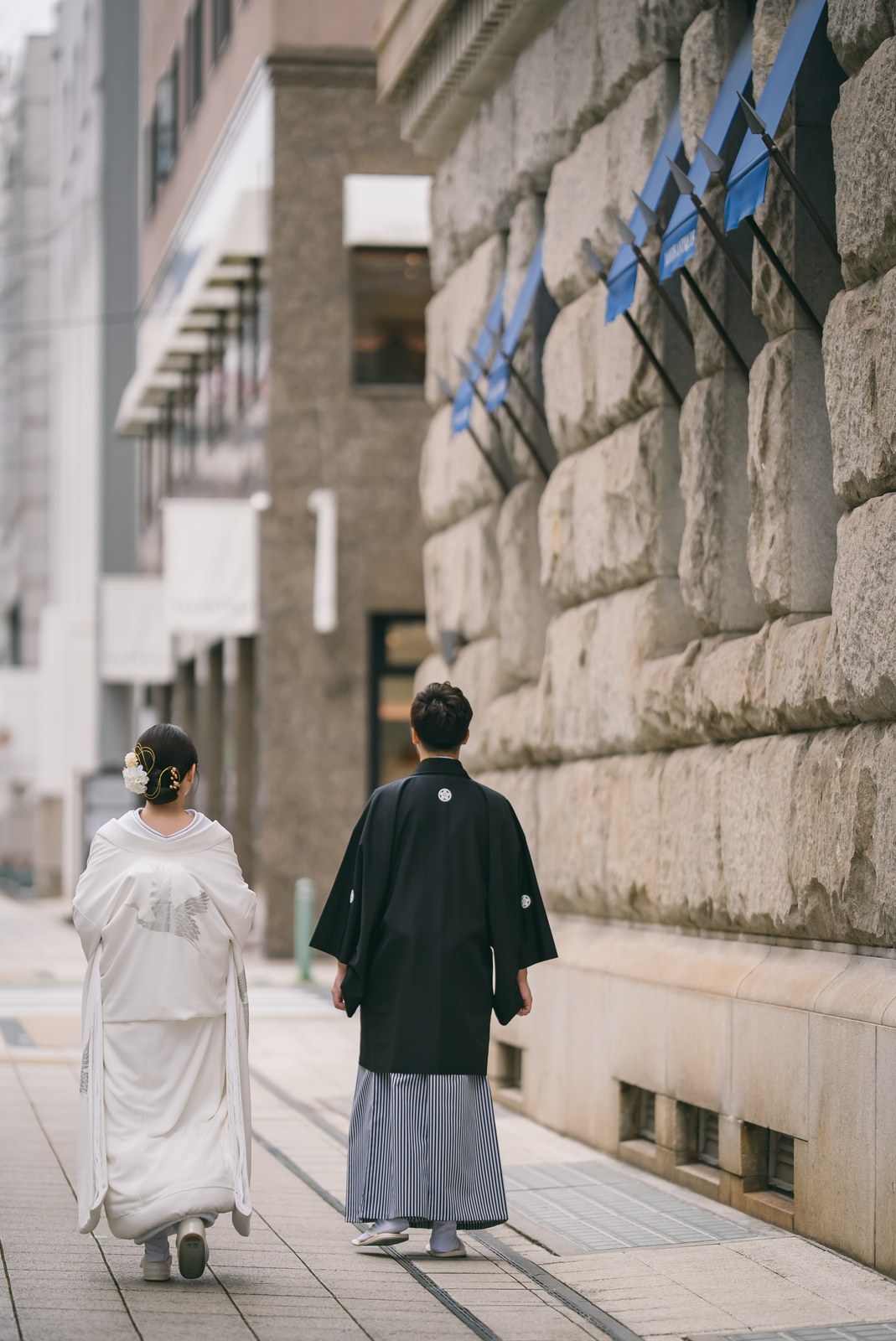
- Weddings: a bride in white shiromuku or a vivid iro-uchikake at a shrine, groom in black crested montsuki (in Japanese, most often on weekend mornings at large shrines. (We wore these ourselves (in Japanese, here’s the full story and cost.)
- Pre-wedding photoshoots: a couple in wedding kimono, a photographer, a reflector (in Japanese, in a garden or historic street on a weekday. That’s a maedori like ours, not a wedding day.
- Sunday tea-and-lesson kimono: women in subdued, elegant kimono near culture centers and hotels (in Japanese, headed to tea ceremony, ikebana, or kimono class.
- New Year (Jan 1–3): the year’s densest kimono days, at shrines for the first visit of the year (hatsumōde).
The cheat sheet
Long swinging sleeves + fur stole in January = new adult. Purple hakama in March = graduate. Cotton kimono on a summer evening = going to a festival. Tiny kimono in November = Shichi-Go-San. All-white bride at a shrine = wedding. Couple + photographer on a weekday = photoshoot.
Part of our Kimono & Japanese Weddings series, written from Nagoya (in Japanese, where we see all of the above at Atsuta Shrine every year.