Nagoya, born and raised. The thing we watch visitors do wrong most often is drag a suitcase around a city all day.
Cost: coin locker ¥400–800/day · booked storage ¥500–800 · suitcase forwarded to your next hotel ¥2,000–2,300
Where: every station, most convenience stores, many cafés
What trips people up: none. You tap your Suica and walk away
1. You will not need coins. The same Suica that opens the ticket gate opens the locker
2. They fill up. At big stations in peak season they are gone by mid-morning, and then your day is spent carrying the bag
3. Changing cities? Do not carry the suitcase at all. Send it ahead overnight and travel with a daypack
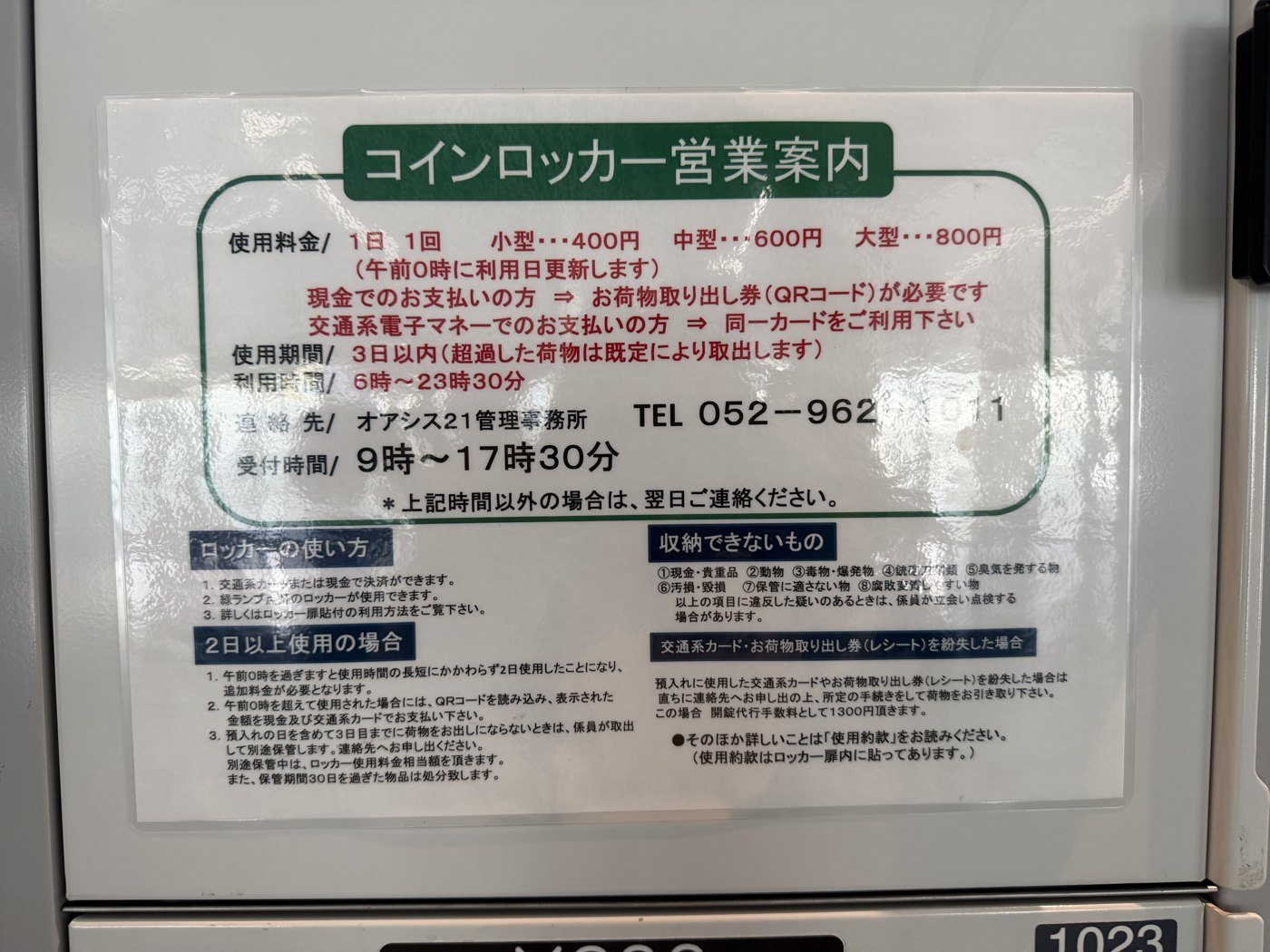
What a coin locker costs (the board at our Nagoya station)
- Small (daypack, camera bag): ¥400 a day
- Medium (cabin bag): ¥600 a day
- Large (full suitcase): ¥800 a day
- Pay by tapping your Suica. Newer lockers have a touchscreen, take IC cards, and print a slip with the locker number. Older ones still want ¥100 coins; the change machine is beside them
How the machine actually works
Here is exactly what you will see, from our own station in Nagoya.
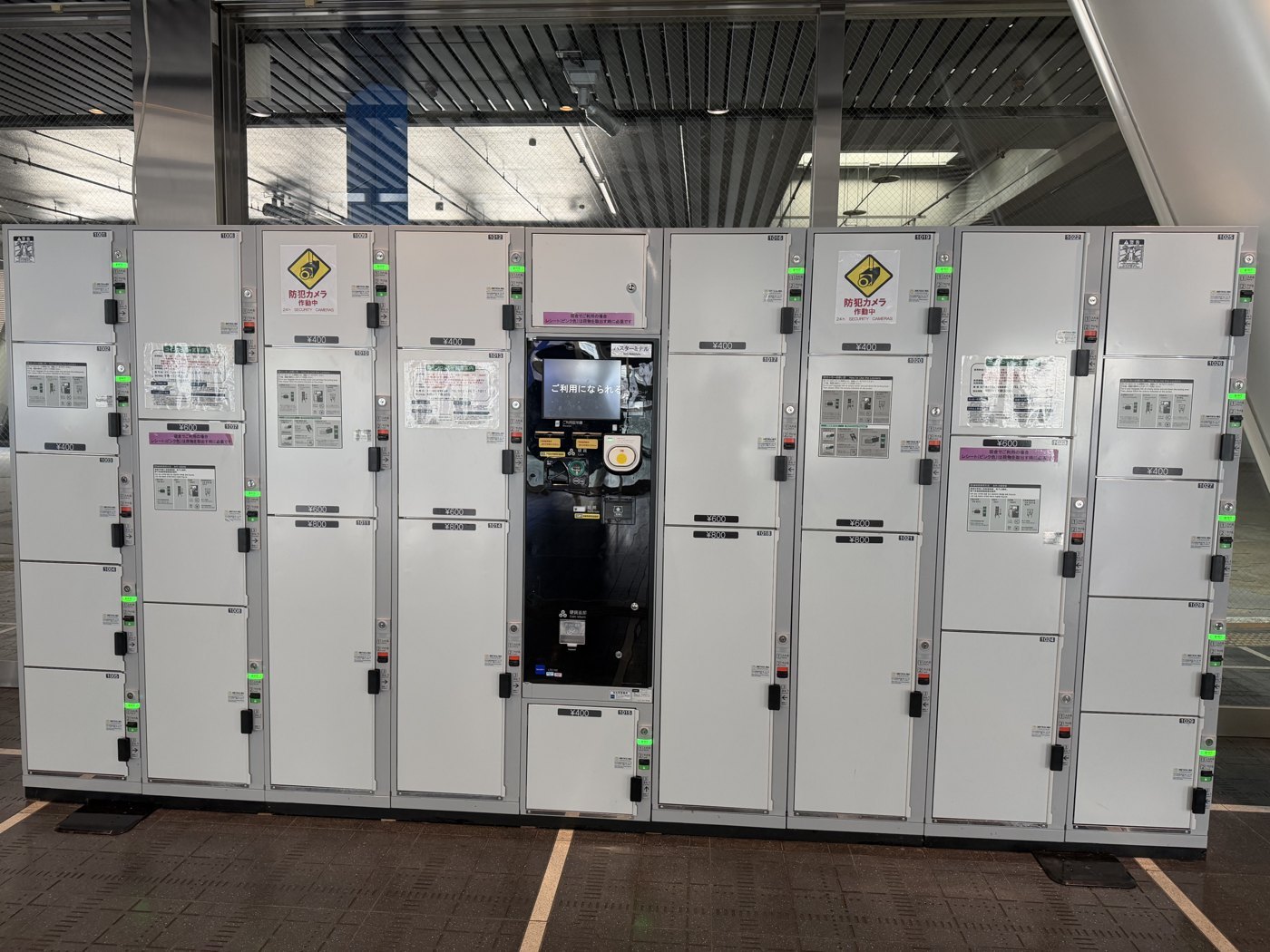
The newer lockers share one touchscreen for the whole bank, not a keyhole on each door. You pick an empty locker, put your bag in, pull the lever, then pay at the screen.
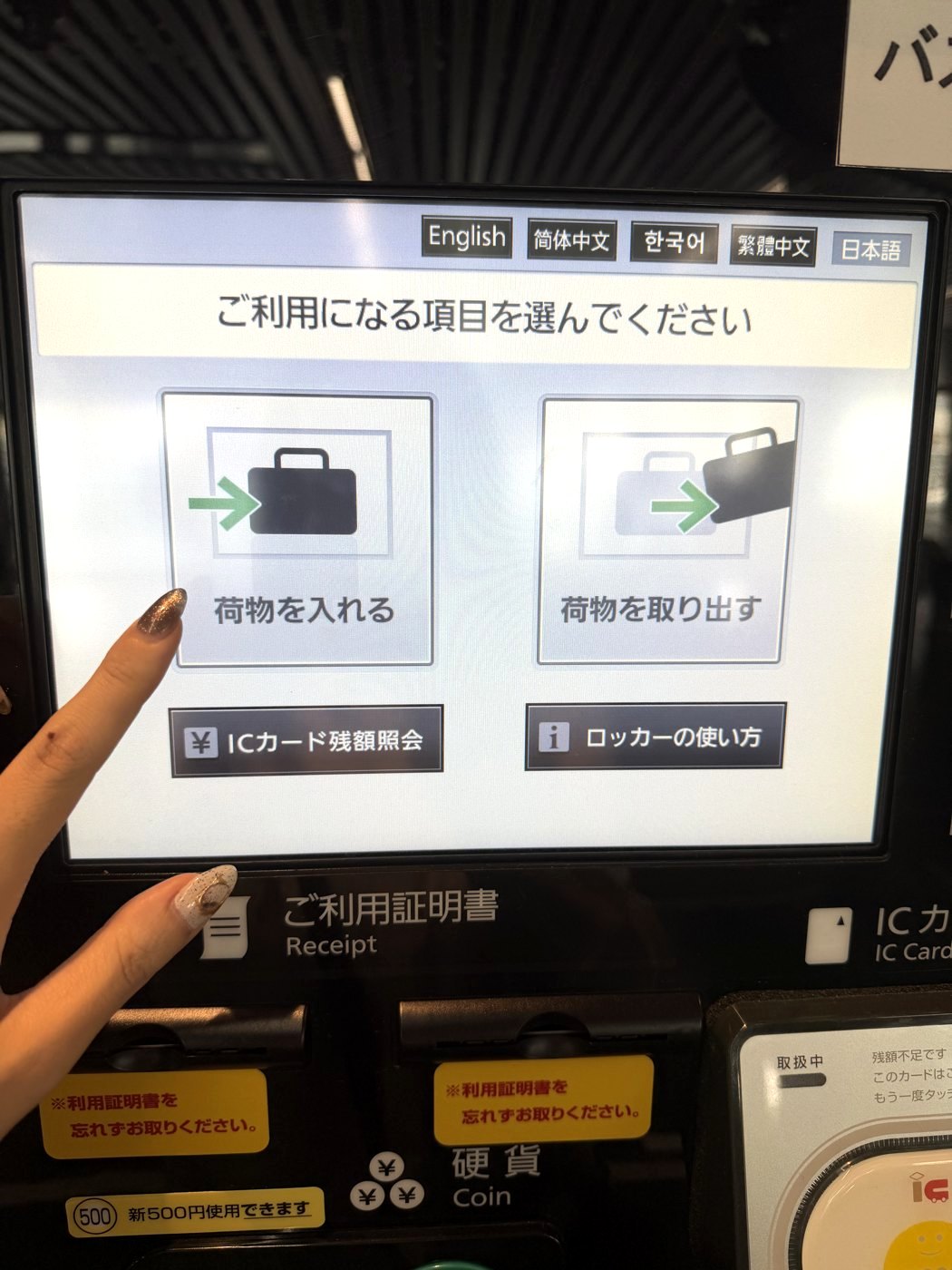
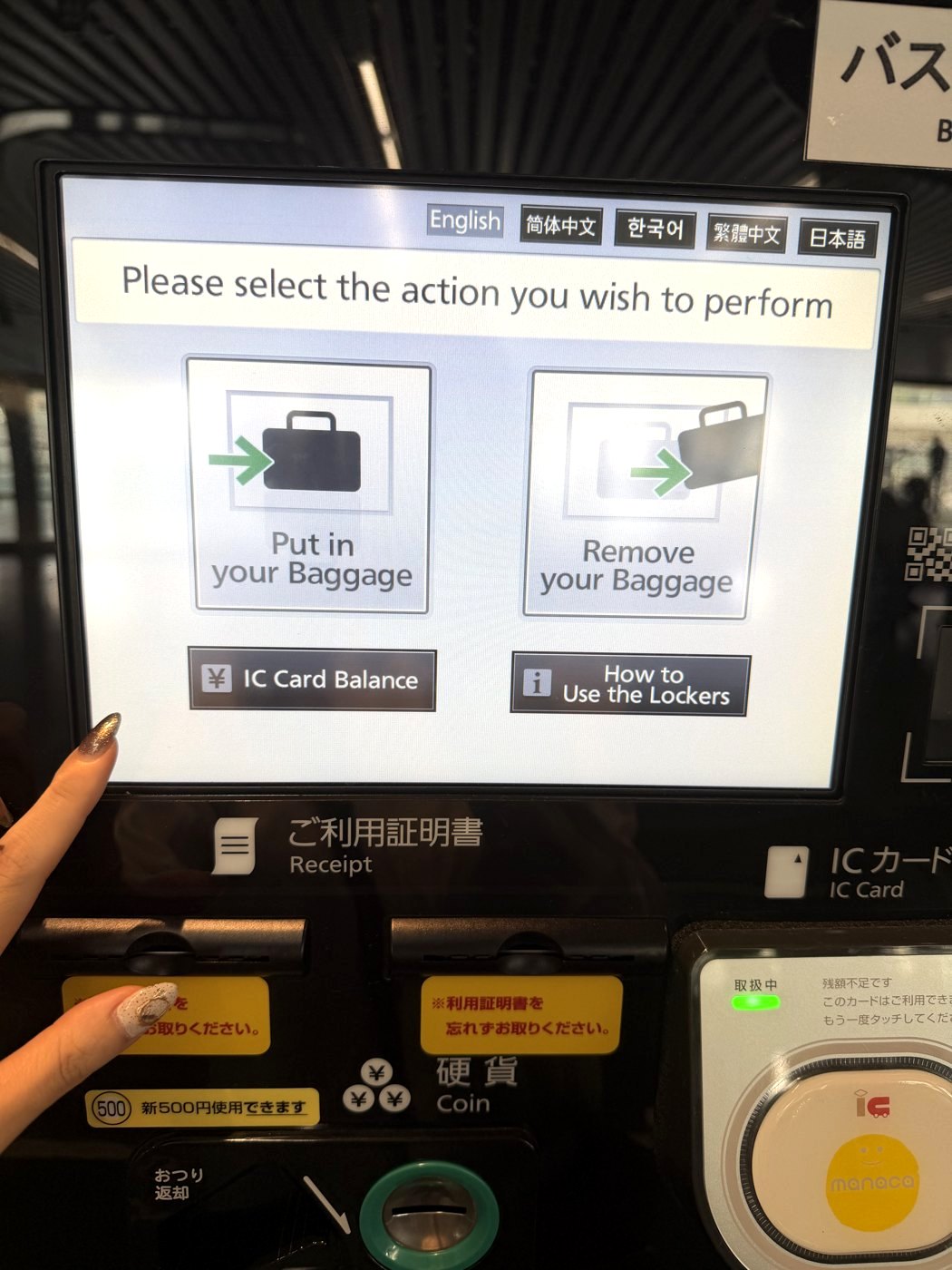
Two ways to pay, and this is the part worth knowing:
- Tap your Suica or ICOCA. The card becomes your key, and you tap the same card to open the locker later, so there is nothing to lose or remember
- Pay cash, and the machine prints a slip with a QR code. That slip is now your key. Lose it and you are talking to station staff
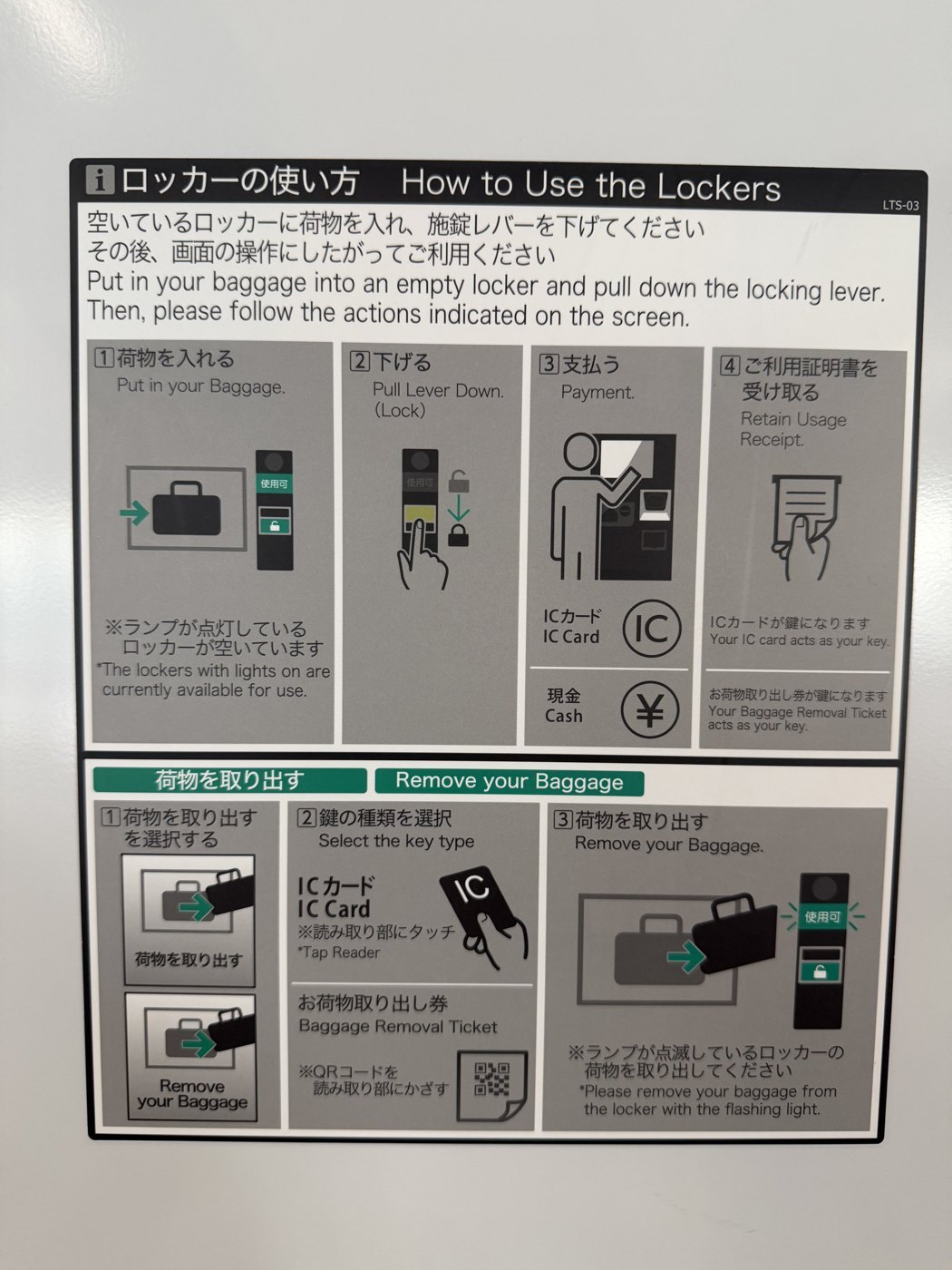
Tap the card, not the cash, and the whole thing takes about thirty seconds.
Find one near you
When they are all full
Nobody warns you about this. At Kyoto Station in autumn, or Shinjuku on a Saturday, every locker is taken by mid-morning. You will walk three sets of stairs finding out.
The fix is booked luggage storage at shops, cafés and hotels near the station that hold bags by the day. You reserve on your phone, walk in, hand it over. Typical prices are ¥500 for a bag under 45cm and ¥800 for a suitcase, charged per calendar day rather than per hour, so a two-hour drop costs the same as all day. Some JR station counters charge a flat ¥1,000.
It costs about the same as a locker and your space is guaranteed, which in peak season is worth the extra minute of booking.
Two networks cover Japan well: ecbo cloak, which is Japanese and has the densest coverage around stations, and Radical Storage, which charges one flat daily rate per bag whatever its size. If your bag is enormous, check the second one first.
Better idea: do not carry it at all
Changing cities? Hand the suitcase to your hotel front desk in the morning and it will be waiting at the next hotel that evening. This is takkyūbin, and it is the single best travel habit in Japan.
- Cabin-sized bag, ¥1,700–1,900
- Standard checked suitcase, ¥2,000–2,300
- Extra-large, ¥3,170–3,700
- Tokyo → Kyoto, Osaka, Nagoya, Hiroshima, Fukuoka: next day. Tokyo → Sapporo: two days. Airports add about ¥660
Every hotel front desk does this without being asked twice. Say takkyūbin onegaishimasu and point at the bag. Pack one night of clothes in a day bag and travel with your hands free.
 TSŪ INFORMATION
what Japanese connoisseurs know
Coin lockers are not indefinite storage. Most run on a three-day limit and the clock is printed on the door in Japanese, which is why visitors miss it. On day four, station staff open the locker, remove your bag to an office, and you pay the accumulated daily fee plus a retrieval charge to get it back. Nothing is lost and nobody is rude about it, but you will spend an hour of your holiday in a back room filling in a form. If a bag needs to sit for longer than a weekend, forward it or use a staffed storage counter instead.
Notes from a local
- The biggest lockers do not fit the biggest suitcases. A 28-inch case often will not go in. Check before you commit to a plan built around one
- Photograph the locker number and the bank of lockers. Every station has several banks that look identical, and stations here are enormous
- Forwarding takes a full day. So it does not work for same-day moves, but it is fine for everything else. Drop it before 11am to be safe
• Coin locker ¥400–800/day, paid by tapping Suica
• Peak season at big stations: full by mid-morning so book storage instead
• Booked storage: ¥500 a bag, ¥800 a suitcase, charged per day not per hour
• Changing cities: forward the suitcase, ¥2,000–2,300, arrives next day
• 3-day locker limit (after that staff remove it and you pay to retrieve)
• Photograph your locker number. The stations are bigger than they look
More from us: this is one step of the full order of preparation. Before you land, sort out getting online.
Read next
Once the suitcase is in the locker, you are two minutes from a bowl of Hakata tonkotsu under Nagoya Station that you order entirely from a screen.