About the shop I go to most days, and what inside it is worth your money.
Budget: a proper snack haul runs ¥1,000–2,000 · coffee from ¥140
Where: 21,000-odd branches · this one is in Nagoya, but the shelves are nearly identical nationwide
Difficulty: zero: everything has a price and a picture, so you can just point
1. The snack aisle is the best souvenir shop in Japan, and the bags marked コンビニ限定 (konbini-exclusive) are the ones you cannot buy anywhere else
2. Seven Cafe coffee is ¥140 and good. That is cheaper than any café in the country
3. Freeze-dried miso soup at ¥108 a sachet is the lightest, cheapest, most useful gift you will find
4. Buy the rice balls. Then buy more rice balls
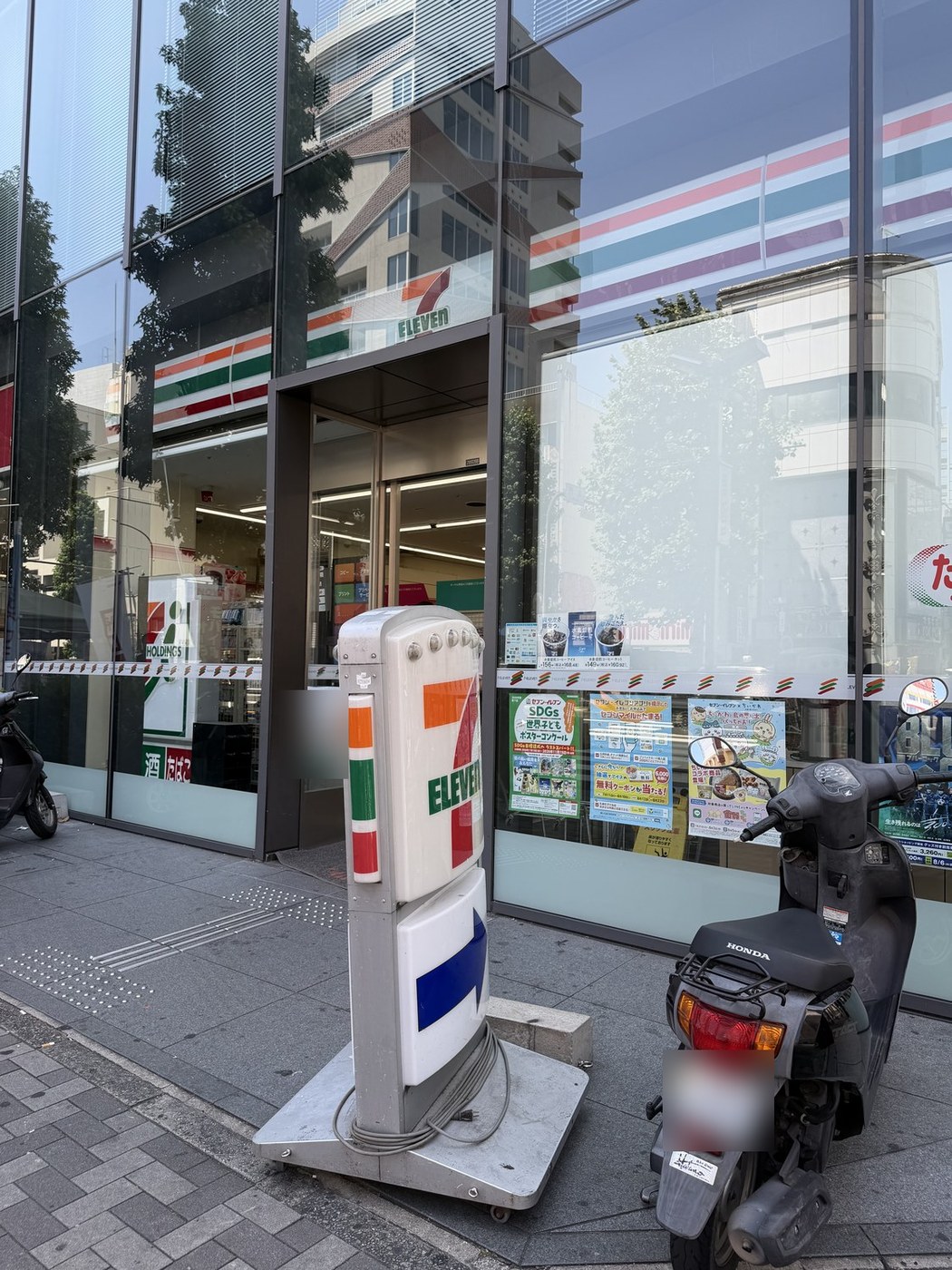
People come expecting Japanese convenience stores to be a novelty, and then they eat in one every day. I want to save you the three days of experimenting, so below is what I looked at on a normal shopping trip to my local 7-Eleven, with the prices exactly as they were printed on the shelf tags. Almost every tag in Japan shows two numbers: the pre-tax price in big type and the tax-included price in small type. Food is taxed at 8%, everything else at 10%. All prices here are the tax-included ones, because that is what you actually hand over.
Start at the rice
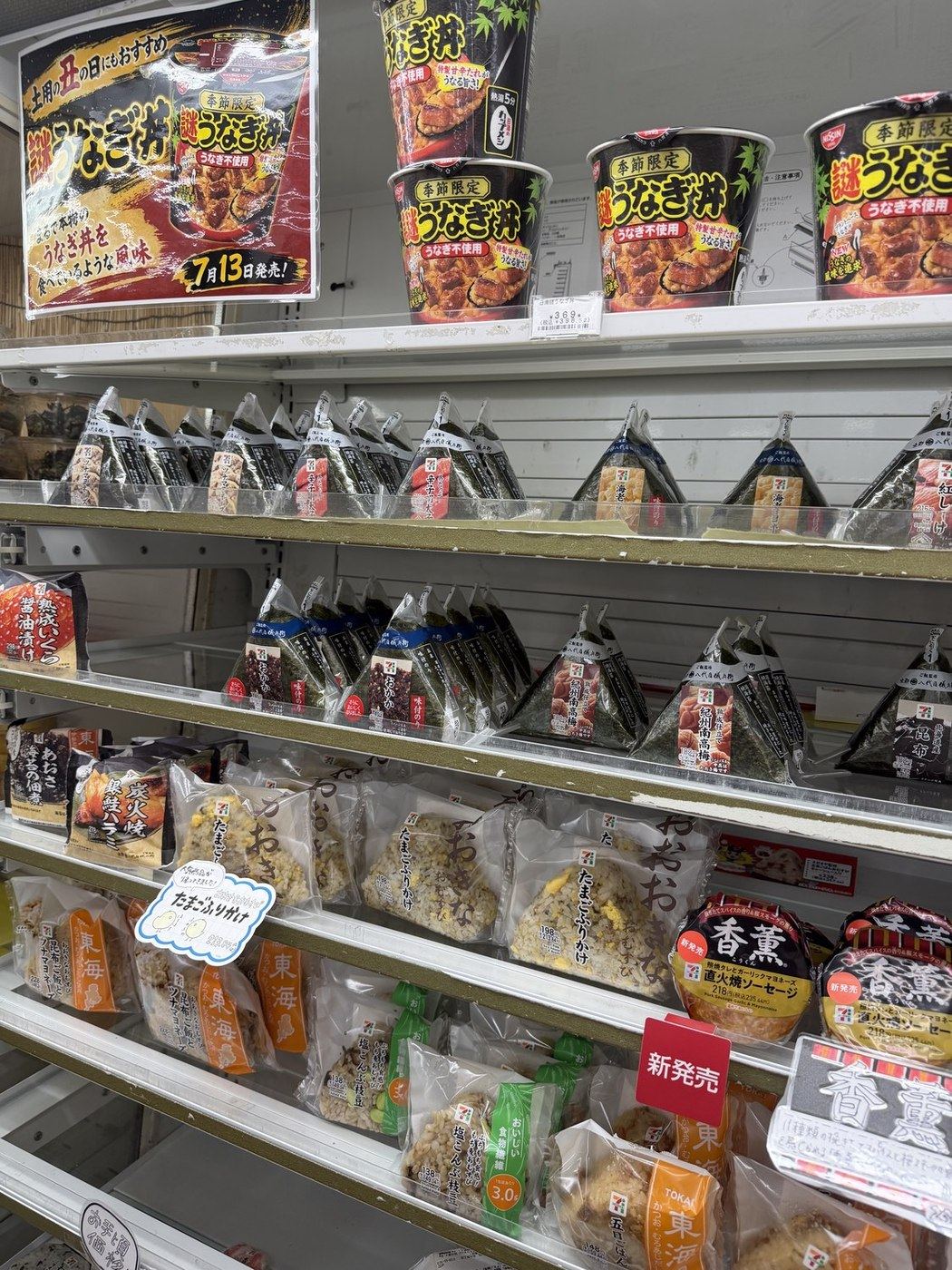
A triangular rice ball wrapped in seaweed costs ¥214 for the egg-furikake one and about the same for the salt-kelp-and-edamame, and it is a full meal you can hold in one hand. The wrapper keeps the seaweed crisp until you open it: pull tab 1, then tabs 2 and 3, and the sheet rolls around the rice by itself. Most people get it wrong the first time, and everyone has done it once.
If you want the full anatomy of what is inside each one, we wrote a whole guide to onigiri. For this shelf: pick two and you will still be under ¥450.
The snack aisle is the real souvenir shop
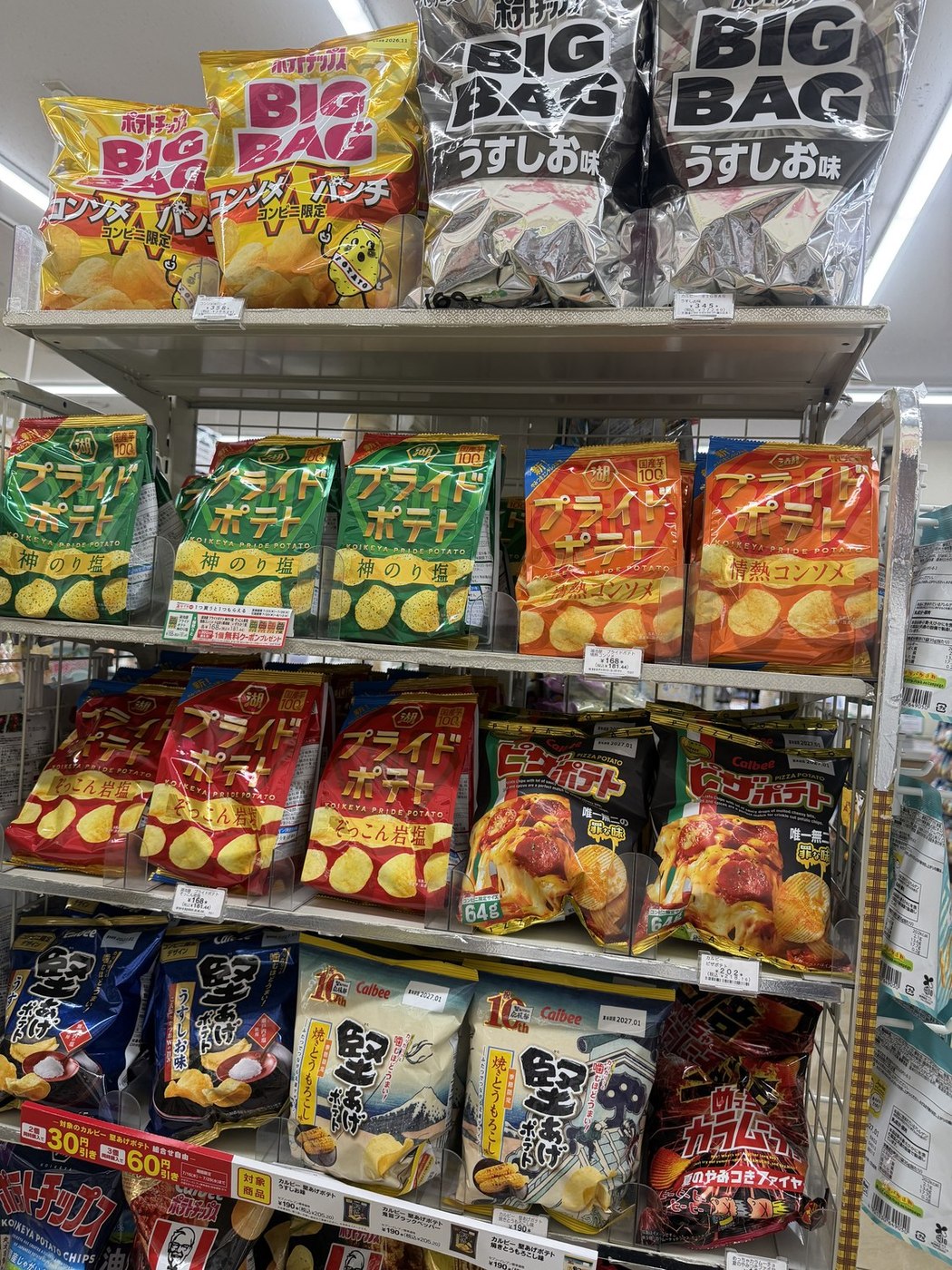
This is where I would spend a visitor’s souvenir budget, rather than at the airport or a gift shop.
- Calbee Kata-age Potato (the hard-fried ones), ¥205 . Salt, black pepper, and a summer grilled-corn edition. At the moment the bags have a Hokusai wave design that lines up across two packets, which is either cute or a way to make you buy two. It worked on me.
- Calbee Pizza Potato: ¥218 , sold here in a konbini-only 64g size
- Koikeya Pride Potato: ¥181 , the “serious” domestic-potato line, in flavours like rock salt and consommé
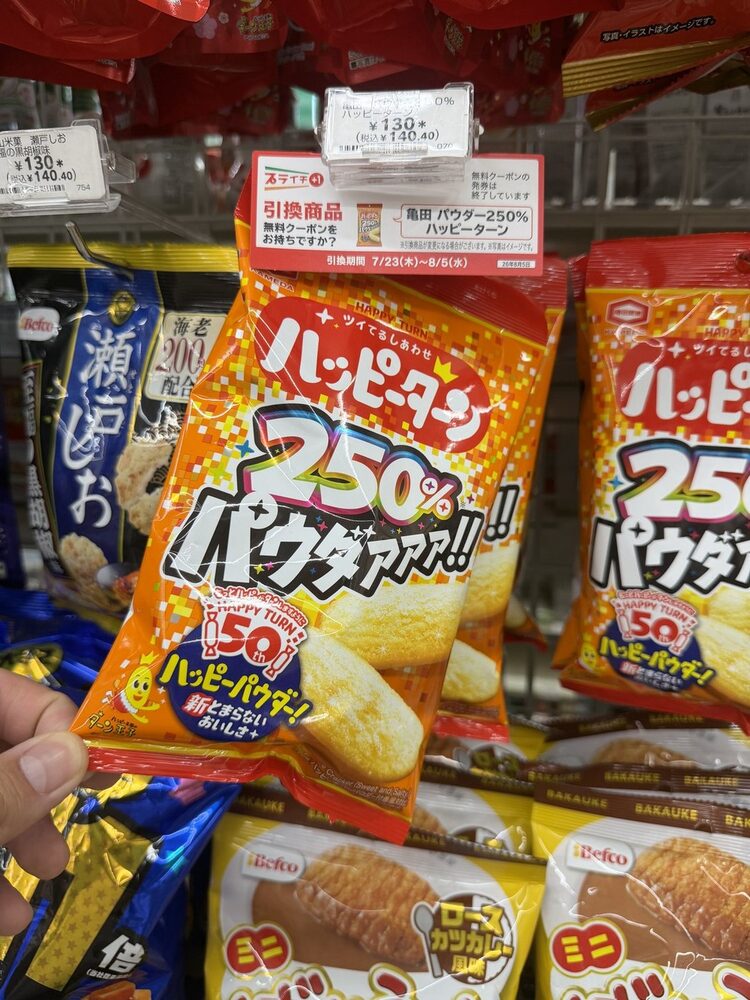
- Happy Turn: rice crackers dusted in a savoury-sweet powder, ¥140 . The current bags advertise 250% powder. This is a real thing the manufacturer does.
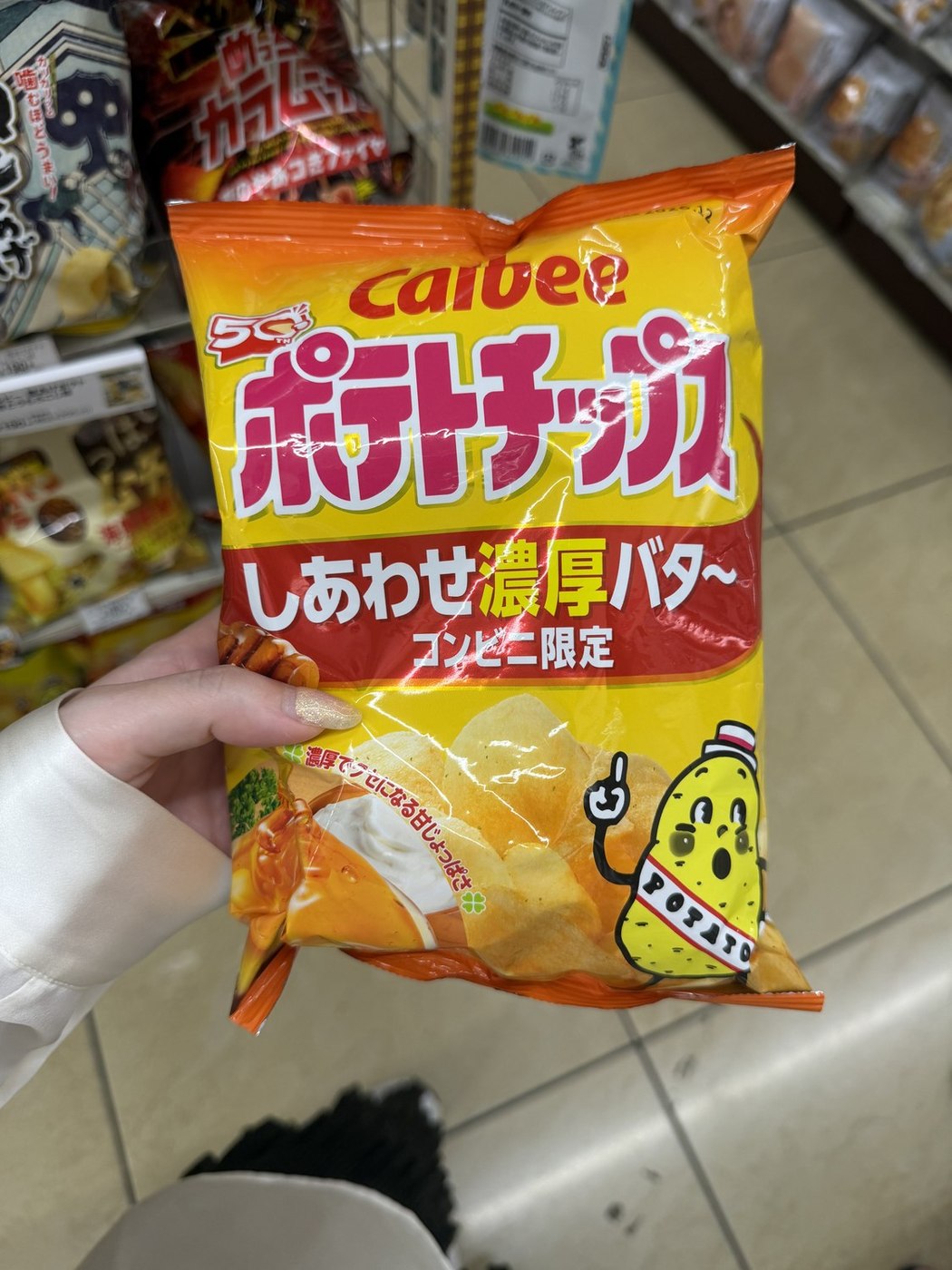
I went in for rice and came out with these. They are sweet and salty at the same time, which sounds wrong written down but works when you eat them, and the bag did not survive the walk home. My husband got four crisps. The Happy Turns did a little better and made it to the kitchen table.
 TSŪ INFORMATION
what Japanese connoisseurs know
Three labels on the shelf tell you what you are holding. コンビニ限定 means convenience-store-exclusive: a flavour or bag size made only for convenience stores, which is why the chip aisle here is different from the one at a supermarket. セブンプレミアム (Seven Premium) is 7-Eleven’s own label, and it is not the cheap tier: the products are made by the same big manufacturers under contract, which is how you end up with a private-label chocolate-mint shaved ice at ¥192 sitting next to Häagen-Dazs. And セブン-イレブン標準価格 on a tag means “chain standard price”. That item costs the same in Hokkaido as in Okinawa, so there is no point shopping around.
Seven Cafe: ¥140 coffee, and a smoothie machine with English on it
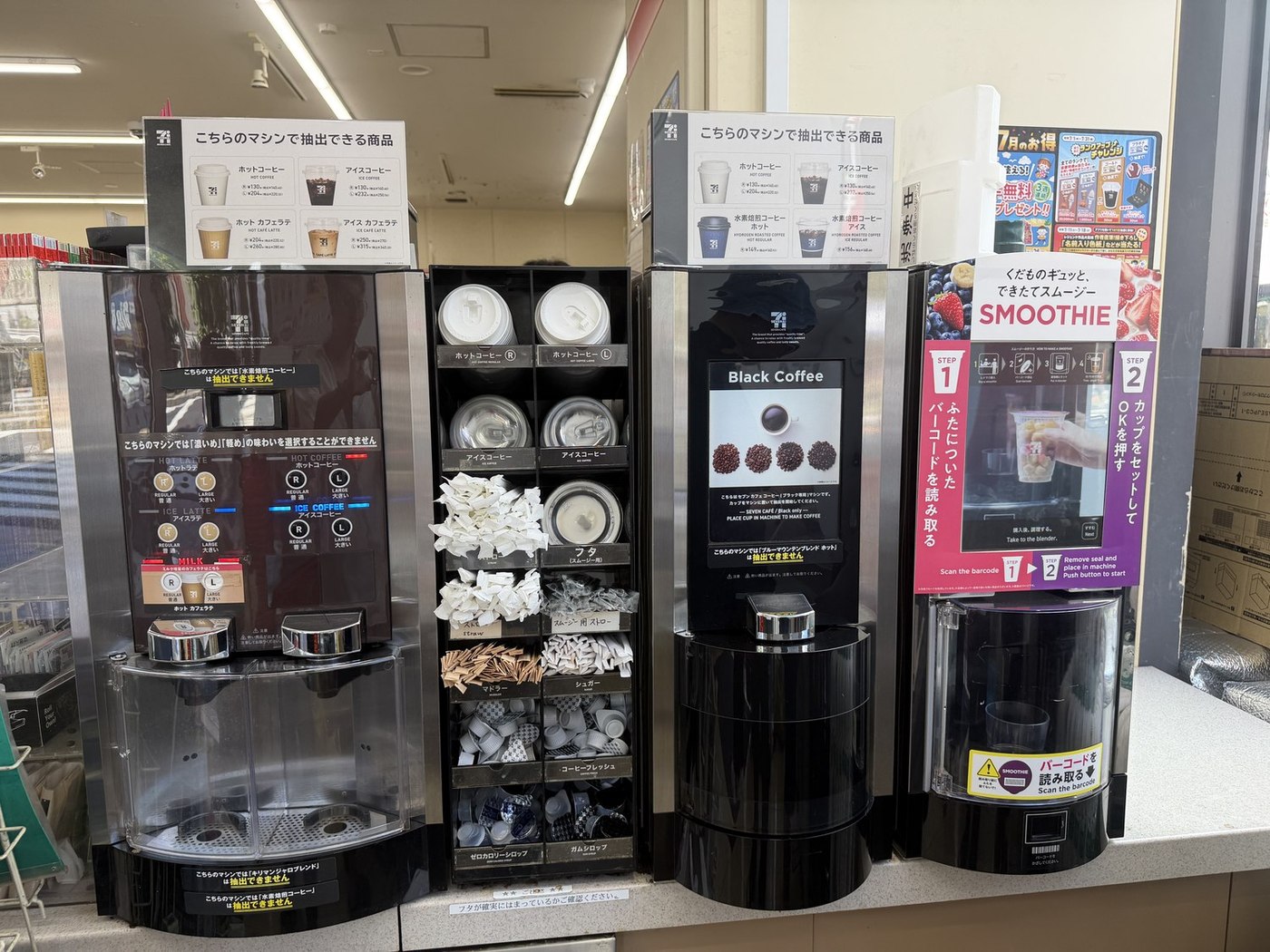
The mechanism confuses people, so: you pay at the till first, the cashier hands you an empty cup, you carry it to the machine, put it in, press the button. Nobody makes it for you and nobody expects you to tip.
- Hot or iced coffee, regular: ¥140 · large ¥220–250
- Hot café latte regular ¥220 · iced latte ¥270
- “Hydrogen-roasted” coffee, a separate machine: hot ¥161, iced ¥168
- For iced drinks you take a cup of ice from the freezer case and bring it to the till. It feels a bit like stealing ice, but that is how it works.
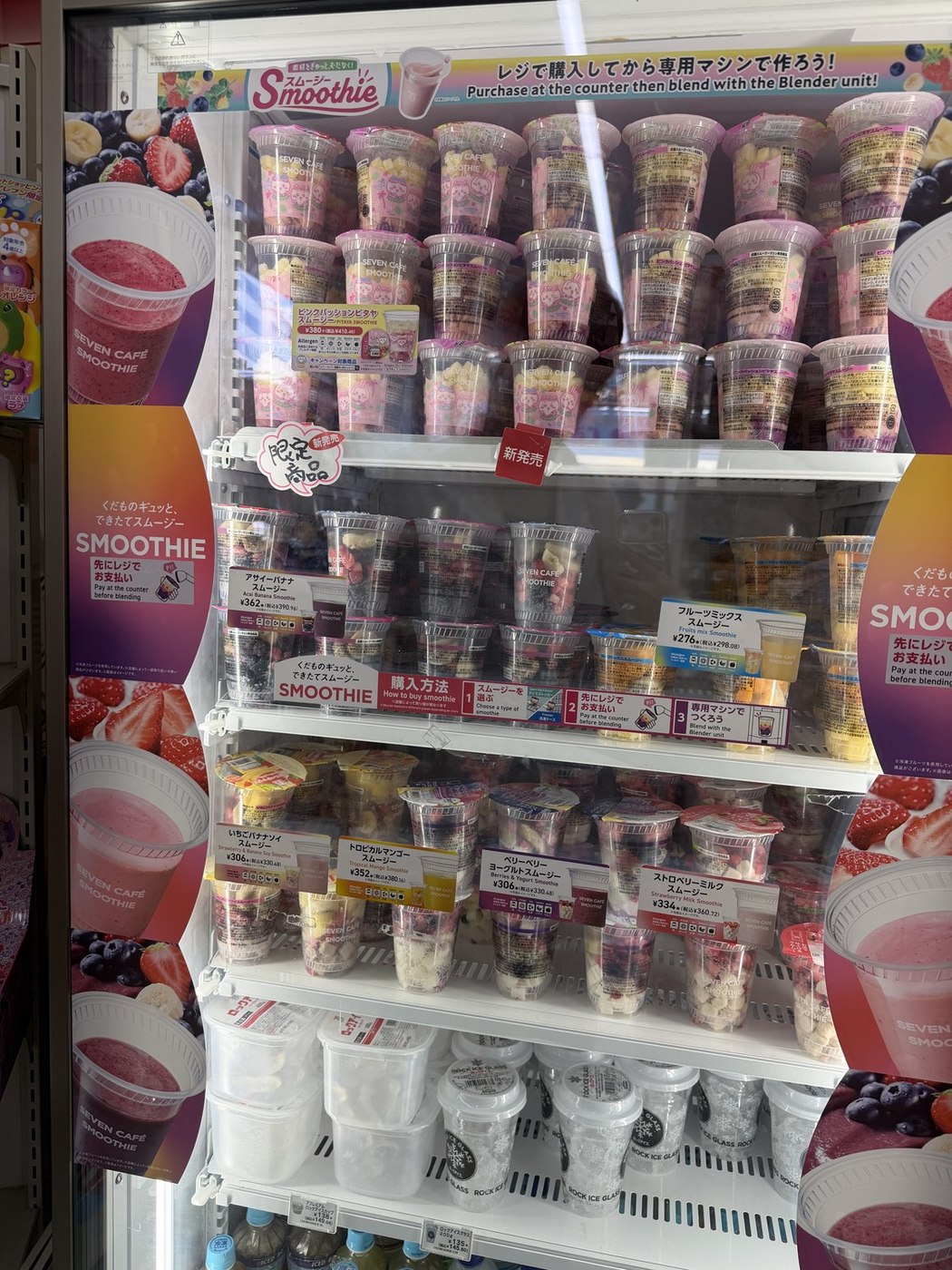
If you are new to Japan, try the smoothies. You take a frozen cup of fruit out of the case, pay for it, then put it in the blender by the coffee machines and it blends while you watch. Fruit mix is ¥298 , strawberry-banana soy ¥330, açaí-banana ¥391, and a limited pink pitaya one at ¥410 . The freezer door carries the instructions in English: choose a type · pay at the counter before blending · blend with the blender unit. Somebody at head office thought about you.
The freezer, which is where the arguments happen
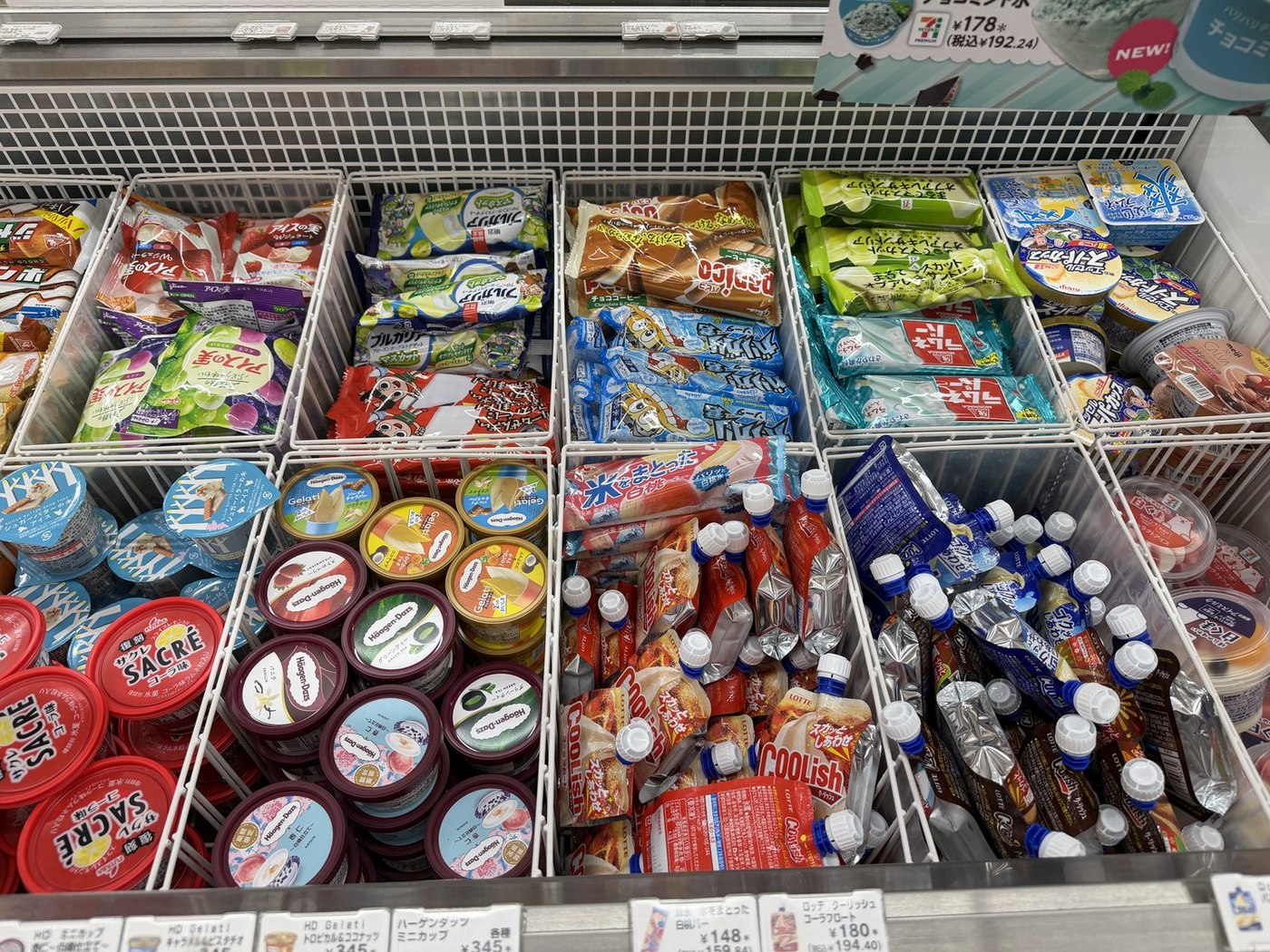
- Seven Premium chocolate-mint shaved ice: ¥192 , and the reason I keep photographing this freezer
- Morinaga Pino: six bite-sized chocolate-coated cones in a box, ¥194
- Lotte Big Suika Bar: a watermelon slice in ice-lolly form, with the seeds as chocolate chips, ¥140
- Shirokuma bar: condensed-milk shaved ice with fruit, a classic from Kyushu, ¥160
Things I did not expect a convenience store to sell
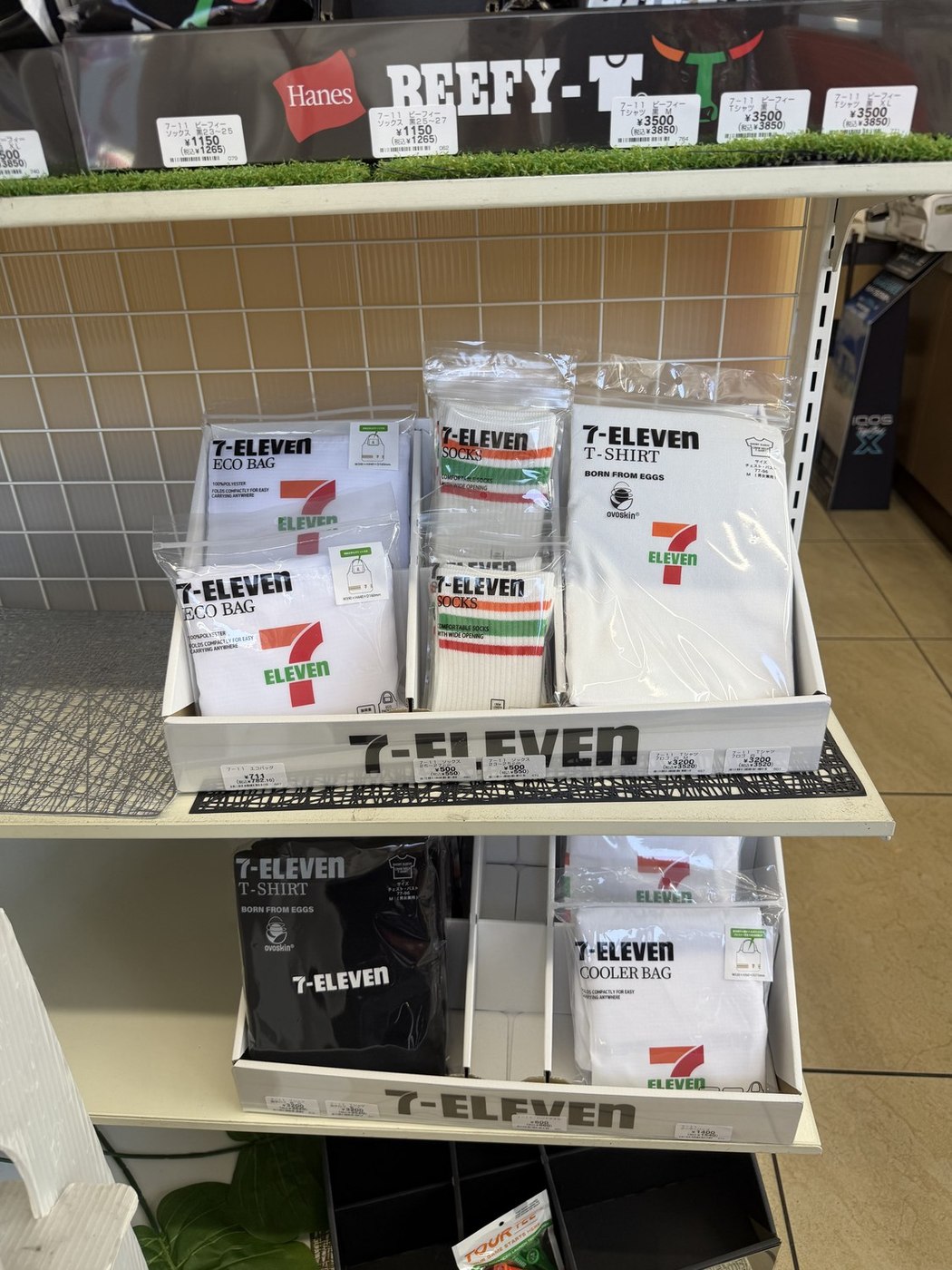
- Branded merchandise. A 7-ELEVEN eco bag at ¥782 (the pre-tax price is ¥711, a joke the buyer obviously enjoyed). Hanes Beefy-T shirts in the store colours are ¥3,850 and socks ¥550 . As souvenirs go, a shirt from a shop that exists on every corner is a better story than a keychain.
- Freeze-dried miso soup, ¥108 a sachet : tofu, spring onion, aubergine, nameko mushroom. It weighs nothing and survives a suitcase, and my overseas friends actually ask me to send it again.
- Pizza, baked to order. A sign by the freezer says we bake it after you order: margherita ¥780, teriyaki chicken ¥880. You take the frozen packet to the till and wait.
- A Daiso shelf inside the konbini. The household aisle at this branch has real ¥100-shop stock next to the toothpaste: sink strainers, sponges, wet wipes.
- Parcel boxes for Mercari, Japan’s flea-market app. You can post a sold item from the same counter where you bought lunch.
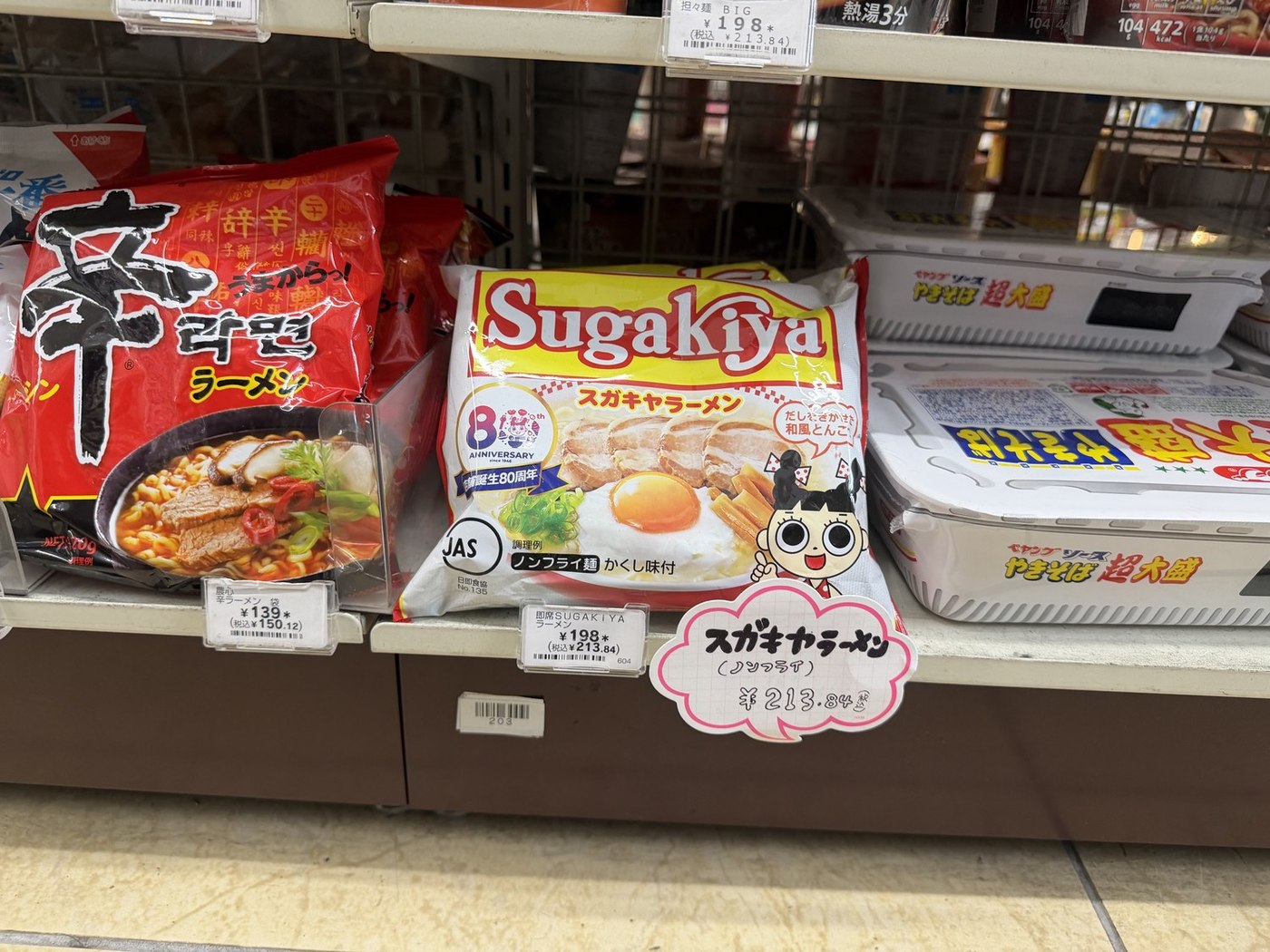
One genuinely useful habit: check the instant noodle shelf in whatever city you are in. The national brands are everywhere (cup noodles at ¥268 , Korean spicy ramen at ¥150), but there is always a slot or two for something local. In Nagoya that is Sugakiya, an eighty-year-old regional chain whose sweet pork-bone-and-dashi broth you cannot get anywhere else, sold here in a packet for ¥214 . It is the cheapest regional souvenir in the shop and nobody buys it.
Notes from a local
- There is often no toilet. The door of this branch says so in English: no public restroom. City-centre konbini often have none, so use the station.
- It is not the cheap option. A supermarket beats these prices on almost everything. You are paying for a shop that is open and close by at 3am.
- Seating is rare. Most branches have nowhere to sit and eating while walking is mildly frowned upon. Find a park bench, or eat standing by the shop like everyone else does.
- The discount coupons are app-only and the app needs a Japanese phone number, so you can ignore the yellow signs.
- Tax-free does not apply here. The ¥5,000 duty-free minimum is for drugstores and department stores; see our drugstore guide for where that actually works.
• Onigiri ¥214 · Seven Cafe coffee ¥140 · smoothie from ¥298 · freeze-dried miso soup ¥108
• Buy anything marked コンビニ限定 (konbini-exclusive, not sold in supermarkets)
• Coffee and smoothies: pay first, then work the machine yourself
• Check the instant noodle shelf for the local brand (ours is Sugakiya)
• Often no toilet · rarely any seating · app coupons need a Japanese number
• Prices from our own July 2026 shelf photos in Nagoya · nobody paid us anything
More from us: the deep version of the rice-ball shelf is our onigiri guide; if the till still worries you, ordering food without Japanese covers every machine and counter you will meet. Flat, light gifts that beat snacks for longevity: our stationery buying list. Planning the whole trip? Start with the Perfect Japan Guide.