Nagoya, born and raised. Updated July 2026. Every price below is read straight off the menu board I photographed in Harajuku.
Budget: ¥750–1,250 per drink
Where: THE MATCHA TOKYO Harajuku, 1 minute from Harajuku Station (other stands all over Tokyo)
What trips people up: zero. English menu, pointing works, but bring a card: no cash accepted
1. Matcha stands are Tokyo’s version of the espresso bar: ceremonial-grade matcha whisked to order and drunk standing
2. First visit? Order the straight matcha, iced (the “Gold Blend” style is blended for umami, not bitterness)
3. Everything is cashless-only (credit card or IC card, no yen)
4. A cup runs ¥750–1,250 ; the global matcha shortage is why (explained below)
5. Menu has English, and staff are used to visitors. It is the easiest place to order “real matcha”
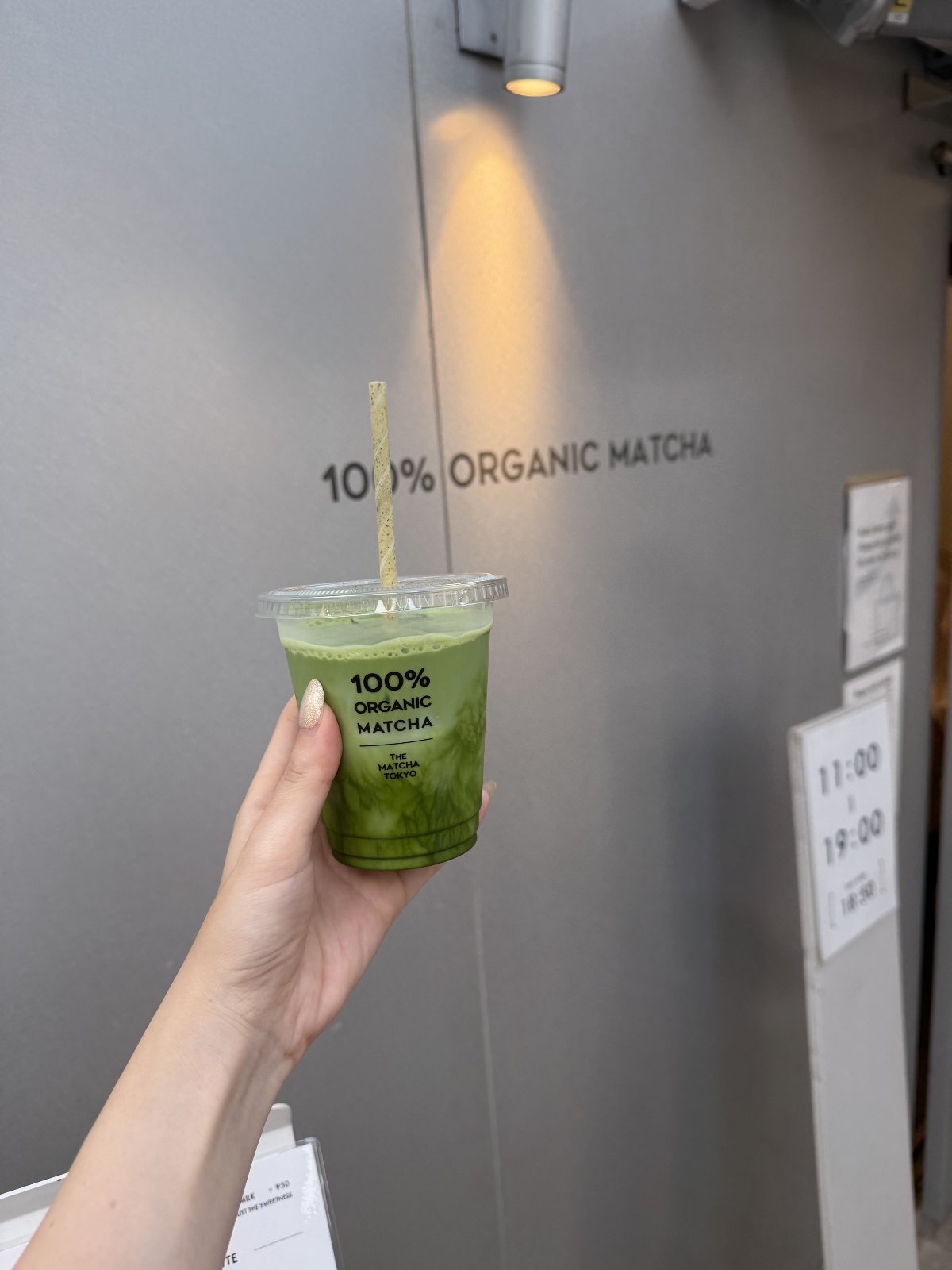
Tokyo’s answer to the espresso bar is the matcha stand: a small counter with few or no seats, one drink made at a time with a bamboo whisk, and a line of locals who drink it the way people in Milan drink a morning espresso. My husband and I stopped at THE MATCHA TOKYO in Harajuku on a Sunday evening, drank an iced Gold Blend, and photographed the menu so you can order without guessing. Below is everything on that board, what it costs, and the one thing that surprises most visitors.
One honest note first: even on our Sunday visit there was nowhere to sit because the few seats were already taken, mostly by other tourists. It works best as a place to get a drink and keep walking. If you want to sit and rest your feet, come at an off-peak hour or expect to stand.
What exactly is a matcha stand?
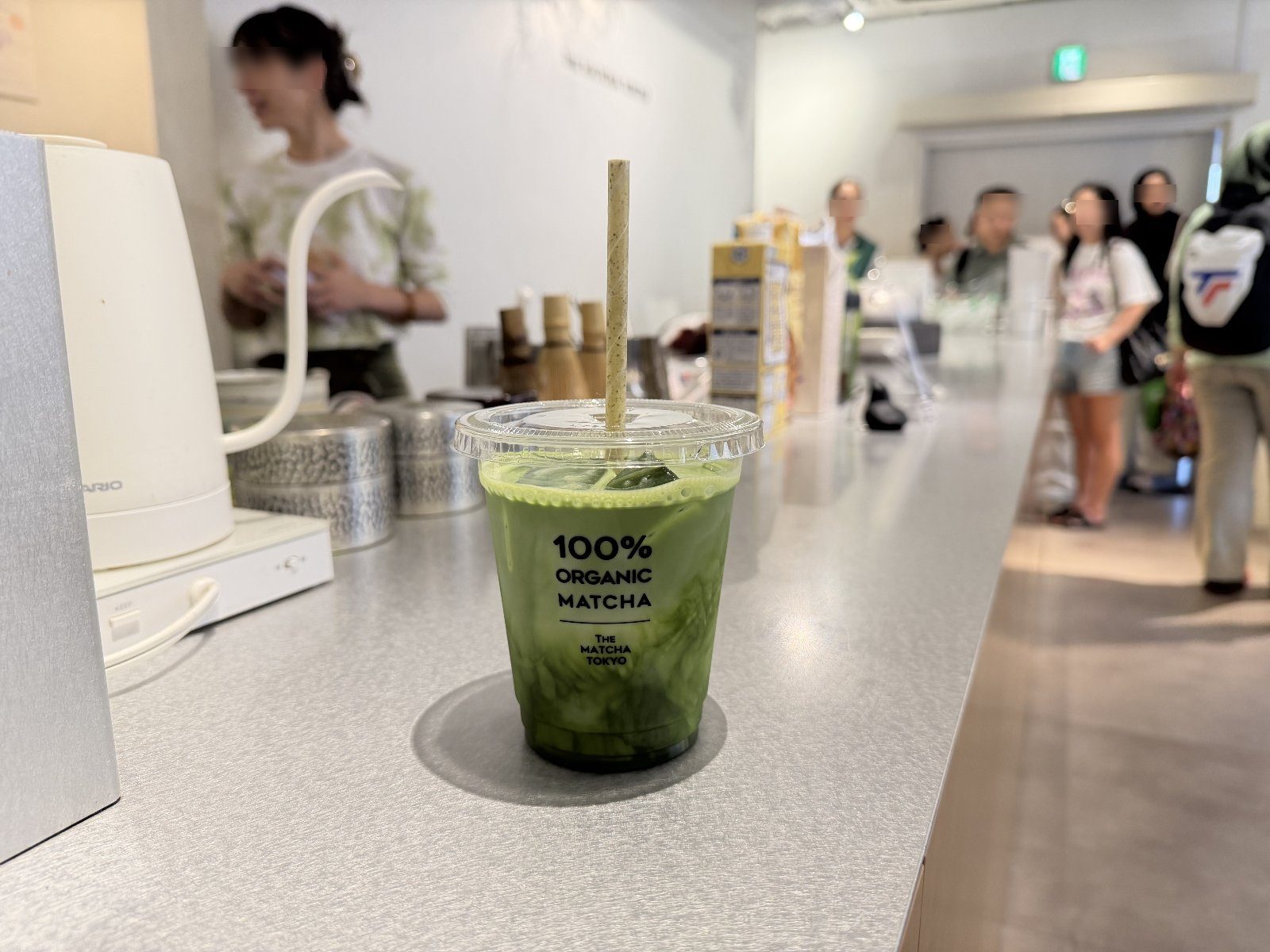
A matcha stand is a tea counter run like an espresso bar: a small space, standing service, and one drink done carefully. THE MATCHA TOKYO, founded in 2018, is the chain you will run into first. Its matcha is organic, certified in both Japan and the US, and sourced from partner farms. The Harajuku shop opened in November 2025, one minute from the station. In Tokyo, matcha is an everyday caffeine drink now, not only a tea-ceremony souvenir.
Before it was a latte, it was a samurai’s ritual
Long before Instagram, matcha was popular with warlords. In the Sengoku era, Japan’s century of civil war, the tea room was the one place a samurai left his swords at the door: the crawl-through entrance (躙口 nijiriguchi) was built so low that everyone, lord or foot soldier, had to bow, unarmed and equal, to get in. For men who might die that week, a slowly whisked bowl of matcha was a way to calm the mind before marching out. The monk Eisai, who brought tea culture from China in the 1190s, had already set the tone: tea is “the elixir of health” (養生の仙薬). Caffeine, calm and courage in one bowl.
 TSŪ INFORMATION
what Japanese connoisseurs know
Oda Nobunaga, the warlord who nearly unified Japan, made tea part of how he governed, a policy later called 御茶湯御政道 (“rule by way of tea”). He collected the country’s famous tea utensils, then gave them to generals instead of land. It worked a little too well: his general Takigawa Kazumasu, granted two provinces and a top military post after a great campaign, wrote bitterly that what he had really wanted was a small tea caddy called the Jukō-konasu. He wanted a caddy that fits in one hand more than a province. Even the permission to host a tea gathering was itself a decoration. So when the tea world says 一期一会 ichi-go ichi-e (“this meeting happens only once”), remember that the people who coined it often meant it literally.
The menu, decoded, with real prices
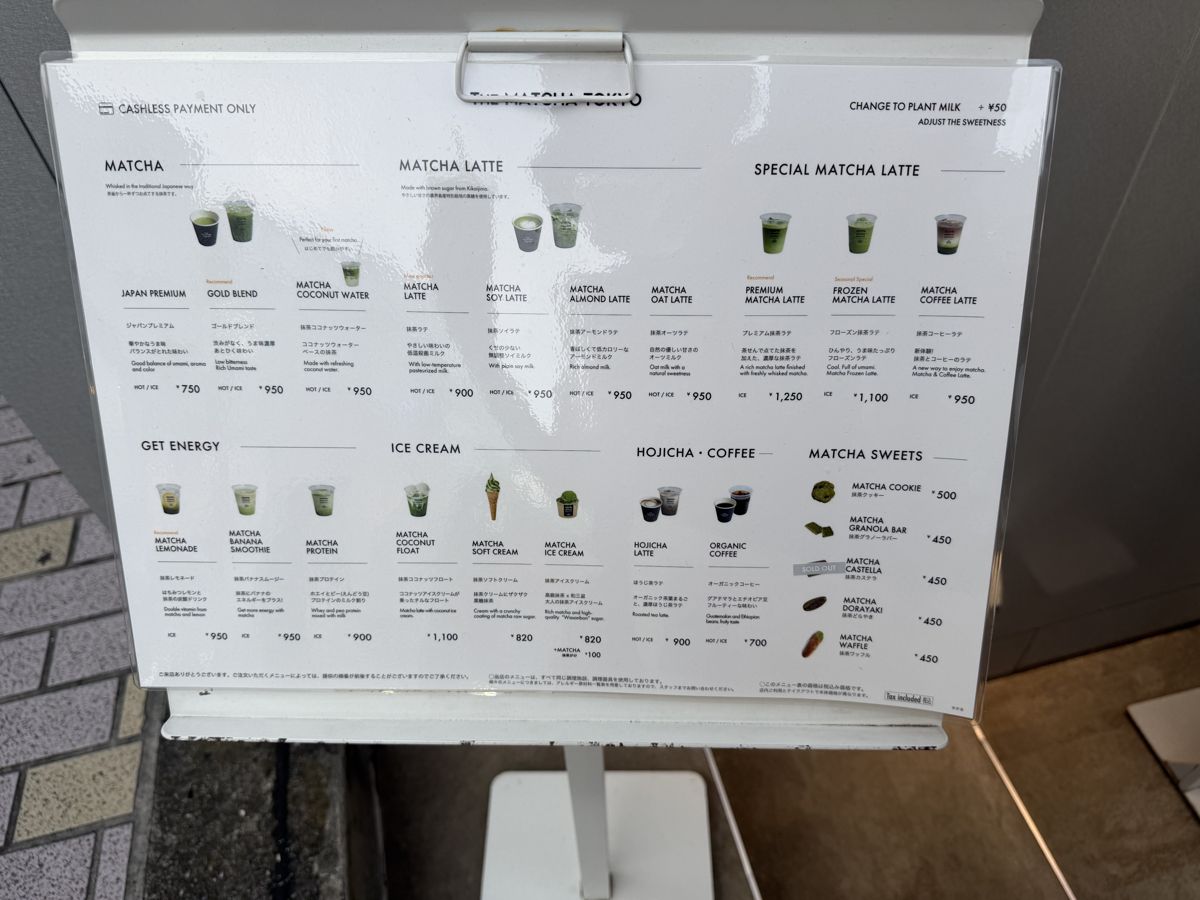
Straight matcha: Japan Premium & Gold Blend
- Price: Japan Premium ¥750 · Gold Blend ¥950 , hot or iced
- My take: I ordered the iced Gold Blend. The board says “low bitterness, rich umami” and that is right: round, almost savory, nothing like the harsh green powder in airport lattes. If you think you hate matcha, try this cup before deciding. The downside: at ¥950 it costs the same as an espresso-bar drink, and you finish it in a few minutes, standing.
- Whisked the traditional way, one cup at a time. It is the same preparation a tea ceremony uses, without the kneeling.
Matcha lattes: ¥900–950, brown sugar from Kikaijima
- Price: Matcha Latte ¥900 · soy / almond / oat ¥950 · plant-milk swap on any drink +¥50
- The lattes are sweetened with brown sugar from Kikaijima, a small island in Kagoshima. A very Japanese detail in a very Instagram drink.
- Splurge option: Premium Matcha Latte ¥1,250 is a rich latte finished with freshly whisked matcha on top. The seasonal Frozen Matcha Latte ¥1,100 exists for August afternoons.
Matcha sweets: ¥450–500
- Price: cookie ¥500 · granola bar, dorayaki, waffle ¥450
- The matcha castella was sold out the day we went. Small-batch items here do run out, so don’t count on anything in the sweets case being there.
How to order: four steps, no Japanese needed
- Get your card out before you reach the counter. Credit card or IC card (Suica/Pasmo). There is no cash register at all.
- Pick your lane: straight matcha if you want to taste the tea, latte if you want comfort. First-timers: iced Gold Blend.
- Point at the menu and say the name since the board is in English and the staff hear these orders from visitors all day.
- Watch the whisk. Your cup is made to order with a bamboo chasen, so there is a short wait. It is the tea ceremony’s drink, made at street speed.
Show this to the staff
Screenshot this block. Point at a line if you want to order in Japanese, or just say the English name; both work.
One matcha latte, less sweet (抹茶ラテを甘さ控えめでお願いします)
Can you make it with oat milk? (オーツミルクに変更できますか?)
Which one do you recommend? (おすすめはどれですか?)
Why a cup of tea costs ¥950 now
TSŪ INFORMATIONwhat Japanese connoisseurs know
The world is in a real matcha shortage. Matcha is ground from tencha (shade-grown leaves that take about five years of cultivation before a field produces properly). Global demand roughly tripled between 2010 and 2023 while Japan’s tea farmers aged out of the work. Top ceremonial tencha from Uji, Nishio, Yame and Kagoshima now sells out within weeks of harvest, and wholesale prices have jumped sharply since 2025. So when a Tokyo stand charges ¥950 for a properly whisked organic cup, that is what the leaf costs now, not a tourist markup. At least you are drinking it in the country it comes from.
How to spot fake matcha (and the silkworm connection)
Because of the shortage, a lot of the green powder on the market is not really matcha: powdered ordinary sencha, sweetened blends, or dyed “matcha-style” mixes. Real matcha is made only from tencha, and you can check it yourself. Screenshot this before you buy tins as souvenirs:
☐ Color check: deep emerald with a soft, natural yellow undertone. A flat neon green that never varies usually means added coloring.
☐ Taste check: umami first, then a gentle bitterness and a sweet finish. If it is only harshly bitter, or oddly sugary, it is not proper matcha. Ceremonial-grade is valued because it tastes savory.
☐ Foam check: whisked well, real matcha holds a fine creamy foam for a minute or more; fakes fizzle in seconds.
☐ Label check: look for a named prefecture (Uji, Nishio, Yame, Kagoshima), a harvest year, ideally a producer. The ingredient list should say green tea and nothing else.
☐ Price check: genuine stone-milled ceremonial matcha cannot be dirt-cheap in 2026. If the price looks too good, be suspicious of the label.
TSŪ INFORMATIONwhat Japanese connoisseurs know
The vivid green of many cheap “matcha-flavored” sweets does not come from tea at all. It is often copper chlorophyllin (銅葉緑素) which is a food colorant classically extracted from silkworm droppings (蚕沙 sansha, a by-product of silk farming). It is legal, food-safe, and used in some famous mass-market matcha ice creams, but it is the clearest line between “matcha-flavored” and matcha. What a 通 does in a Japanese supermarket: turn the package over. If the label lists 着色料(銅葉緑素), coloring, copper chlorophyllin, that green came from a silk farm, not a shaded tea field. Real matcha needs no coloring; the shade-growing gives it the color.
The quiet way to drink it
 IKI STYLE
the Japanese idea of cool
Everyone photographs the cup. What makes it 粋 is the order you do things in: take the first sip within the first minute, standing at the counter, before the foam settles and the ice waters down the whisked tea. Freshly whisked matcha changes fast, and its texture is half the drink; after ninety seconds it is gone. Locals drink first, then photograph the half-empty cup. Nobody will say anything if you don’t, and that is why it counts as 粋.
Quick facts: THE MATCHA TOKYO Harajuku
Seats: very few. On our Sunday visit they were all taken. Plan to drink standing or strolling
Hours: 11:00–19:00 (last order 18:50; from the sign we photographed; check before you go)
Payment: cashless only: credit card or IC card
Other locations: Omotesando, Shibuya MIYASHITA PARK, Shinjuku and more, same menu concept citywide
FAQ
Is this the same matcha as a tea ceremony?
Same preparation (real matcha whisked with a bamboo chasen), but the setting is casual on purpose. It is the tea ceremony’s drink without the ceremony.
Does matcha have caffeine?
Yes, roughly comparable to a light coffee, released more slowly. If you are caffeine-sensitive, the hojicha latte (¥900 ) is the lower-caffeine escape hatch on the same menu.
Can I pay cash anywhere?
Not at THE MATCHA TOKYO. Some independent stands take cash, but assume cashless across Tokyo’s new-wave matcha shops and you will never be caught out.
Is it vegan-friendly?
Yes. Straight matcha is plant-based by definition, and any latte swaps to soy, almond or oat milk for +¥50.
Do I need to queue? Can I sit down?
We walked up on a July Sunday evening with no real wait, but every seat was taken, mostly by visitors like us. Cups are whisked one at a time, so a short line moves slower than a coffee line; allow ten relaxed minutes and plan to drink standing. If sitting matters to you, aim for a weekday or an off-peak hour.
• Matcha stands = Tokyo’s espresso bars · THE MATCHA TOKYO is the easiest entry point
• Order: iced Gold Blend ¥950 first · latte ¥900 second visit
• Cashless only (card or charged Suica/Pasmo, no yen)
• Prices are up because of the global matcha shortage, and you are drinking it at the source
• Seats are scarce, so plan to drink standing or while walking
• Fake-matcha tell: neon green + only-bitter taste · real matcha = umami, and its label says just “green tea”
• 粋 move: first sip within a minute, photo after
• Prices from the board we photographed, July 2026 · nobody paid us anything
More from this trip: this stop was Stop 1 of our Tokyo Sweets Crawl covers the full day of matcha, nama-donuts, craft chocolate and an emperor’s anpan. The raw photos live in our Tokyo camera roll. Planning the whole trip? Start with our Perfect Japan Guide.
More from us: the coffee half of Japan’s caffeine story is our % Arabica and kissaten guide, and the chocolate half is Minimal bean-to-bar.