Updated September 2026. Every photo is from our own visit.
Budget: beautiful souvenirs from ¥300 (≈ $2); most under ¥1,000 (≈ $6)
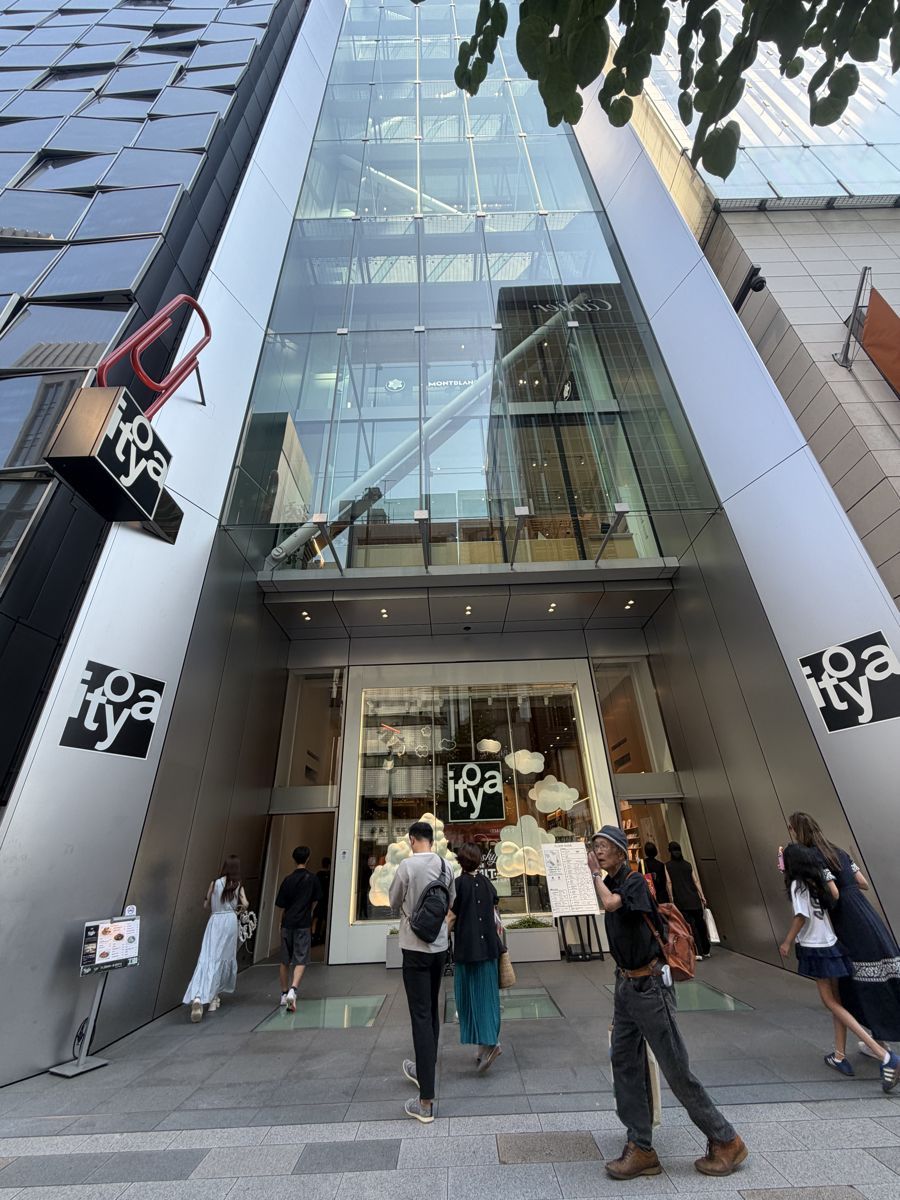
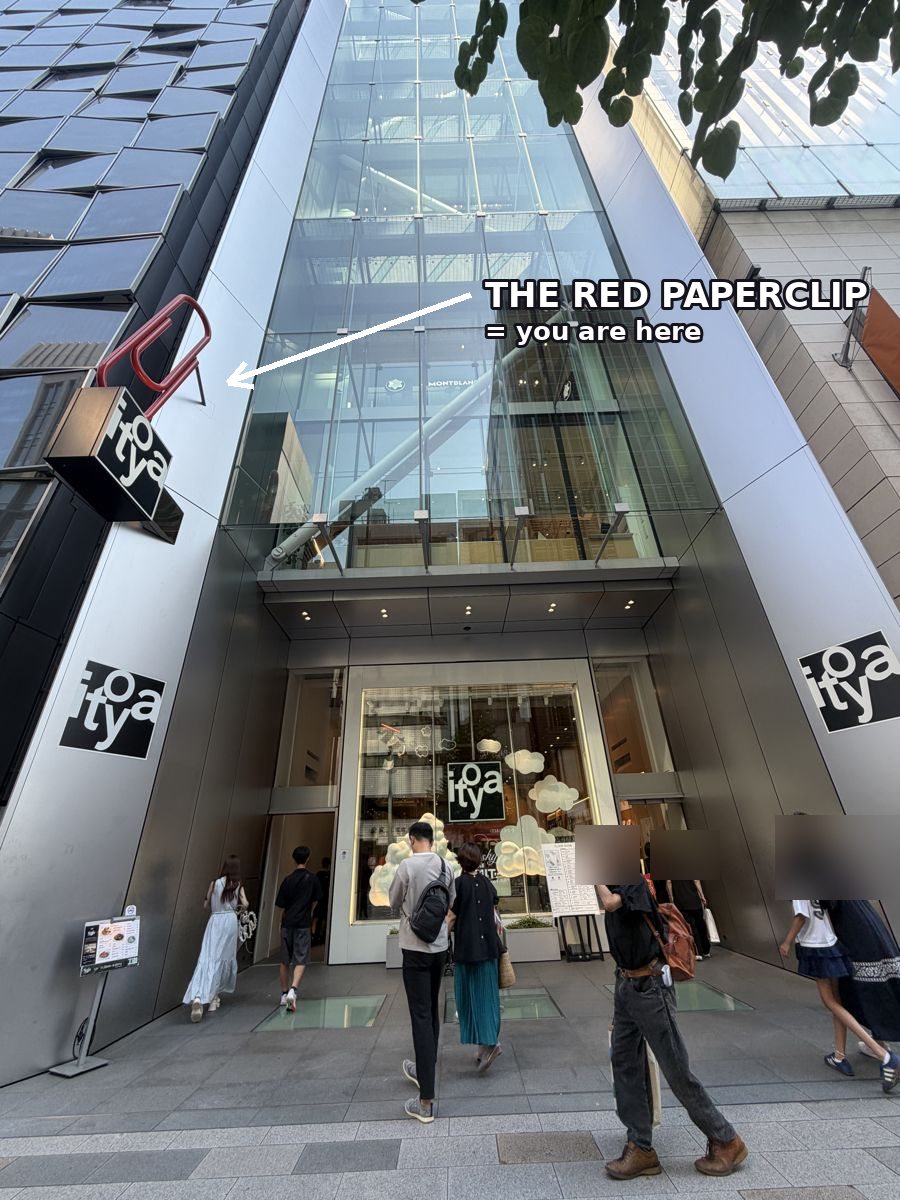
Where: Chuo-dori, Ginza, 3 minutes from Ginza Station. Look up for the giant red paperclip
Watch out for: your suitcase space. Twelve floors take longer than you expect, so pick three before you go in
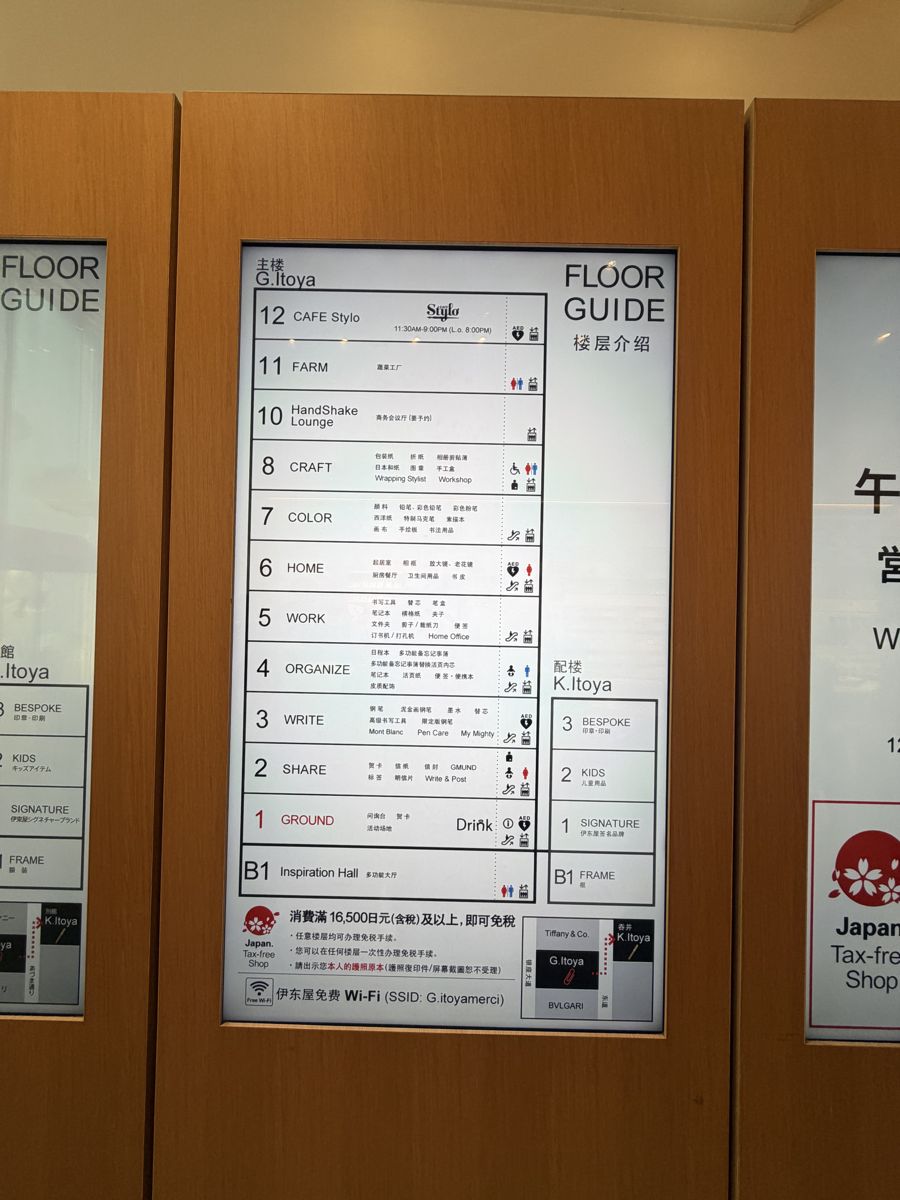
1. Twelve floors, one theme each. Photograph the floor guide by the elevator and pick two or three
2. Best souvenir floors: 1F cards · 2F letters · 7F washi paper
3. Most of the nice things here cost less than a coffee back home
4. Before you leave: the “mail yourself a letter” move on 2F, explained below. Do it.
Every country has souvenirs. Japan has 文房具 bunbōgu, stationery, and people here take it as seriously as Italians take leather. In Ginza there is a twelve-story building that has sold only stationery since 1904. It is also where my husband sat down and wrote me a letter. More on that below.
Why a stationery store deserves your Tokyo time
Japan never stopped writing by hand, and I think I know why. We are reserved: 本音 honne, our real feelings, rarely get said out loud, so we write them in letters. From there it spread to “kawaii” sticker sheets, glitter pens and washi-patterned postcards, all for decorating things you feel but would never say. Itoya is where people shop for all of it. It is more than a souvenir store with pens; it is the 120-year-old headquarters of Japanese paper civilization, and walking around it is one of the calmest, most Japanese things you can do in Tokyo.
Floor by floor: where to actually go
- 1F Cards: greeting cards and postcards, including die-cut pieces you will not find anywhere else
- 2F Letters: writing paper, envelopes, stamps, and the Write & Post corner (the insider move lives here)
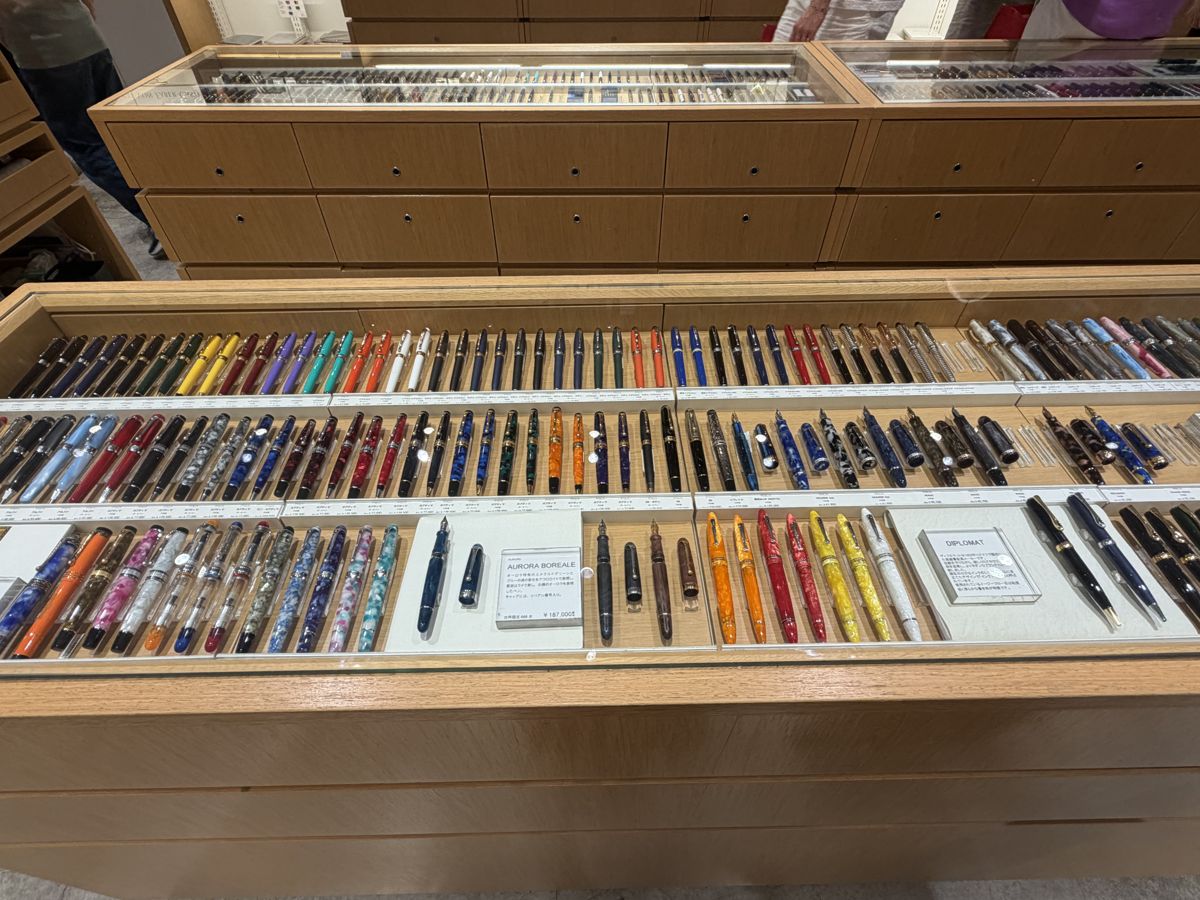
- 3F Pens: roughly 2,000 of them, from ¥300 (≈ $2) gel pens that write better than your pen at home to fountain pens with waiting lists
- 4F–6F Notebooks, travel goods, home: all browse-worthy; ration your time
- 7F Fine paper: over a thousand kinds including 和紙 washi, with a Paper Concierge on staff, a kind of paper sommelier
- 12F Café Stylo: for when your decision muscles give out
What to buy: souvenirs that feel like secrets
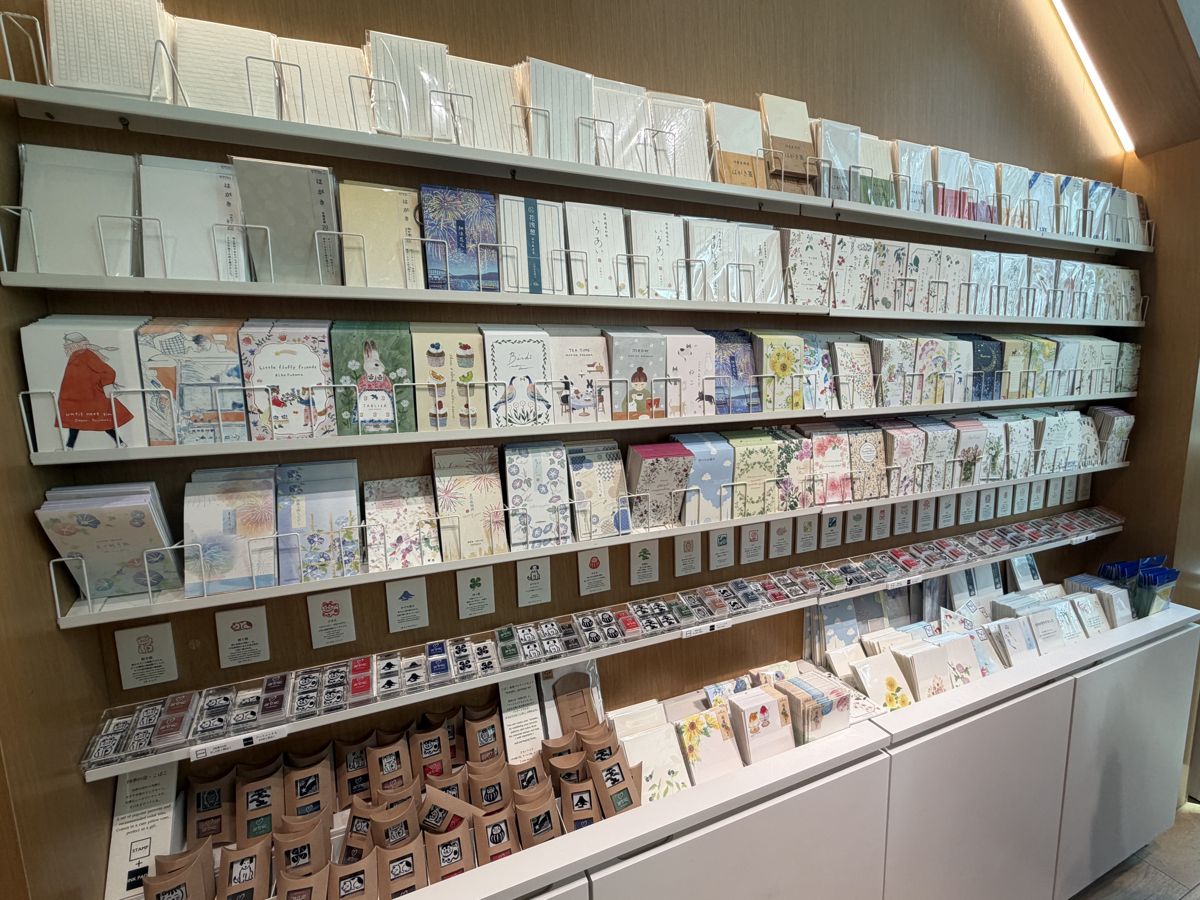
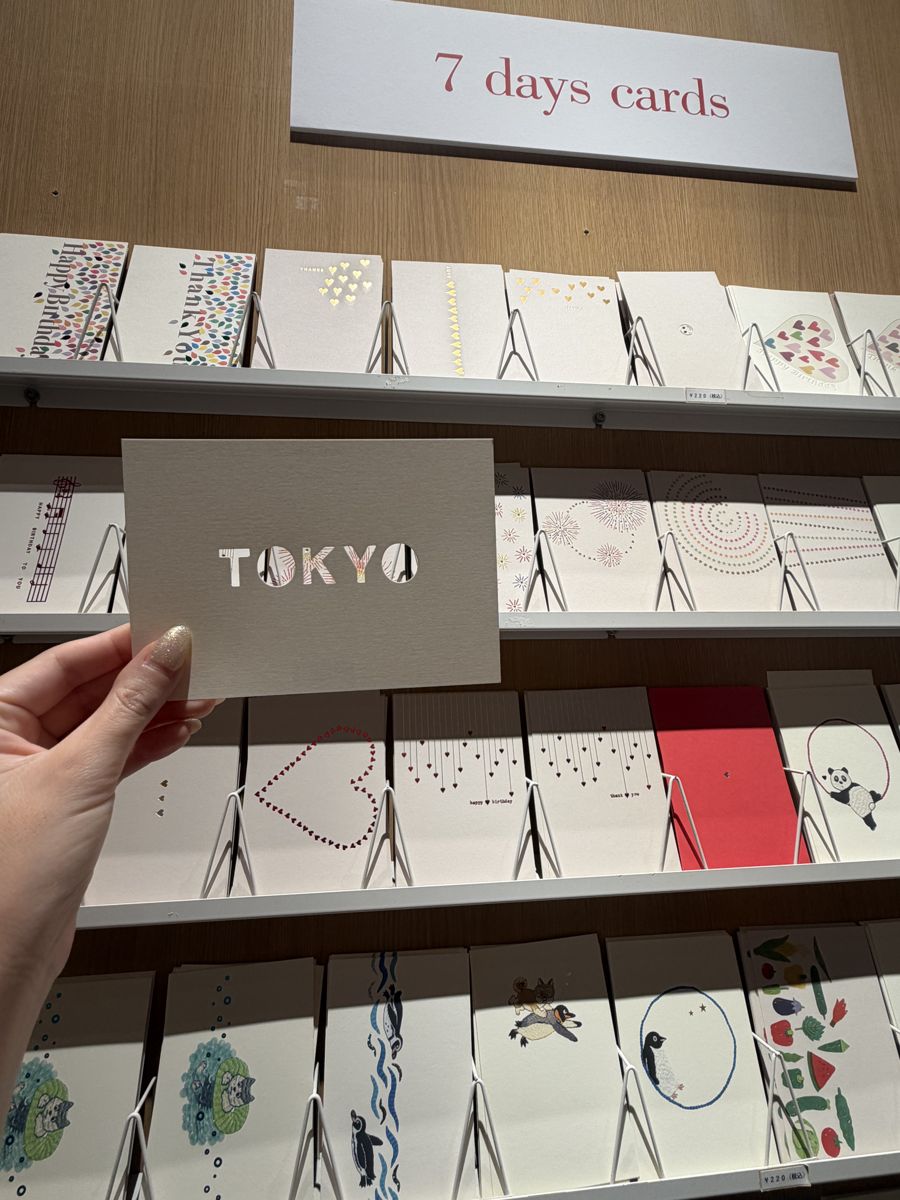
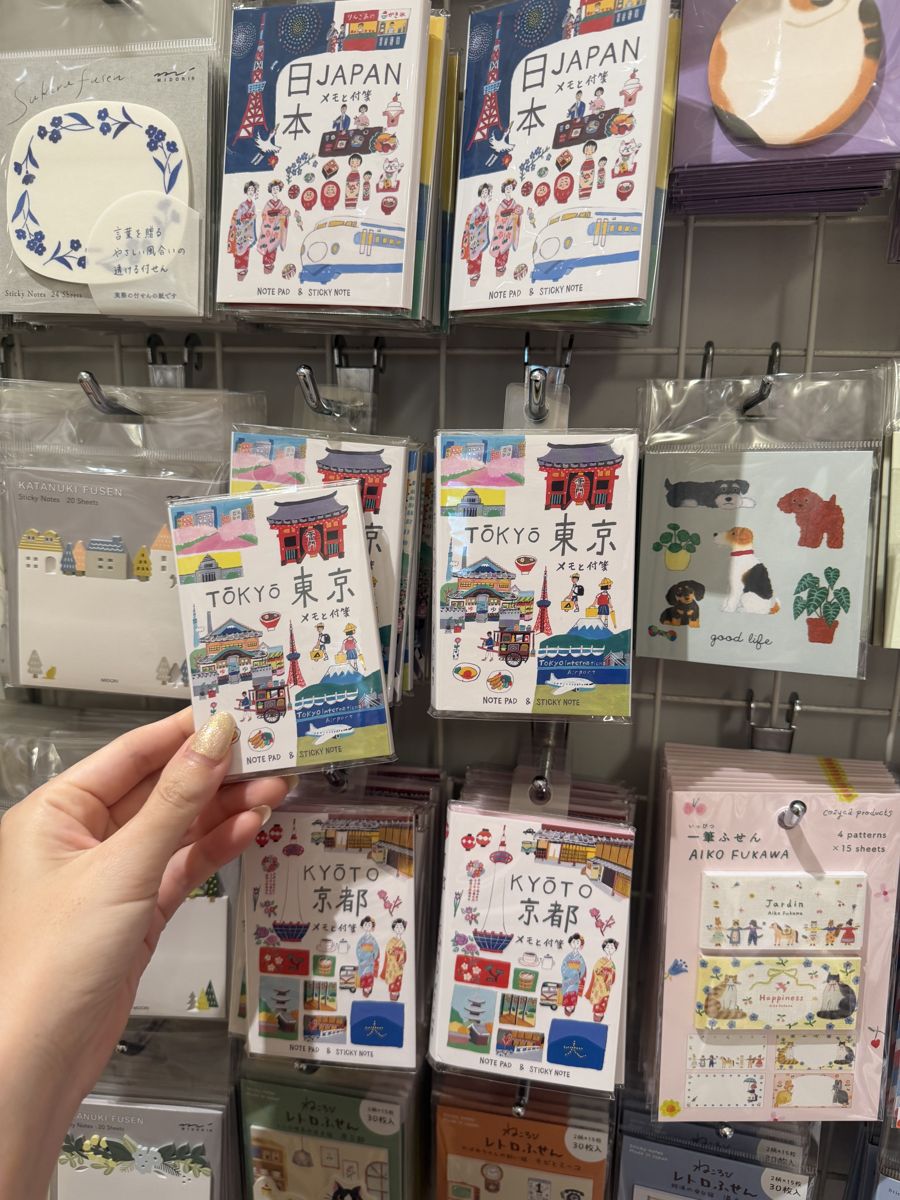
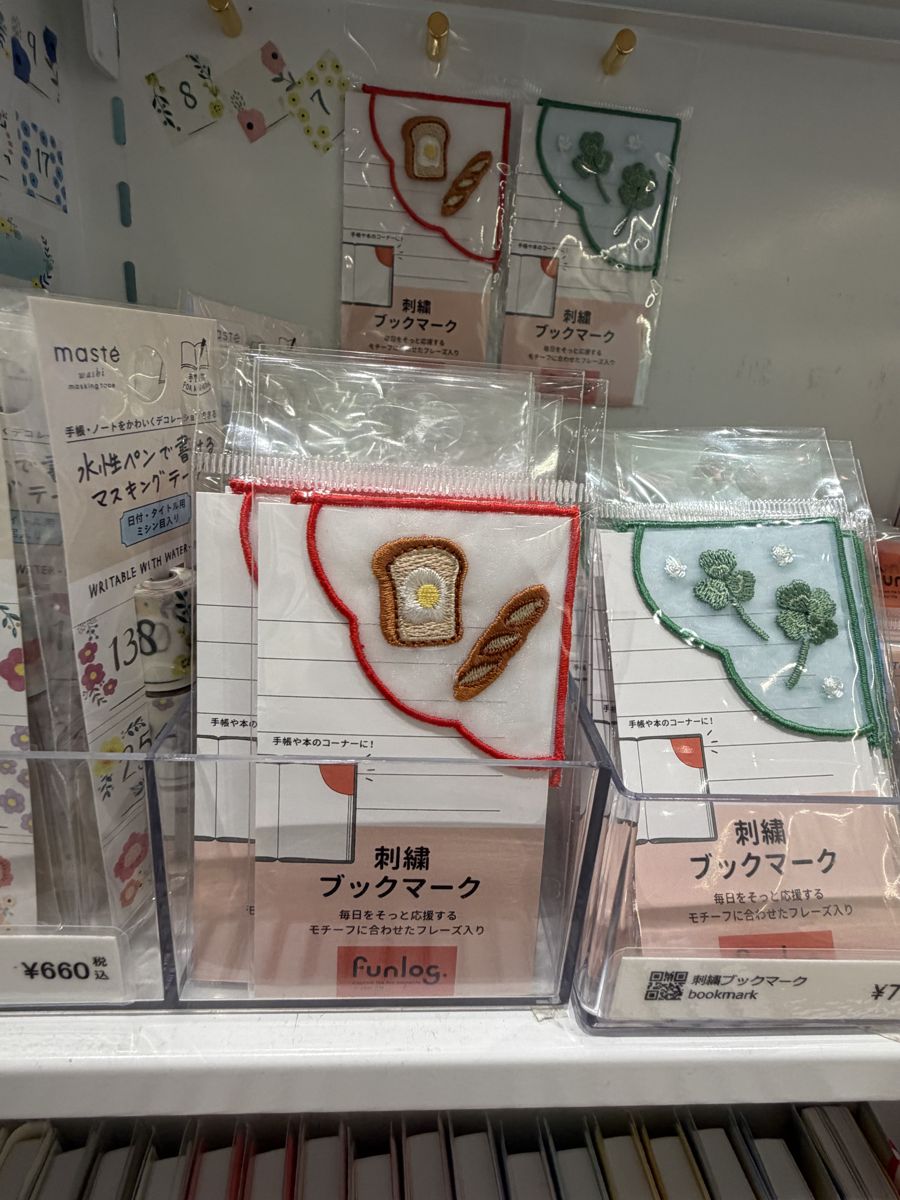
Our shortlist, tested for suitcase-worthiness: 一筆箋 ippitsusen, “one-stroke” note paper: small sheets for a few handwritten lines, the 粋 iki of saying a lot with a little. Around ¥400–700 (≈ $2–4). Die-cut cards like our TOKYO one. Sticker sets of Japan icons. Embroidered bookmarks. Yes, that is a piece of toast stitched in thread. And one silly gel pen for yourself.
 TSŪ INFORMATION
what Japanese connoisseurs know
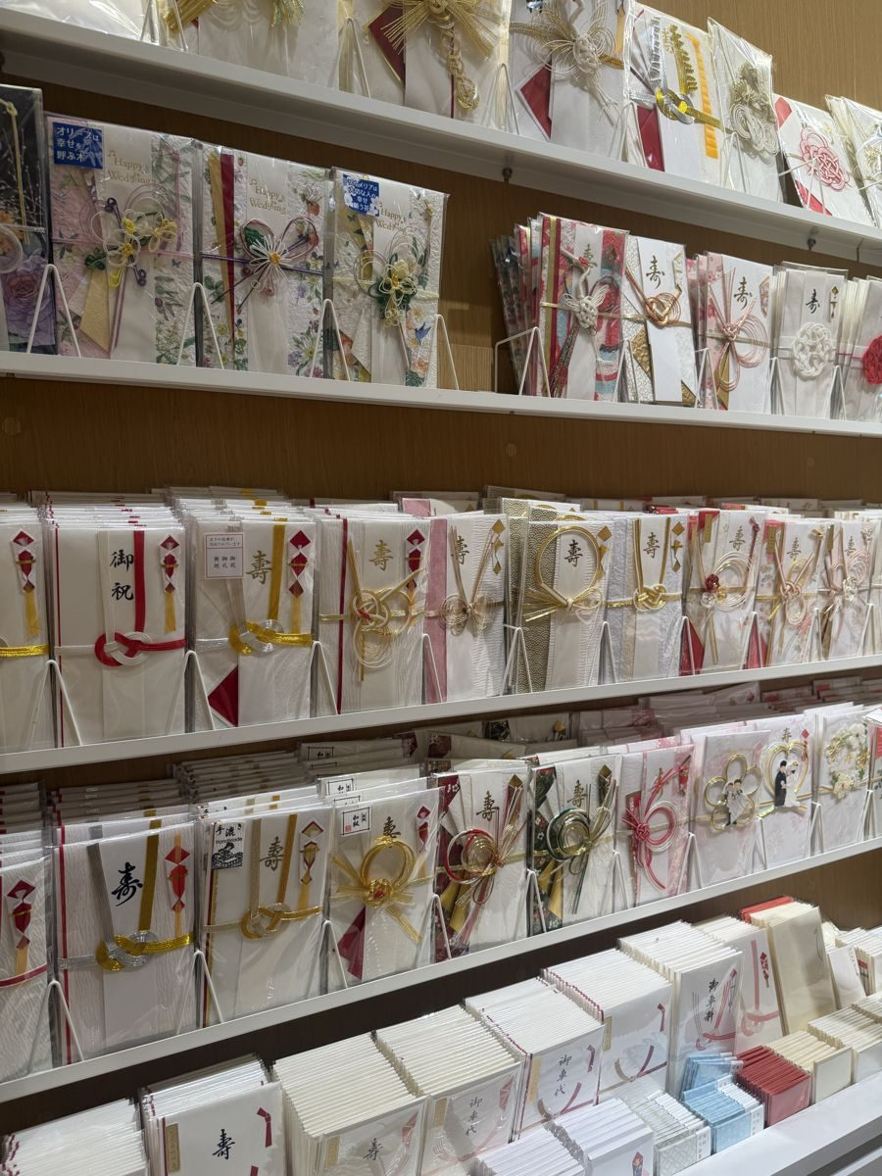
Those decorated envelopes deserve a pause. The cords are mizuhiki, and they work like a language. Japan has a different envelope for each ceremonial occasion: 冠婚葬祭 kankonsōsai, the four big ceremonies of life. The details carry the meaning. Red-and-white cords for celebrations, black-and-white for funerals; knots that untie for happy events you would gladly repeat, knots that never untie for a wedding. If you give the wrong one, people notice, so you will see locals stop and think at this shelf too. A ¥400 (≈ $2) envelope here means more than most luxury goods, and now you can explain it to your friends back home.
For edible souvenirs in the same part of Ginza, see Shorakuen Kiosk at GINZA SIX: mountain-shaped sweets, cookie tins and a ¥500 gacha, with shelf prices.
What things actually cost (photographed August 2026)
We went back on 29 August 2026 and photographed the tags this time, so the ranges above now have hard numbers under them. Everything here is the tax-included price on the shelf, what you pay at the till. Itoya’s tags show both: the big number is with tax, the small one in brackets (本体) is without.
| Item | You pay |
|---|---|
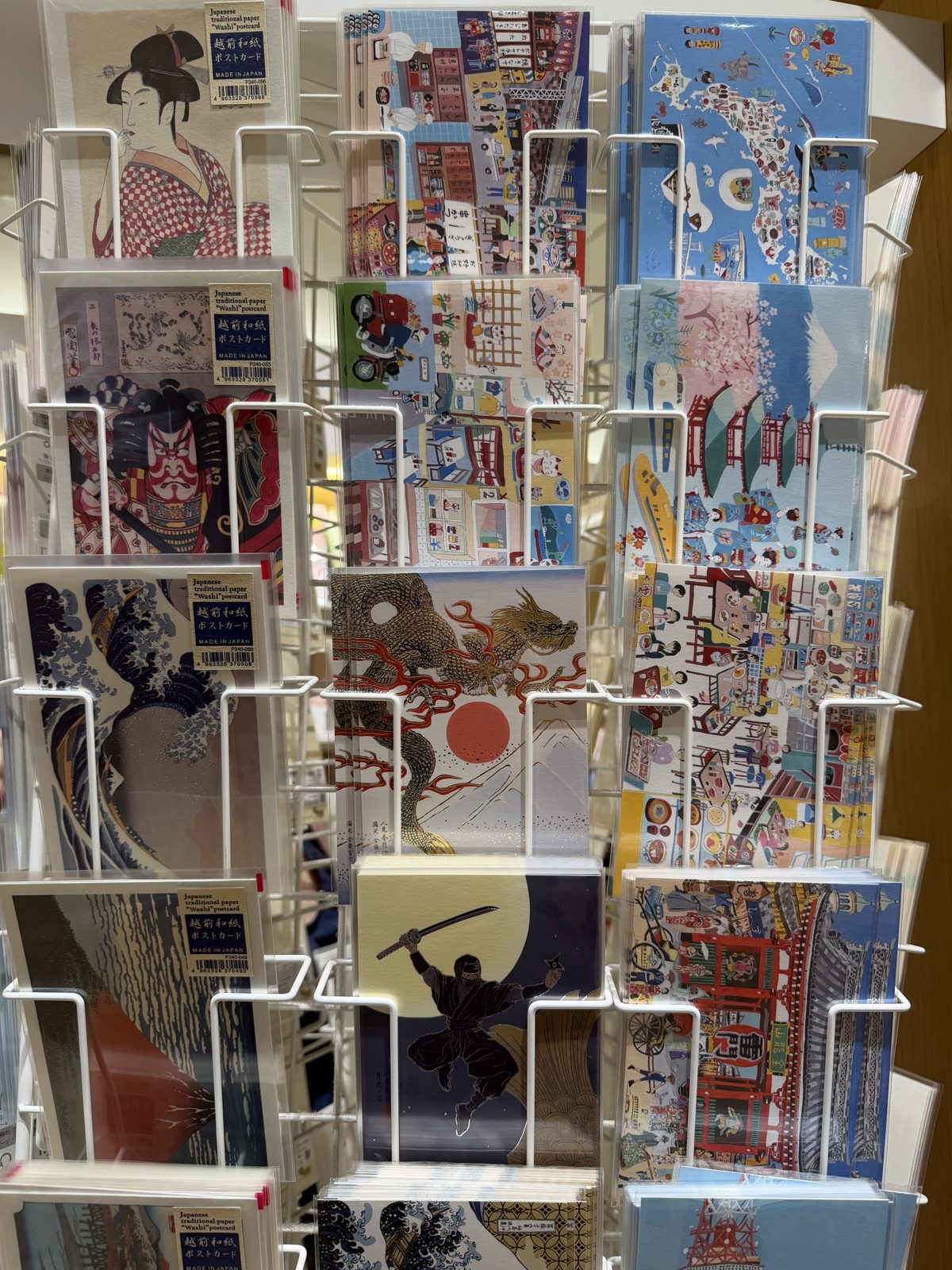
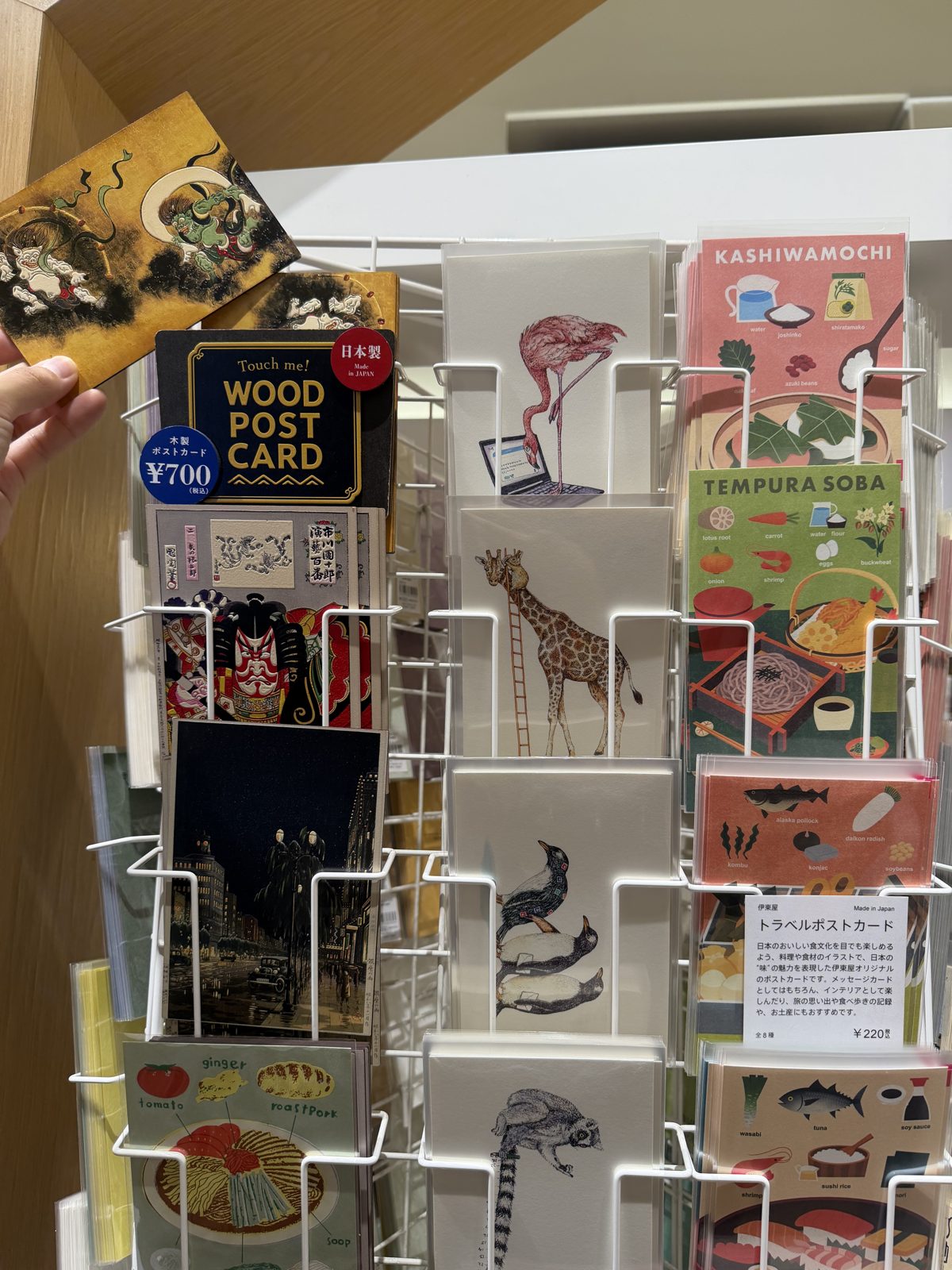
| Postcard (standard, from the racks) | ¥220 |
| Wood postcard, made in Japan | ¥700 |
| EDiT B7 notebook, “Japanese Icons” cover (kokeshi dolls / ramen) | ¥1,320 |
| おいしい魚トランプ, “delicious fish” playing cards, part 1 | ¥1,760 |
| Solar Eclipse (New York) hand-painted compact mirror | ¥5,500 |
| Brigitte Tanaka × Itoya embroidered organza pouch | ¥7,150 |
| Having a postcard framed: white frame ¥7,799 + dark-green mat ¥605 + the postcard ¥220 | ¥8,624 |
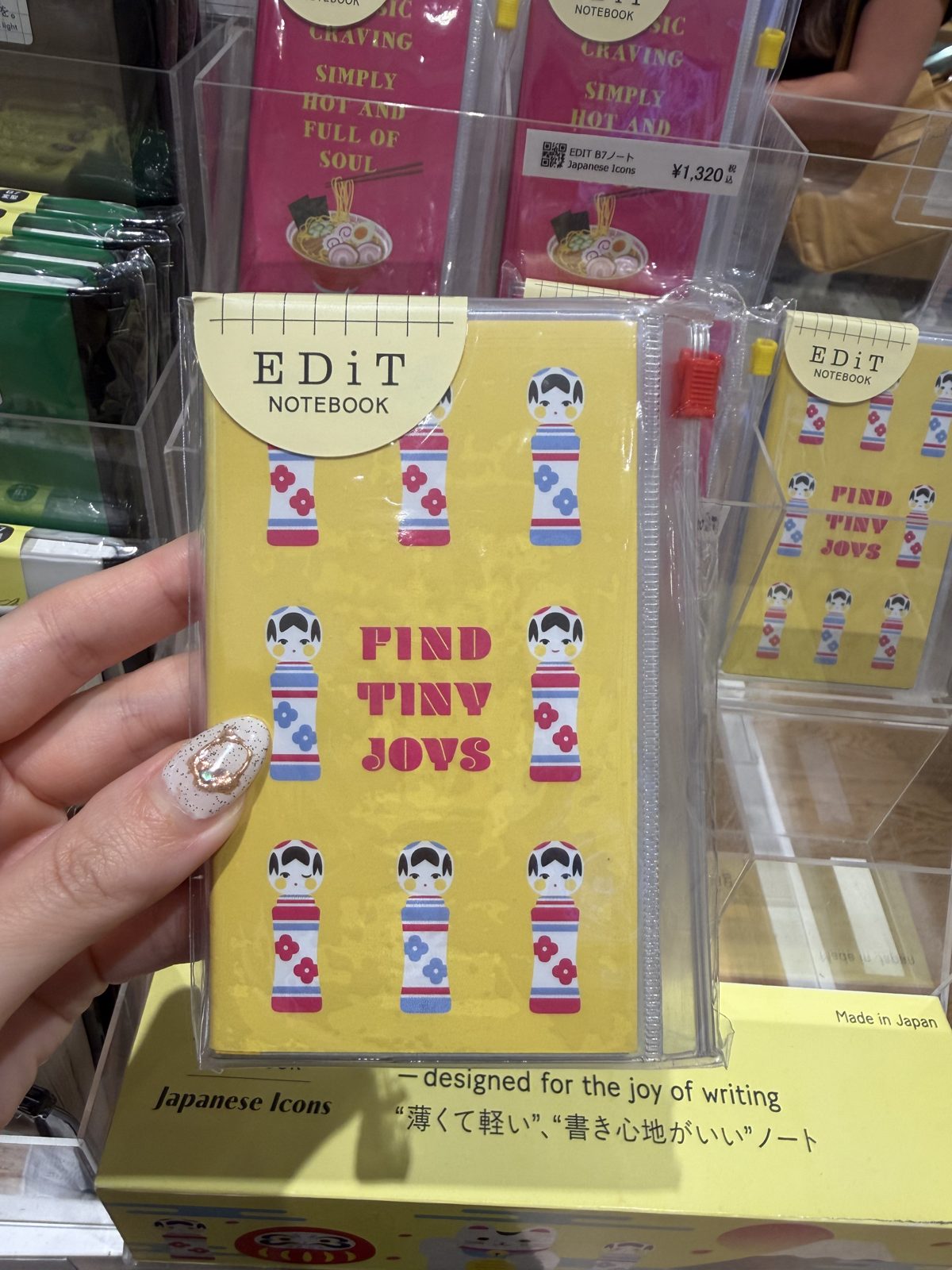
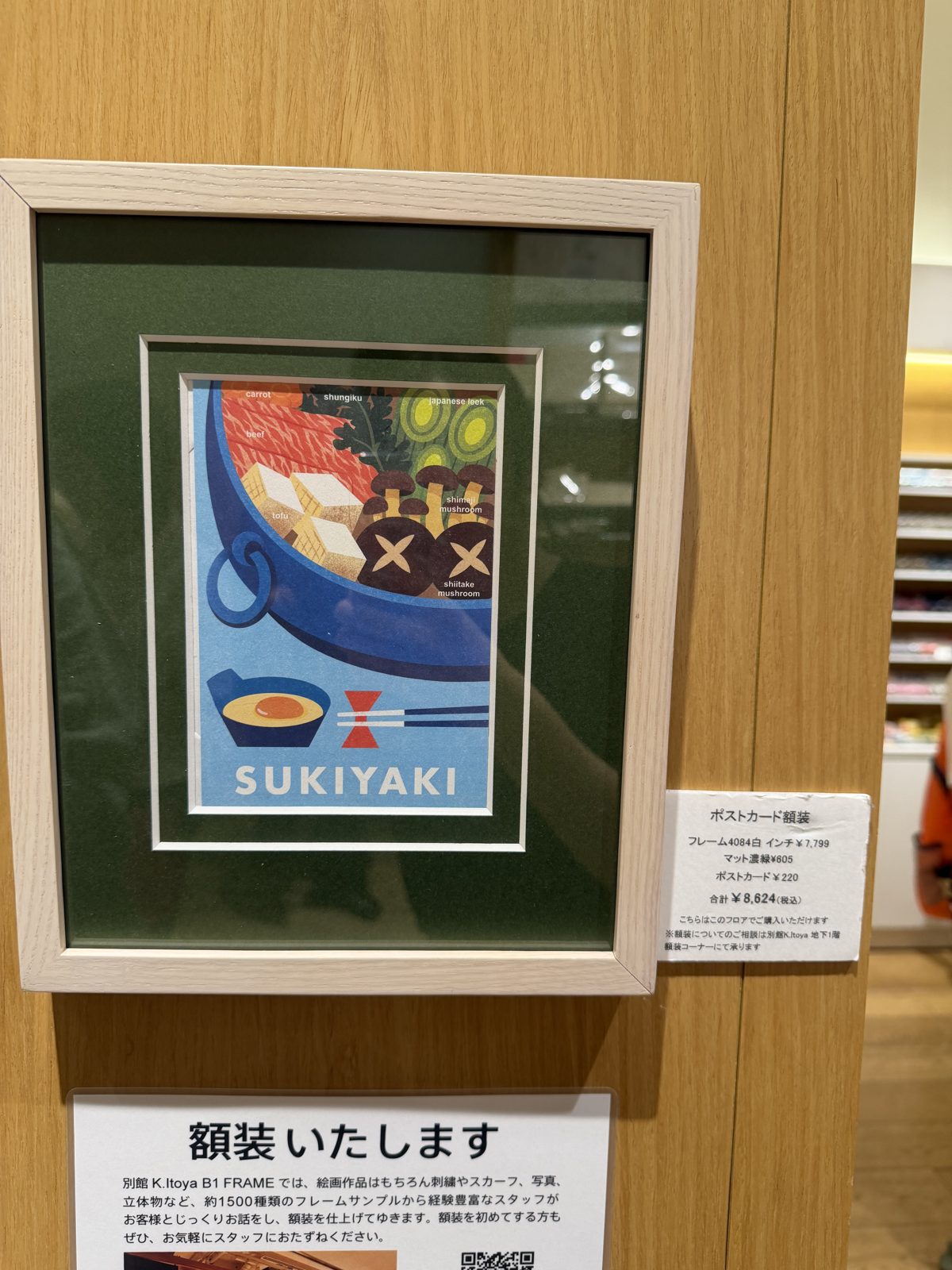
The tags answered two things we had only guessed before. First, the cheap end is cheap: a ¥220 postcard is the lowest-priced thing in the building that you would actually want. Second, the expensive things are the collaborations. The Brigitte Tanaka pouch at ¥7,150 is embroidered organza made for Itoya, and you will only find it here. In between, most of what people buy costs ¥700–1,500.
The 粋 iki move: mail yourself a letter
 IKI STYLE
the Japanese idea of cool
Here is the one thing almost no tourist does. On 2F there is a Write & Post corner: buy a card, sit down, write a few lines to yourself about this exact day (where you ate, what surprised you, who you were with) and mail it to your own home address. It costs a postcard and a stamp. Two weeks after you get home, when the trip has started to blur, a letter arrives from Ginza in your own handwriting. We have never met anyone who regretted it.
The moment that got me
I have to admit something. My favorite moment at Itoya had nothing to do with shopping. I stood in an aisle watching visitors from overseas pick up a pen or a sheet of paper, things I have used all my life without thinking, and say wow, out loud, smiling. To a ballpoint pen. Seeing my everyday things become someone else’s treasure changed how I see my own country a little.
言霊 kotodama: the reason all of this exists
The day we visited was my birthday. Somewhere between the card walls my husband disappeared for a few minutes. That evening he handed me a card he had chosen, and written, right there in the building. The cake is long gone. I still have the card: my name, that date, his handwriting.
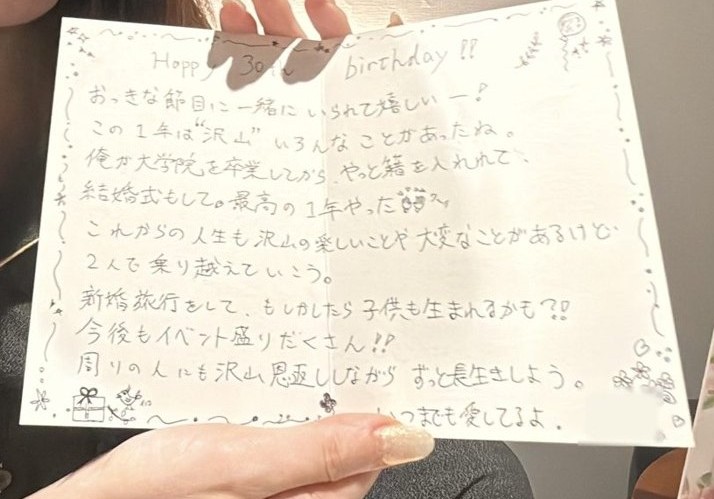
Japan has an old belief called 言霊 kotodama: the belief that words carry a spirit, and that writing them down gives them power. We rarely say what we feel out loud, so we put it on paper, and Itoya has been selling the paper for over 120 years. If you buy a card, write something in it and give it to someone.
• Chuo-dori, Ginza · look for the red paperclip · plan 60–90 min
• Photograph the floor guide → hit 1F cards, 2F letters, 3F pens, 7F washi
• Good souvenirs: 一筆箋 ippitsusen note paper · die-cut cards · sticker sets · mizuhiki envelopes
• The 粋 iki thing to do: write yourself a postcard at 2F Write & Post and mail it home
• 言霊 kotodama: words carry spirit. Buy one card and write it to someone you love
• Typical hours 10:00–20:00, checked July 2026; confirm before a special trip
Nobody paid us; Itoya has no idea who we are. We just think a ¥400 envelope is a better souvenir than a ¥4,000 keychain.
More from this trip: the photos began in our Tokyo camera roll. The shortlist version, what to actually buy and what to skip, is our stationery souvenir guide, and Kimuraya’s 150-year-old anpan is a five-minute walk away. And if you are planning your own visit, start with our Perfect Japan Guide: live exchange rates, pocket phrases with native audio, and everything we tell friends before they visit.
Read next
If Itoya is the big, polished side of Tokyo stationery, Kuramae is the small, handmade side: a half-day walk through Kuramae covers the mt masking-tape lab, a notebook maker and a scone shop, with every price we paid.