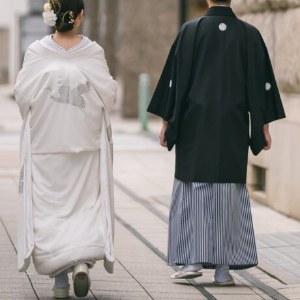
I was born and raised in Nagoya. This is the shop I send every visitor to, and I warn them about it at the same time.
Budget: a serious souvenir haul is ¥3,000–5,000 · most snacks are under ¥200
Where: about 500 branches · many open until 3am, some never close
What trips people up: low, but it is loud and narrow, with stock piled to the ceiling on purpose
1. Read the small number on the tag. The big one is before tax; the small one is what you hand over
2. Anything marked ド is Don Quijote’s own brand, and the cheapest on the shelf. Look for the fat yellow katakana
3. Your souvenir budget belongs in the snack aisle, not the gift boxes
4. Tax-free is a separate counter and needs your passport. The rules change on 1 November 2026
5. Go late. After nine it stops being a scrum
Every visitor ends up in a Don Quijote at some point, often by accident, often at eleven at night, holding a basket they did not plan to fill. This is our local branch in Osu, Nagoya, and everything below is what was printed on the shelf tags the afternoon we walked it. Every yen figure below is the tax-included number: the small one in brackets on the tag, not the big one. The store is nearly identical wherever you find one.
What this place actually is
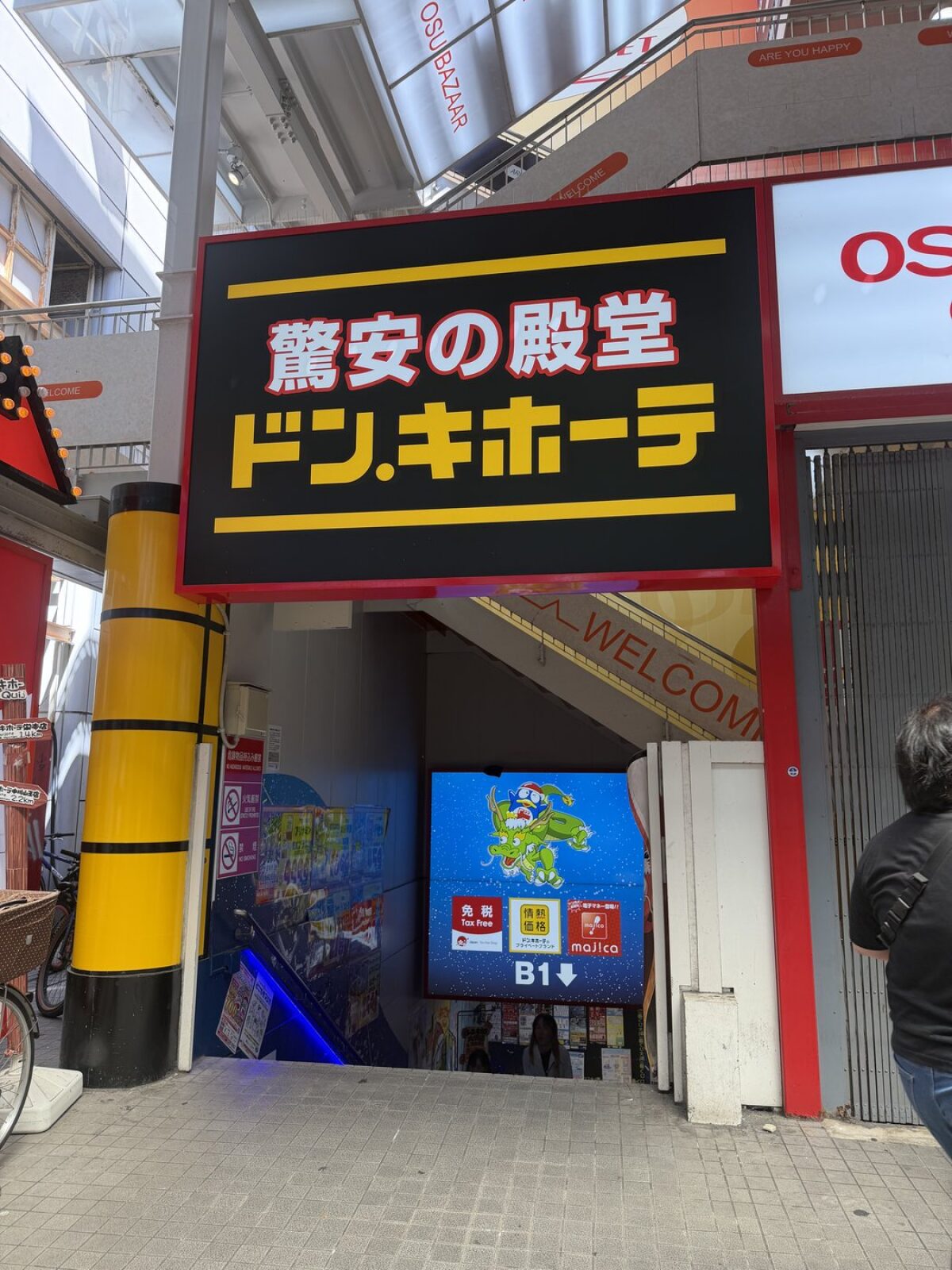
The black-and-yellow sign says 驚安の殿堂 — the palace of astonishing cheapness. It is the company’s own slogan, not something made up for tourists, and the odd first character is a word they coined themselves. Behind that sign there are roughly 500 stores nationwide, many of them open past 3am, selling cosmetics, snacks, whisky, suitcases, rice cookers, Halloween costumes and fresh vegetables on the same floor.
The chaos is on purpose. The merchandising method has a name, 圧縮陳列, compression display. The rules are to keep the aisles narrow, stack stock up to the ceiling and cover every surface with handwritten cards. The idea is that you feel like you are digging for things. It works on me, and I have lived here my whole life.
One more thing nobody warns you about: the song. A synth jingle called Miracle Shopping plays on a loop the whole time you are inside, and you will still be humming it at home.
Read the price tag before anything else
Almost every tag has two numbers, and the big one is not the price. The big figure is before tax; the small figure in brackets is what you actually pay. Food is taxed at 8%, everything else at 10%. Every price below is the small number.
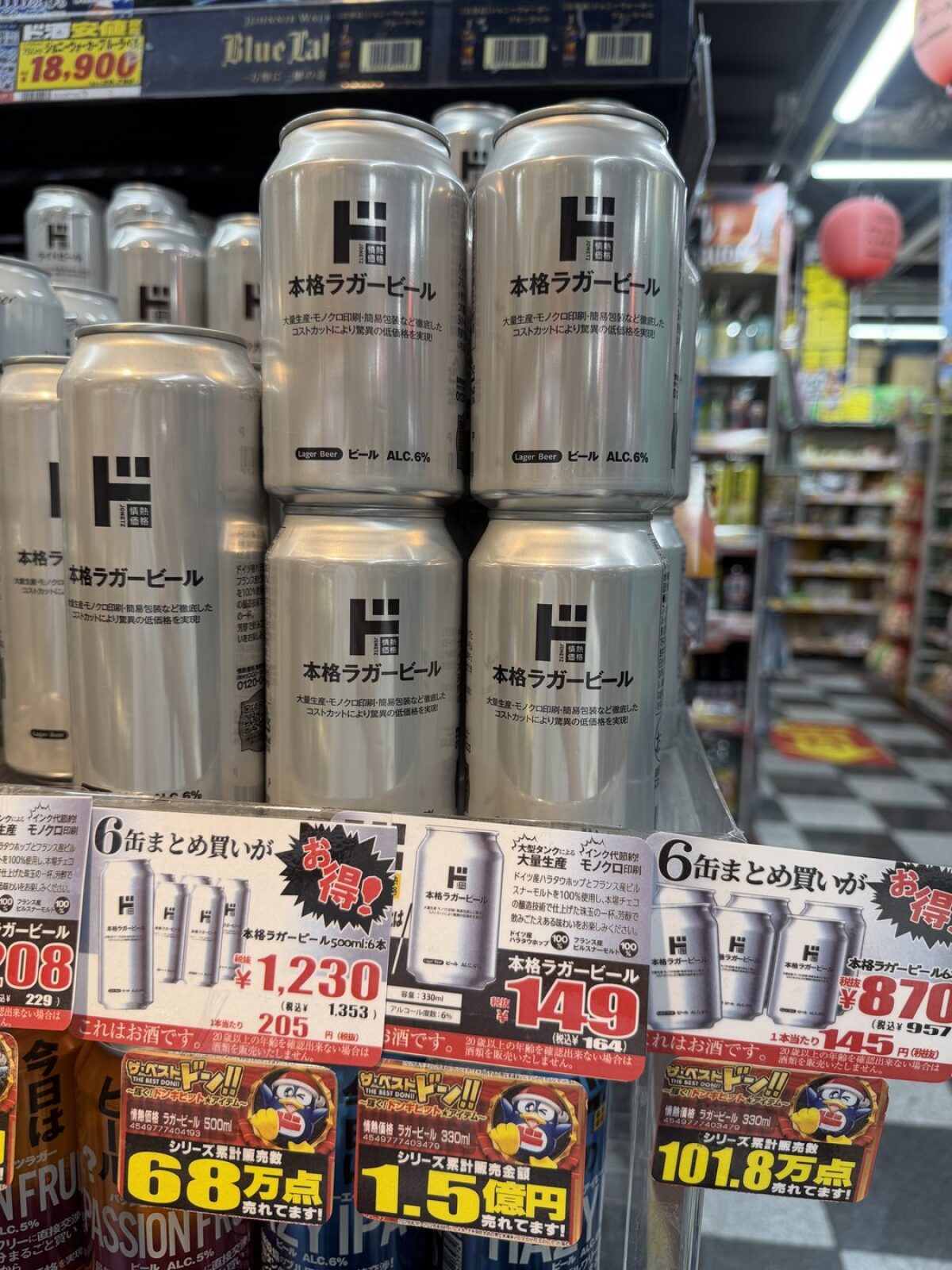
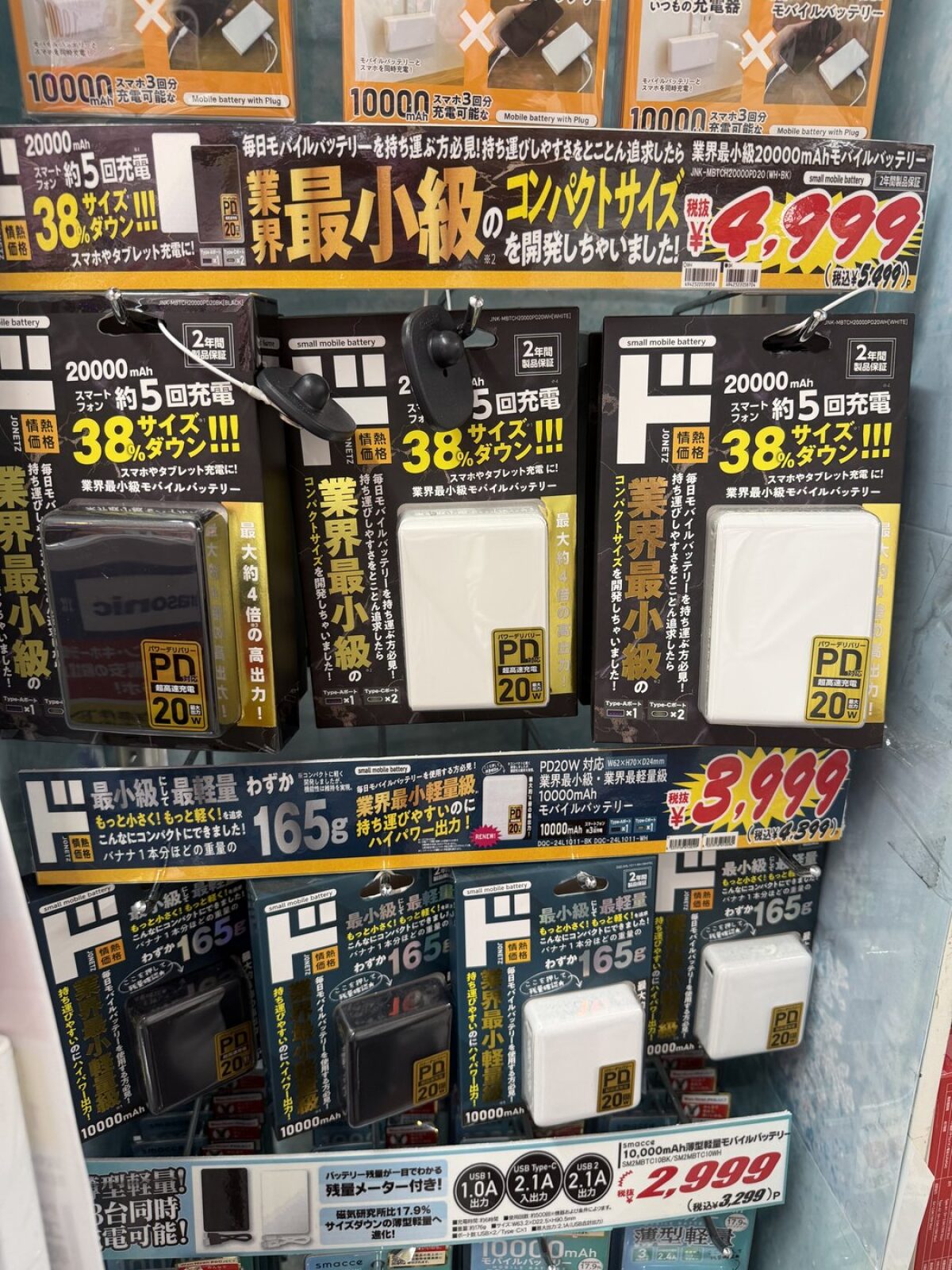
The second thing to learn is the ド mark: one thick katakana character, black on yellow, printed on the packaging. ド means the product is Don Quijote’s own, and that it is the cheapest thing on that shelf. It is their private label, sold under the name 情熱価格 (jōnetsu kakaku, passion price). It is the same kind of product from the same kind of factory, without the brand name and with a lower price. If two products on the shelf do the same job, pick up the one with ド. Locals shop this way without thinking about it.
- Own-label lager, ¥164 a can , or ¥1,353 for six . A national-brand can beside it is roughly double
- Own-label 10,000mAh power bank, ¥4,399 . 165g, 20W fast charge, and the tag brags that it is the smallest in its class
- The handwritten yellow cards saying 担当者おすすめ mean the staff member responsible for this shelf recommends it, not head office. If a shelf is covered in handwriting, somebody there cares about it
 TSŪ INFORMATION
what Japanese connoisseurs know
Follow the handwritten yellow cards. Head office prints the big laminated signs, but the scrawled cards (担当者おすすめ, recommended by the person in charge) are written by hand by the staff member who runs that shelf, about stock they chose. This goes back to the founder’s rule that each employee owns their own square metres of the store. When you cannot decide, ignore the printed signs and buy whatever has the most handwriting around it.
The snack aisle is the souvenir shop
I would spend a visitor’s whole gift budget here, not at the airport and not on boxed sweets with a ribbon. These are the prices:
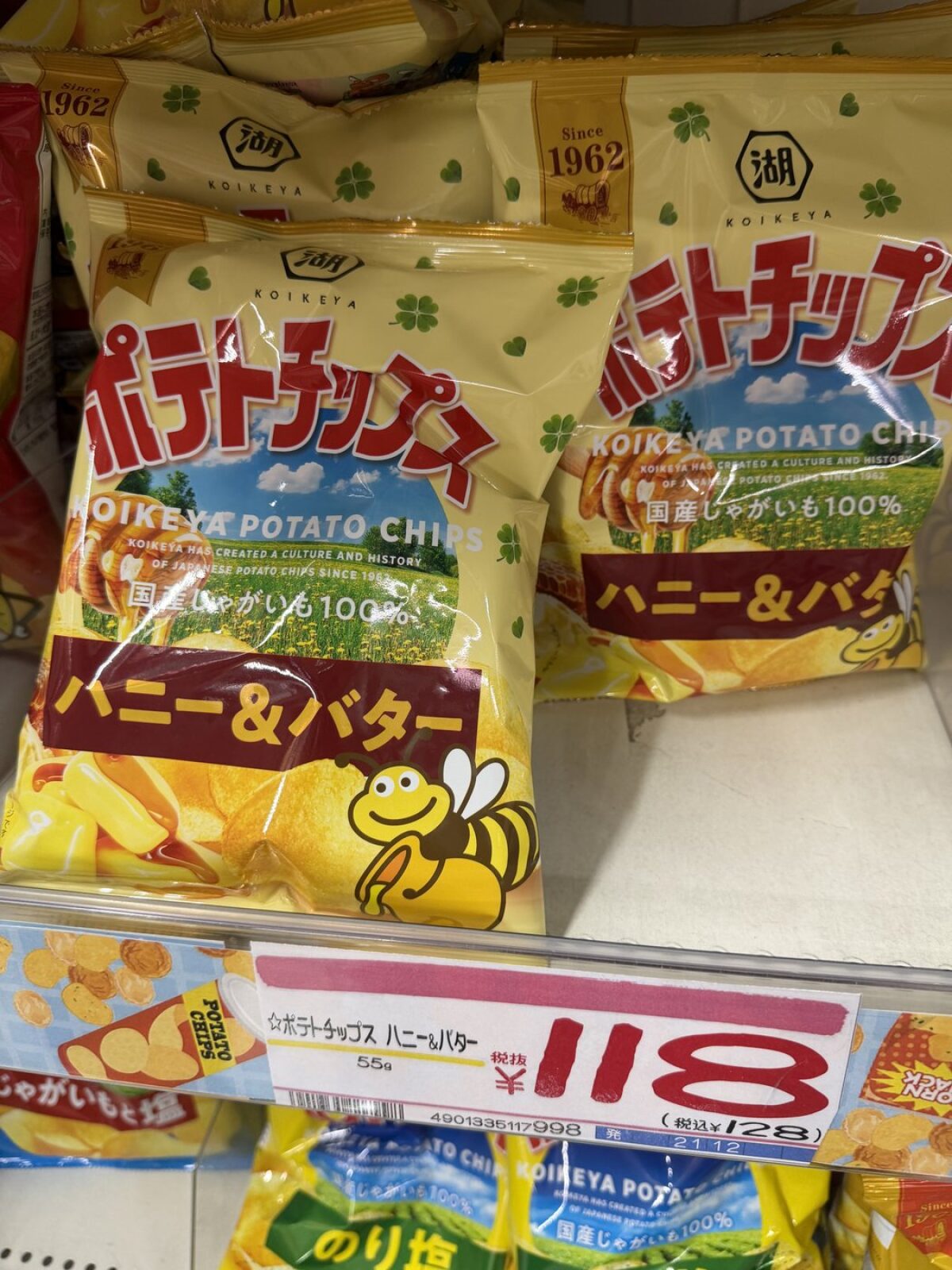
- Koikeya potato chips, honey and butter, ¥128 for 55g. Made with Japanese potatoes, in a flavour you cannot get outside Japan, and light enough to take six home
- 網紅面筋 spicy gluten strips, ¥214 . A snack that went viral in China, and the Osu staff marked it as their own pick. Very spicy, and hard to stop eating
- A million-yen fish cake, ¥108 . Grilled kamaboko printed to look like a banded bundle of ¥10,000 notes, paper band included. The best cheap joke gift in Japan
- Party-size HARIBO, ¥1,706 . Not Japanese at all, but the bag is bigger than anything sold at home and the price makes people stare
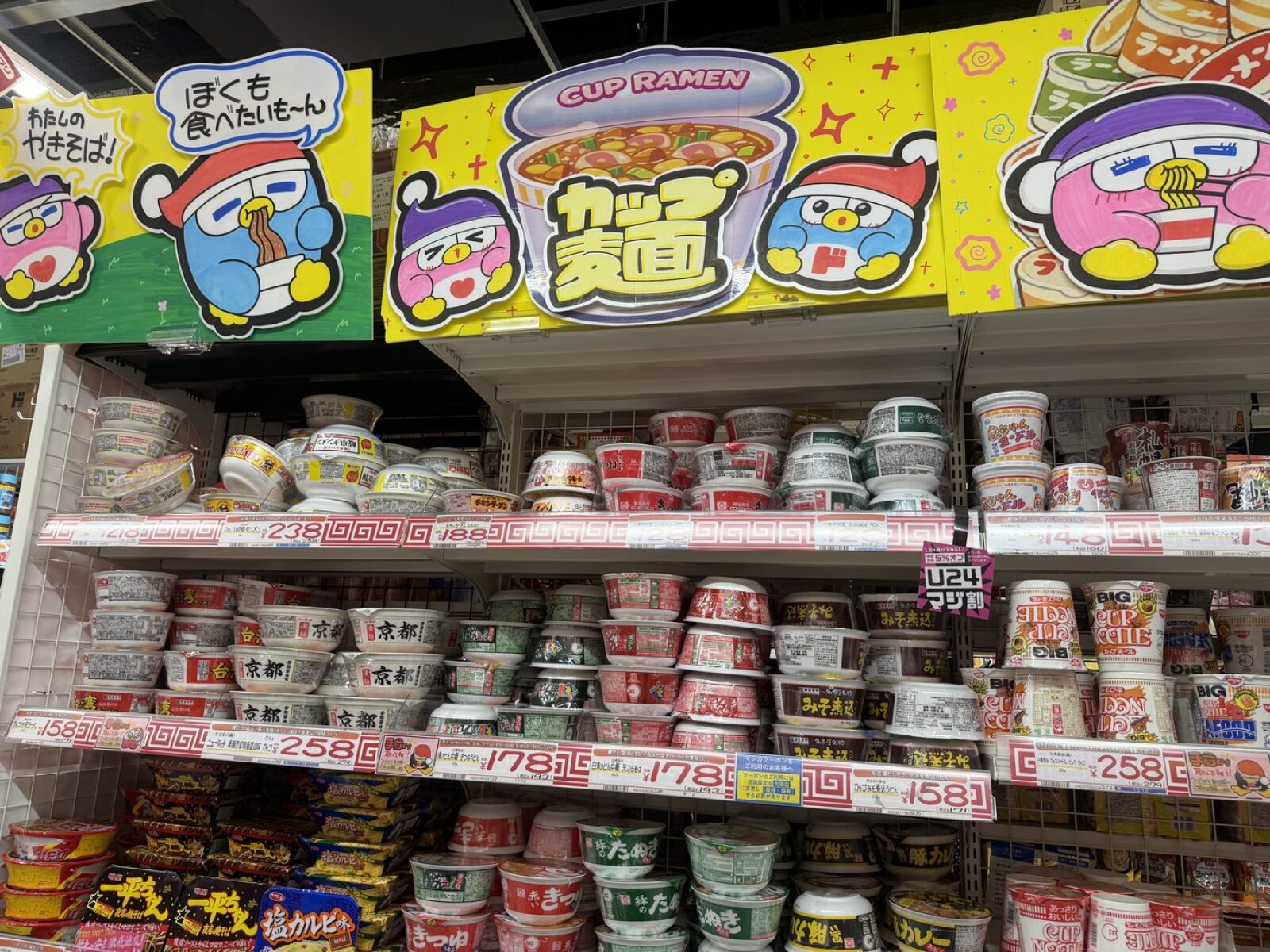
Then there is the instant noodle wall: ¥139 to ¥306 a cup, three shelves deep, including regional editions you will not find in a convenience store. If you want the konbini version of this same shelf, we wrote up what to buy at 7-Eleven.
The Korean cosmetics corner is the real reason locals come
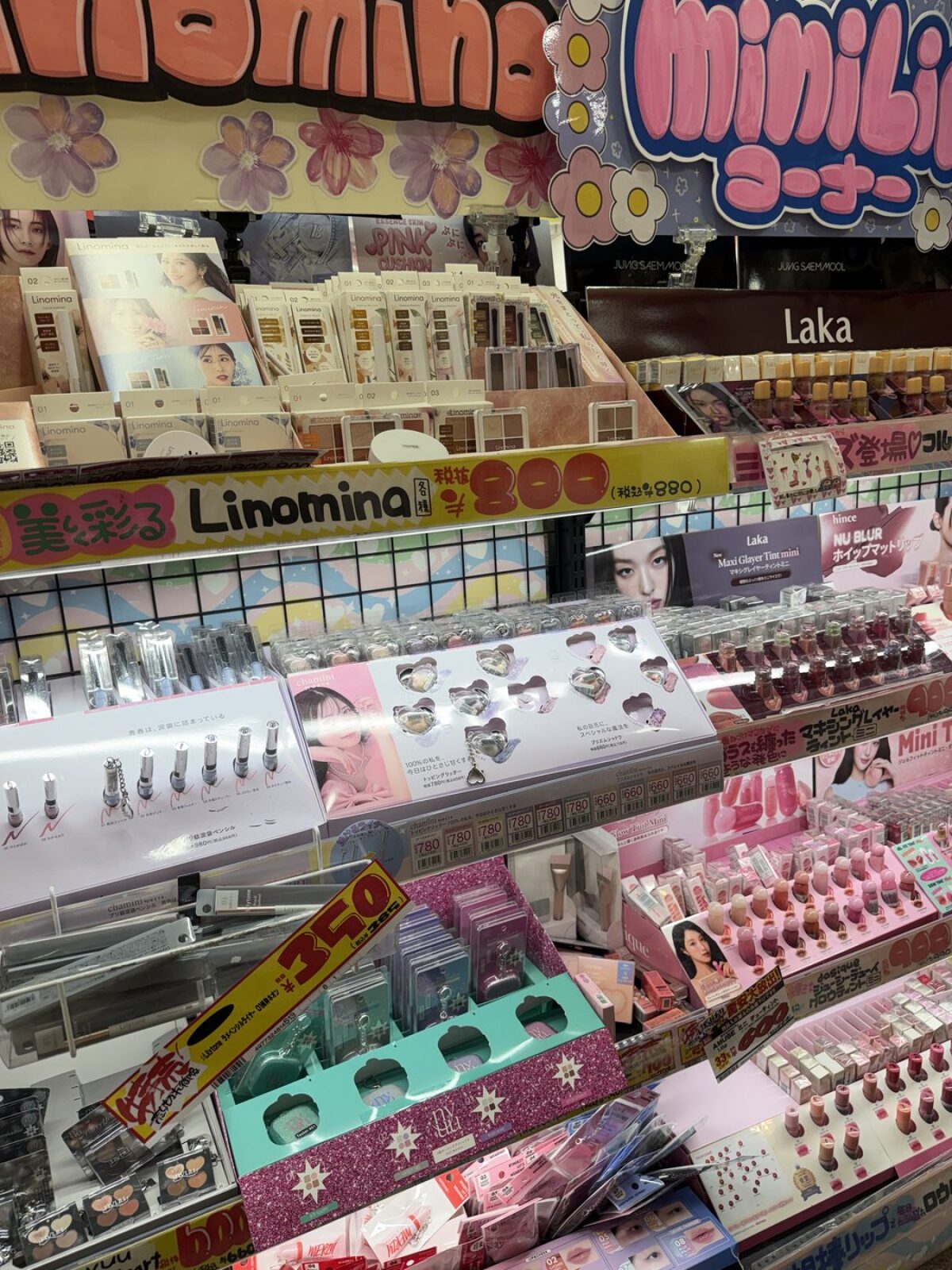
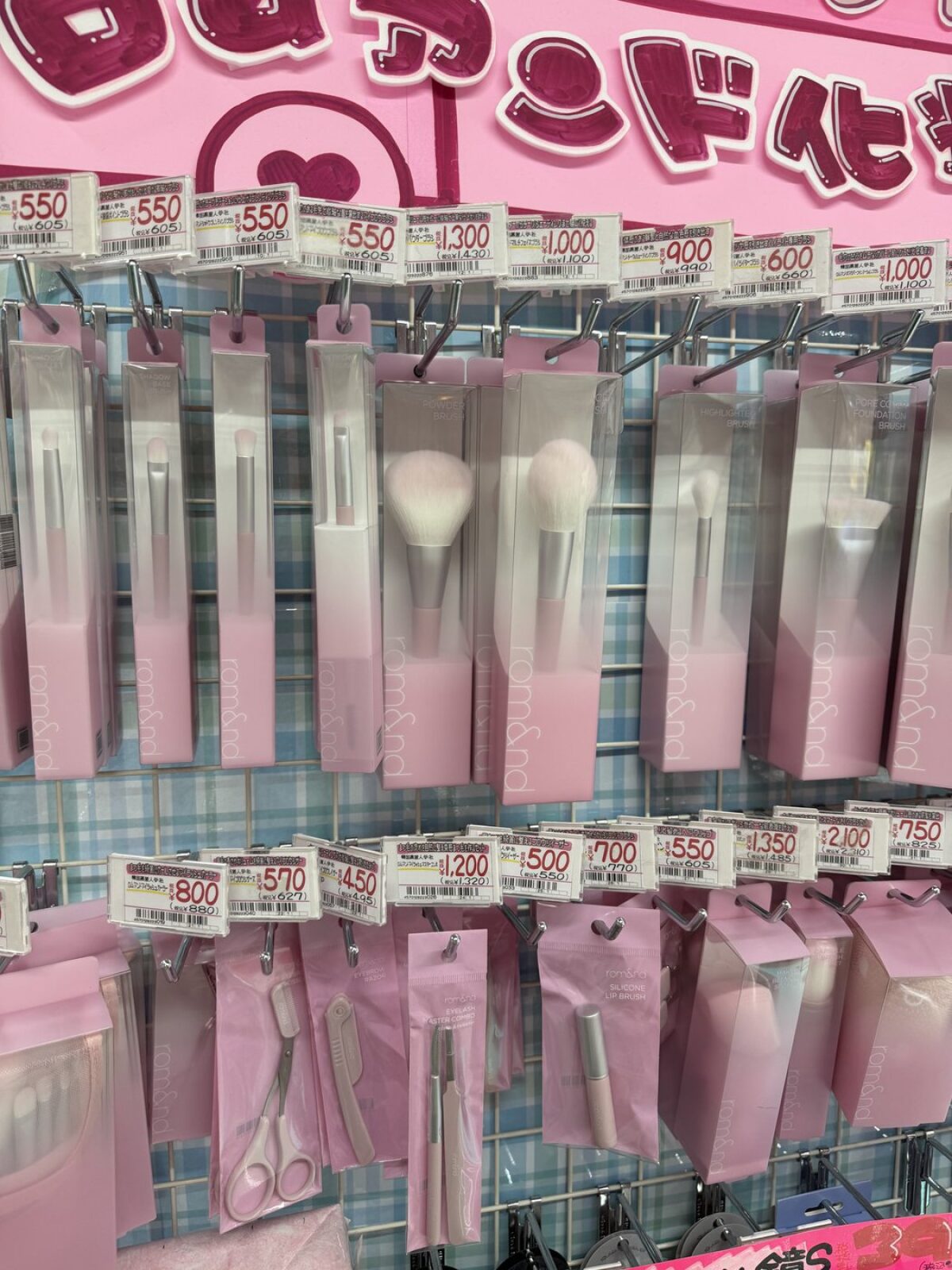
In most branches, beauty takes up half the ground floor, and the loudest section is Korean. Our branch has a corner signposted MINI LIP in bubble letters, stocked with Laka and JUNG SAEM MOOL tints from ¥990 , in mini sizes so that you buy four instead of one.
- Makeup brushes, ¥495–2,310 , hung in a wall of individually tagged sleeves
- The face-muscle stick, ¥2,178 . A metal wand you press into your cheek. It is made in China with Japanese packaging, and it always seems to end up in the basket
- Be careful here. Big Japanese skincare brands are often cheaper at a drugstore. Donki wins on Korean imports and novelty, not automatically on the classics. See what we actually buy at the drugstore
Character goods, sold by weight of enthusiasm
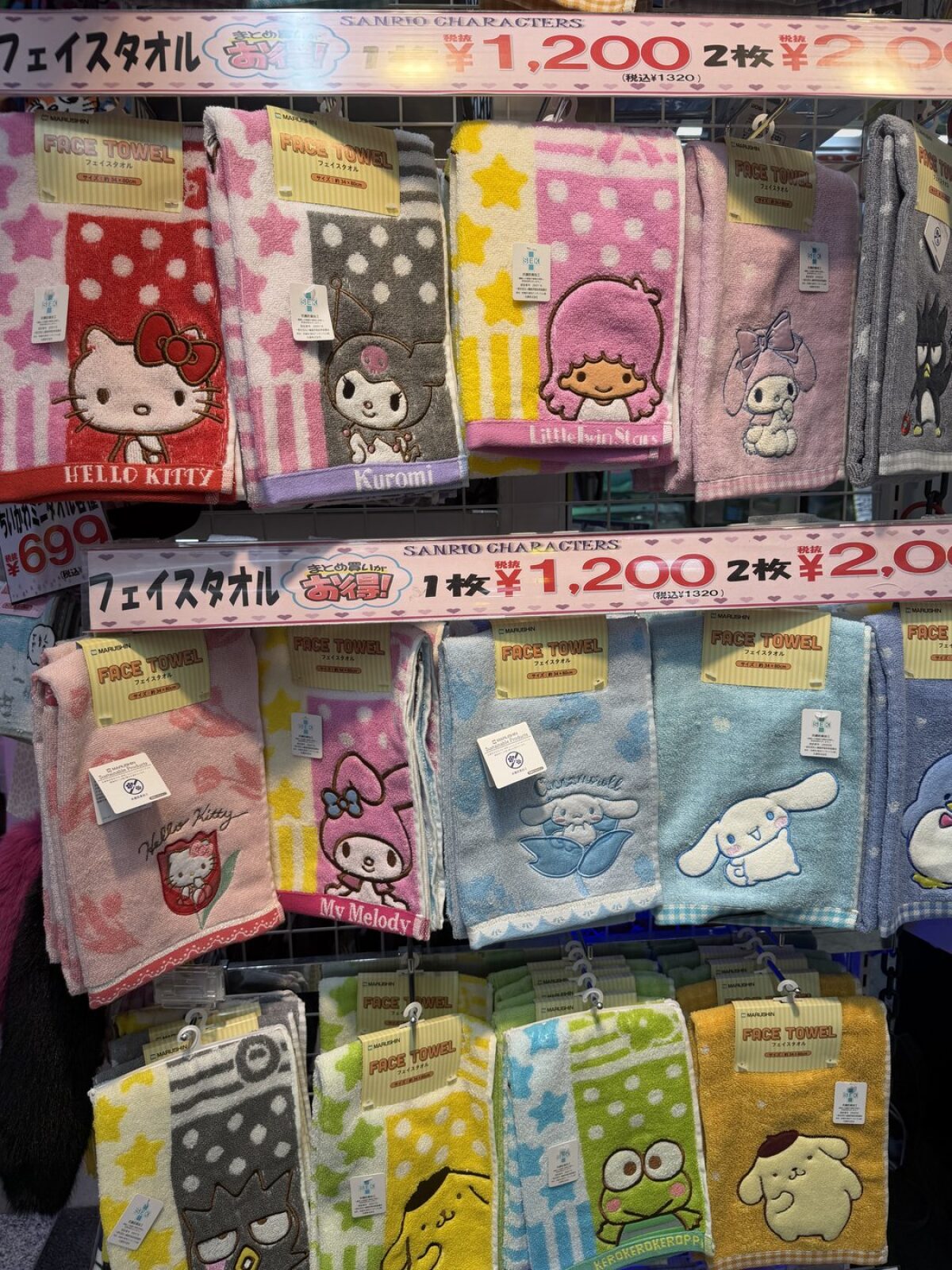
- Sanrio face towels, ¥1,320 each or two for ¥2,200 . Hello Kitty, Kuromi, Cinnamoroll, Pompompurin. Always buy them at the two-for price
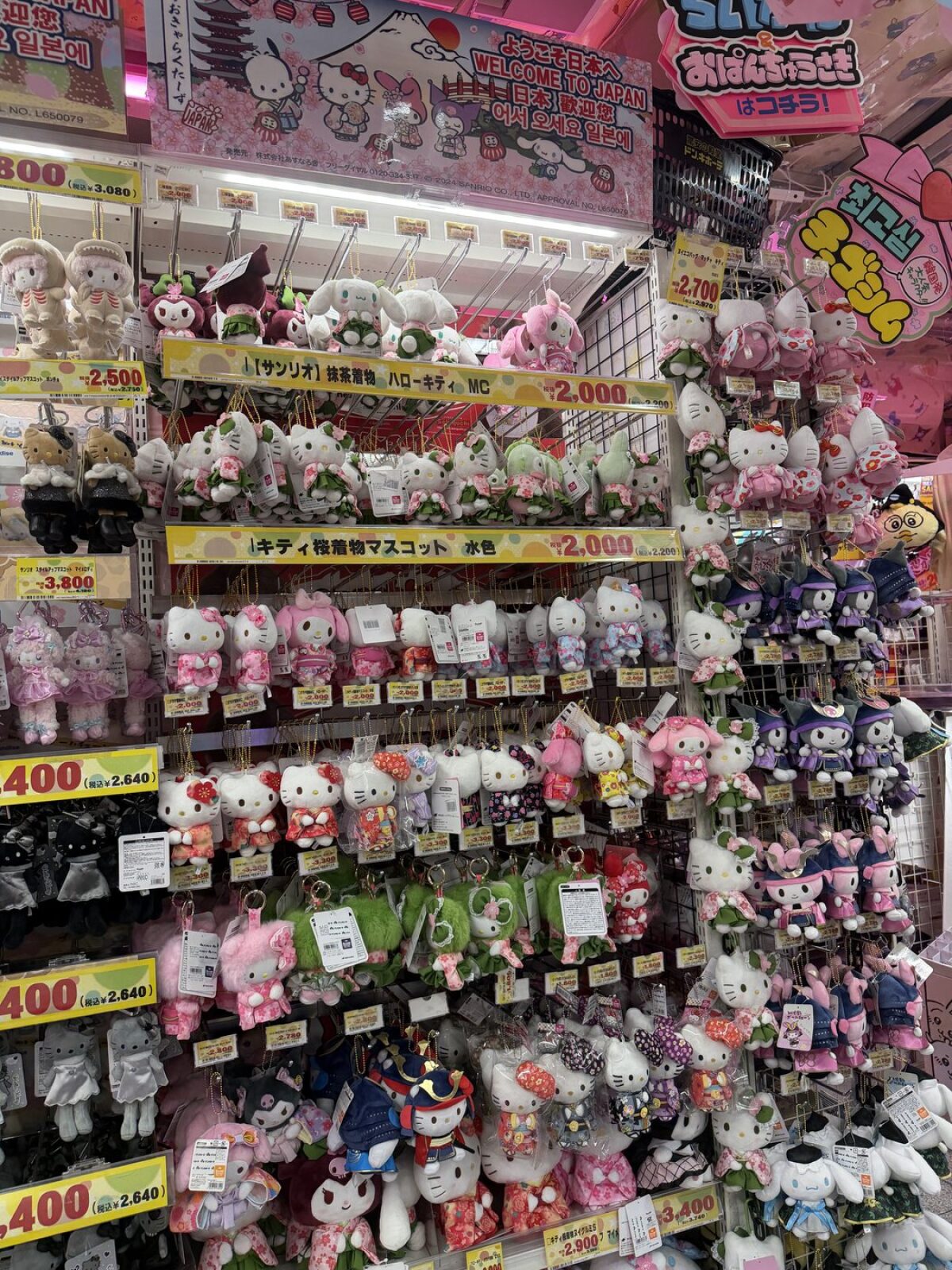
- The plush wall: ¥400 to ¥3,800 , floor to ceiling, seasonal costumes included
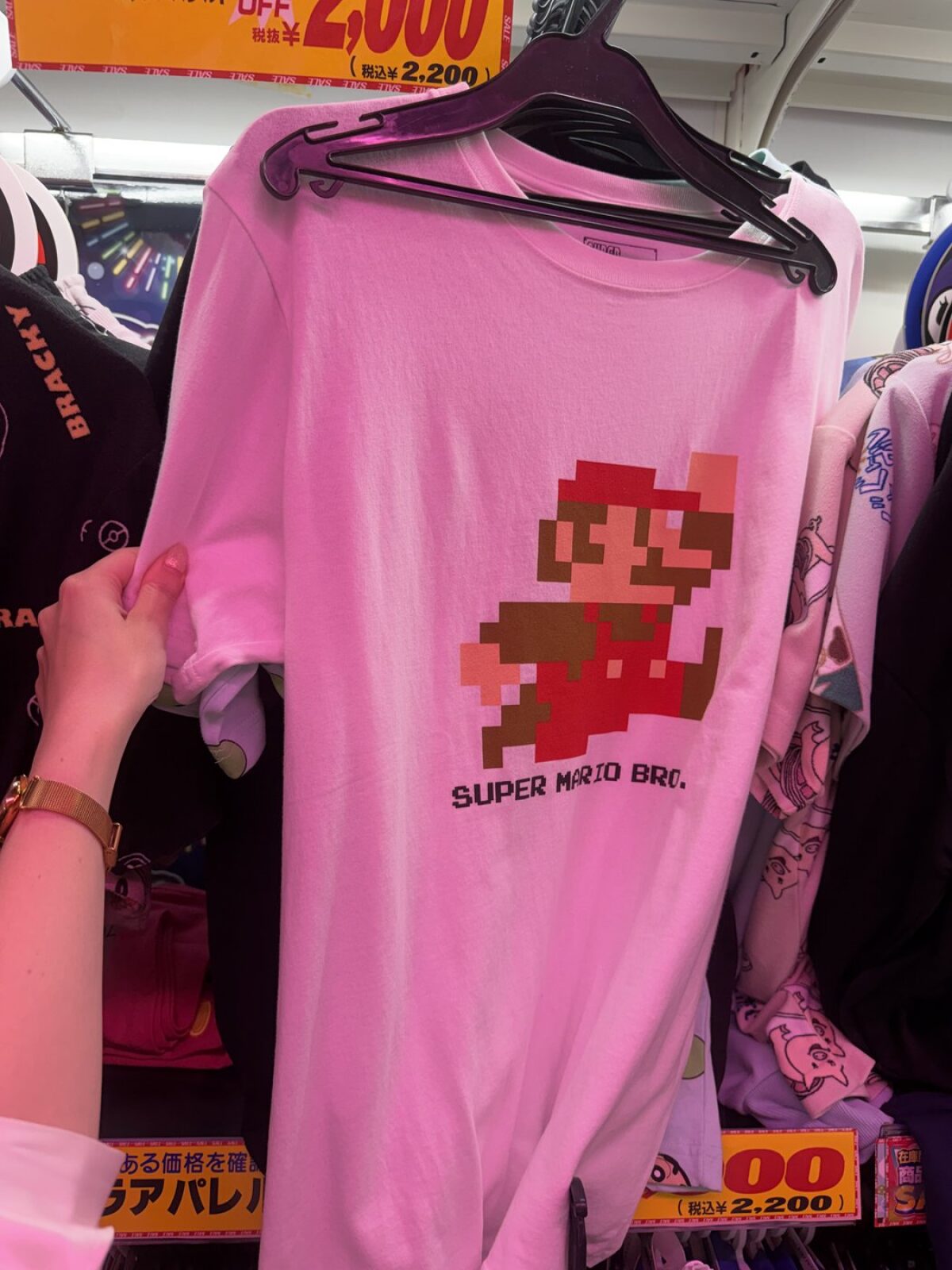
- Character T-shirts ¥2,200 , and the clearance rack runs 33% off that. Ours had an 8-bit Super Mario in pink
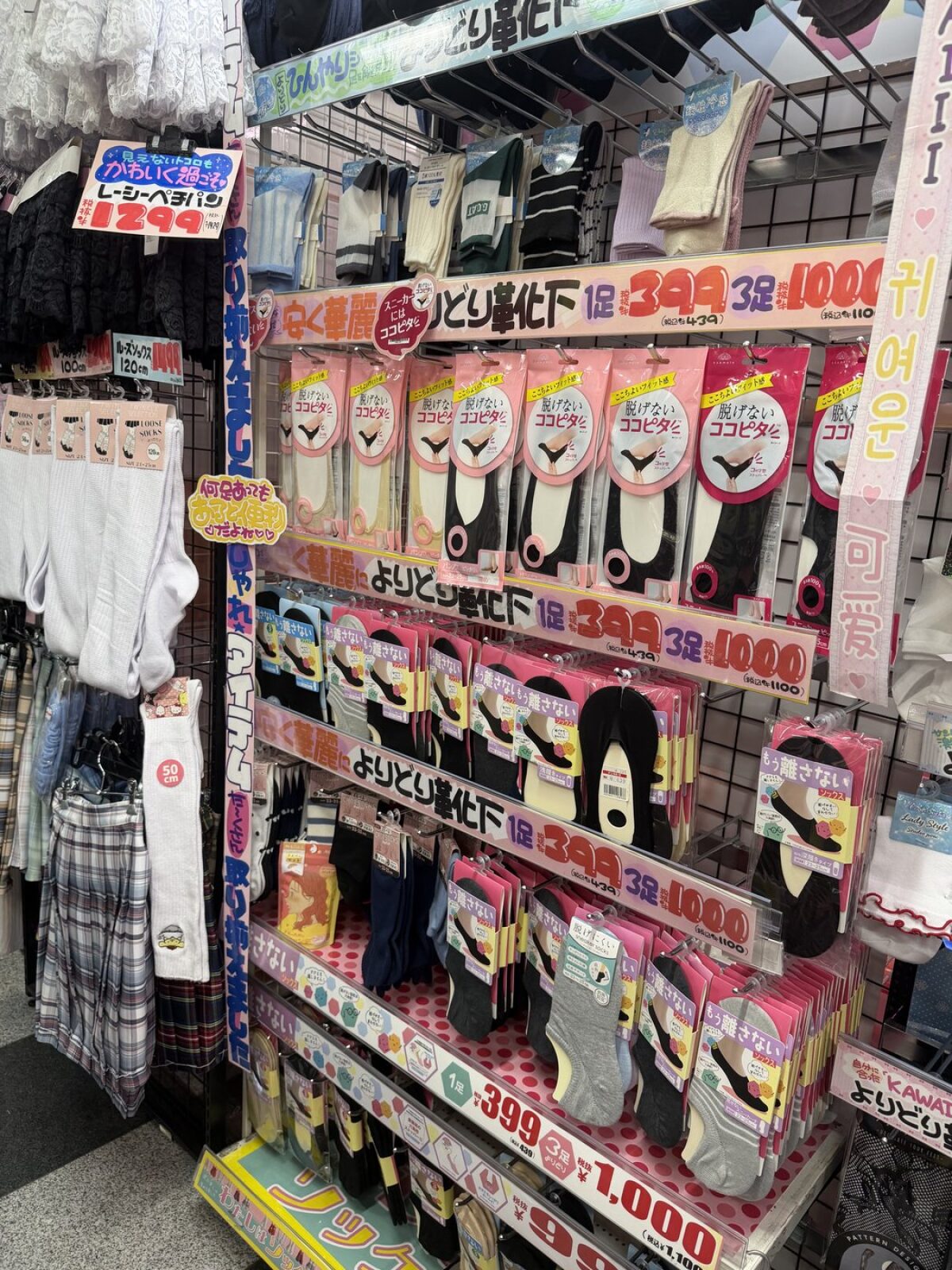
- Socks, ¥399 a pair or three for ¥1,000 , and you can mix and match across the whole rack. Good souvenirs for colleagues
Two aisles most visitors walk straight past
Electronics. Beyond the own-label power bank there are toy cameras at ¥6,589 and small gadgets that change often. If you arrived without a battery pack, you can fix that here quickly, and it is the one item we tell everyone to bring in our Japan packing list.
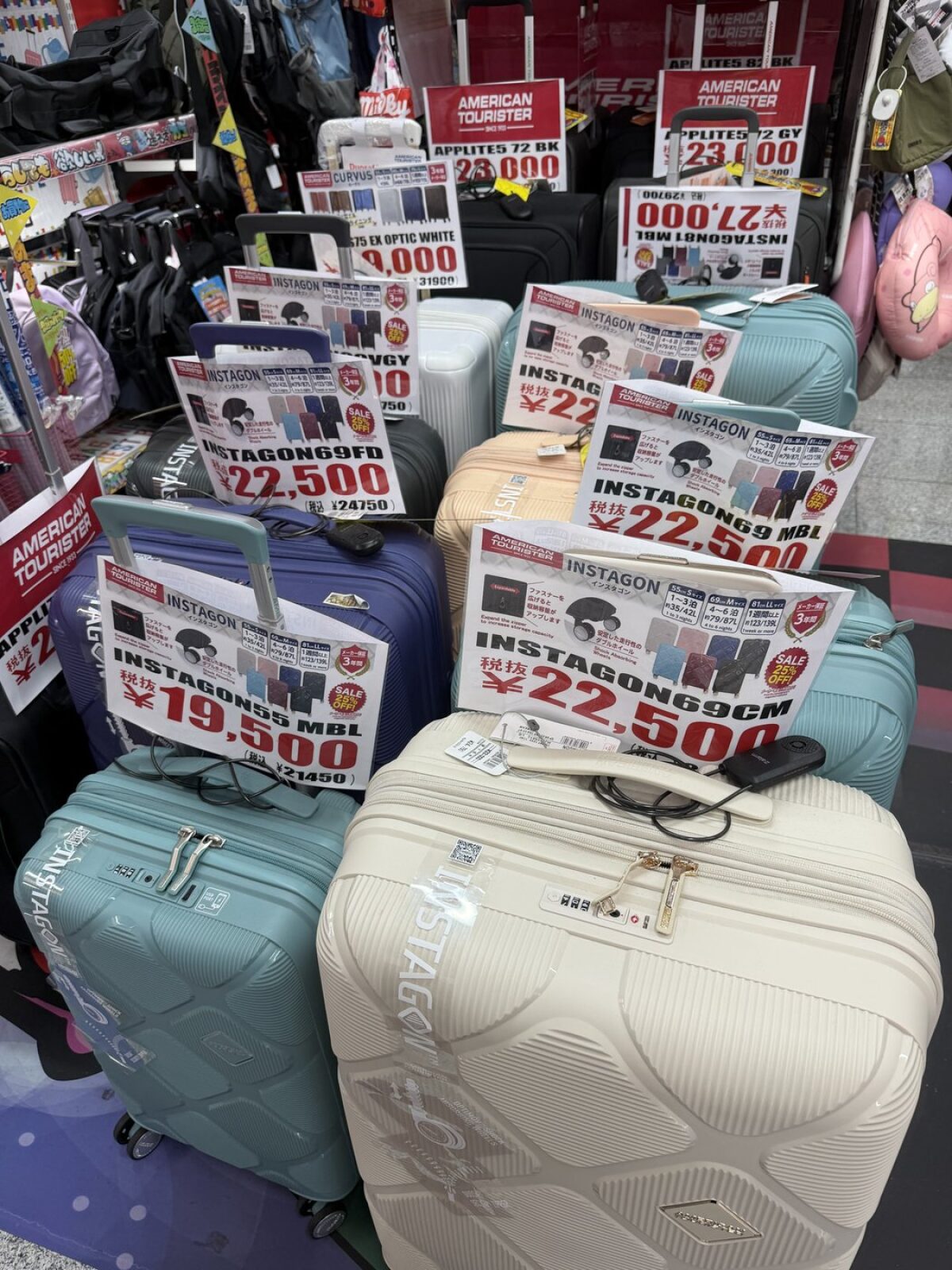
Suitcases, ¥19,500–27,000 . Nobody plans to buy luggage on holiday, but plenty of people buy it here on the last night because the shopping got out of hand. A bigger case is one answer. Sending your old one ahead is cheaper: see luggage storage and forwarding.
Tax-free, and what changes this November
- Bring your physical passport. A photo of it is not accepted
- The tax-free desk is a separate counter, usually on another floor. You pay at a normal till first, then queue again. Budget fifteen minutes
- ¥5,000 before tax is the minimum spend, and it has not changed
- From 1 November 2026 the whole system flips: you pay full price in store and claim the refund at the airport instead. We wrote up exactly how that works in cash, cards and the new tax-free rules
Before you go: Don Quijote gives discount coupons to overseas visitors, and Klook lists them with its Japan activity vouchers. It is only a few percent, but it takes thirty seconds.
Notes from a local
It is tiring. The aisles are too narrow for a suitcase, the jingle never stops, and on a Saturday afternoon in Osu you have to queue just to move. Go after nine at night and it becomes a completely different, almost calm shop.
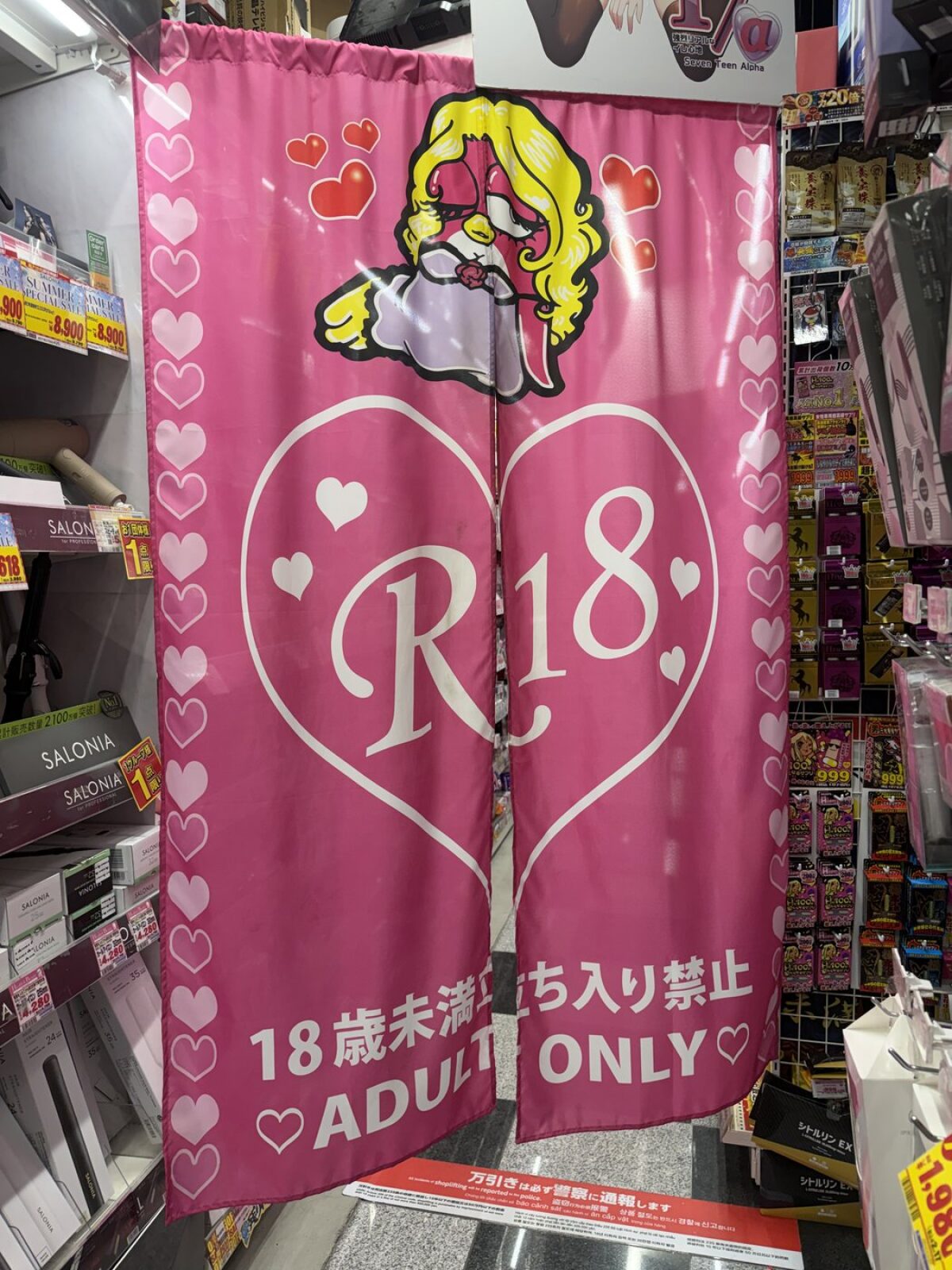
It is also not the cheapest for everything, whatever people say. For snacks, alcohol, socks, novelty goods and Korean cosmetics, yes. For famous Japanese skincare and medicine, check a drugstore first. The upper floors of most branches also have an adult section behind a curtain. It is clearly marked and easy to avoid, but it surprises people who go up looking for luggage.
FAQ
Is it open late? Most branches run until 3am and a good number never close. It is the only real shopping you can do at midnight in Japan.
Can I pay by card? Yes, everywhere. The store pushes its own majica e-money, which is not worth setting up for one trip.
How long do I need? Thirty minutes with a list. Two hours without one. The Osu branch is in the basement and easy to walk past; look for the black sign and the down arrow.
• The small bracketed number on the tag is the real price · food 8%, everything else 10%
• The ド own-label is where the savings actually are
• Snacks ¥108–214 · socks 3 for ¥1,000 · Sanrio towels 2 for ¥2,200
• Tax-free: physical passport, separate counter, ¥5,000 minimum · system changes 1 Nov 2026
• Go after 21:00 · from our own neighbourhood shop in Osu · nobody paid us anything
More from the same walk: the whole Osu neighbourhood and the four-floor DAISO two minutes away, plus the full Japan trip checklist if you are still planning.